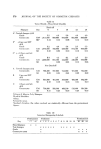
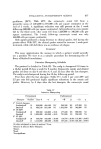
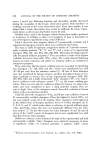
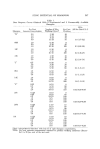
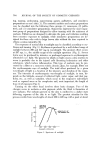
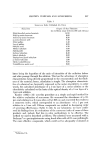
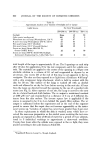
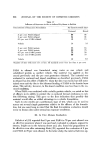
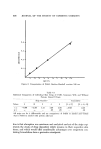
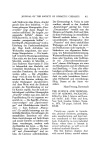
PROTEIN VEHICLES AND SUNSCREENS Table I 597 Sunscreen Index Published (In Vitro) Sunscreen Degree of Ray Filtration (in erythema range between 285 and 315 nm) Ethyl-dimethyl-amino-benzoate 14.80 Ethyl-p-amino-benzoate 9.60 Isobutyl-p-amino-benzoate 9.20 p-amino-benzoic acid 7.40 Ethyl gallate 1.40 Lauryl gallate 0.85 Salicylic acid 4.30 Methyl salicylate 4.00 Salicylamide 3.90 Sodium Salicylate 2.40 Salicyl aldehyde 2.20 Dipropylene glycol sa]icylate 1.90 p-Amino-salicylate 1.90 Methyl umbelliferone 7.70 Umbelliferone acetic acid 6.00 latter being the logarithm of the ratio of intensities of the radiation before and after passage through the solution. This has the advantage of absorption characteristics being directly proportional to the concentration and the thick- ness of the material hence, calculation is simple. The absorption characteris- tics of a chemical are frequently expressed as the molar absorbtivity, in order words, the calculated absorbance of a 1-cm layer of a molar solution or the absorbtivity calculated on the basis of the optical density of a 1-cm layer of a 1 per cent solution. Kumler (1952) (12) uses this procedure as a simple and rapid method for the relative evaluation of sunscreens. He measured the absorbance of a 10- per cent solution in a 0.l-ram silica cell at 308 nm and converted the results to a sunscreen index, which corresponded to an absorbance of a i per cent solution in a 1-nm cell. Fifteen compounds are ranked in decreasing order of screening effectiveness (Table I) (12). In our laboratory, we have confir- med his findings from his evaluations of the sunscreen index of some of these products and, indeed, find this in vitro methodology to be effective. The method we used is described as follows. The solutions were measured with a Beckman* uv spectrophotometer using fused silica cells of 0.l-ram pathlength. The more effective compounds, which could not be adequately evaluated at *Fullerton, CA.

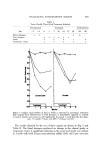
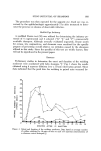
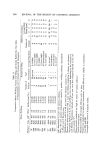
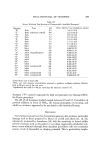
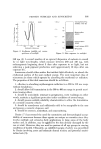
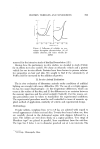
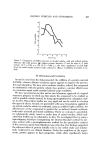
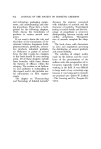
598 JOUBNAL OF THE SOCIETY OF COSMETIC CHEMISTS this concentration and pathlength (because their densities were too high), were diluted tenfold using 95 per cent alcohol, which resulted in a 10 per cent solution, and brought the densities down to a value, where the relative ab- sorbing power of the various compounds for the rays producing sunburn could be compared. The sunscreen index is a number obtained by dividing the absorbance of the solution at 3080 A by the per cent of concentration that is found in the solution. The value of the sunscreen index then repre- sents the density of 1 per cent solution of the compounds at a pathlength of 0.1-min. The fact that isobutyl para-amino bezonate has a higher value than the propyl compound appears anomalous and may be due to the relative purity of the compounds. The absorbance has been chosen to compare different compounds rather than to present transmission because sunburn depends on the amount of light absorbed by the skin in the sunburn range, and the amount of light that is screened out is given directly by the absorbance. On the other hand, the light screened out is a log function of the transmission thus, the numbers obtained in the sunscreen index can be used to compare the effective sunscreening power of any compound with any other compound on a weight basis. One will notice that PABA has a concentration per cent or sunscreen in- dex of 7.4, and that there are other derivatives of benzoic acid (which we have already noted) •vith higher sunscreen index. However, one must keep in mind that this is an i•, vitro evaluation to give a relative comparison and, in- deed, a final evaluation of the formulation must be made on intact skin before any conslusions can be reached. However, it was established that any material with the sunscreen index less than 6 would not be interesting for further eval- uation. At best, these in vitro evaluations are qualitative in nature and provide an indication •vhether or not the sunscreen absorbs the burning rays. In order for a good sunscreen to be effective, a compound must possess high absorption properties at 308 nm while superimposing itself on the entire sunburn curve. However, one must be careful with these data, making certain that the sun- screen index does not exclude the effect the vehicle has on the absorption characteristics (15) as demonstrated by Van Ham et al (16, 17) (Fig. 4). One cannot overemphasize the vehicle effects of a sunscreen preparation, particularly in an in vitro evaluation. In 1954 and 1955, Stambovsky (18, 19) published an extensive series of articles reviewing the factors considered im- portant for a suntan preparation. In these articles he criticized the use of the spectrophotometer for the evaluation of sunscreen products on technical grounds (with which xve and others (20) do not concur). The disparity in the results, which might exist between the spectrophotometric data and the re- sults of skin testing, may be due to overlooking the effect of the vehicle com- ponents on the absorbent properties of the active compound. Properly de- signed spectrophotometric tests will always be more sensitive, rapid, and ac- curate guides for product evaluation than human testing. The latter can be
Purchased for the exclusive use of nofirst nolast (unknown)
From: SCC Media Library & Resource Center (library.scconline.org)