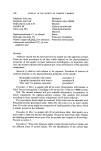
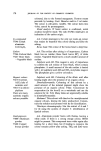
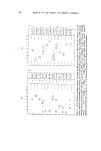
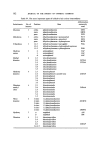
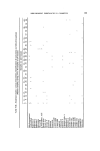
172 JOURNAL OF THE SOCIETY OF COSMETIC CHEMISTS 1 contains BiOC1 on mica l 5 contain titanated micas 3 contain lakes of organic colours CI 19140 CI 42O9O There 14 2 27 2 6 5 2 were 31 BLUE eye make-up preparations contain chromic oxides contain ferric ferrocyanide contain ultramarines contain aluminum powder contain BiOC1 on mica contain titanated micas contain lakes of organic colours CI 14290 CI 42O9O There 3 15 3 1 3 7 2 1 were 20 VIOLET eye make-up preparations contain iron oxides contain ultramarines contain Mn-violet contains aluminum powder contain BiOC1 on mica contain titanated micas contain lakes of organic colours CI 42090 CI 75470 (Carmine) CI 45170 contains unidentified pigments There 2 3 2 1 were 3 RED/BROWN eye make-up preparations contain iron oxides contain ultramarines contain titanated micas contains a lake of an organic colour CI 45425 There 1 3 were 3 BLACK eye make-up preparations contains iron oxides contain carbon black There 3 2 1 1 2 were 5 GREY eye make-up preparations contain iron oxides contain ultramarines contains aluminum powder contains BiOC1 on mica contain carbon black

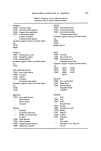
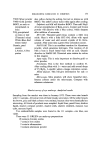
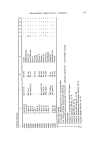
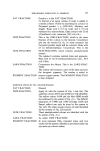
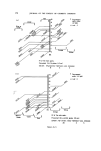
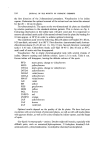
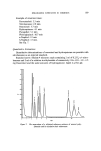
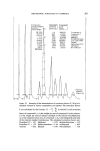
RISK-BEARING SUBSTANCES IN COSMETICS 173 There were 16 BROWN eye make-up preparations 14 contain iron oxides 2 contain bronze powder 6 contain titanated micas LIPSTICK COLOURS Identification Many excellent papers exist on the paper and thin layer chromatographic identification of lipstick colours. For this reason the choice of methods made for their identification in the 36 samples (18 brands) of lipsticks purchased in February 1972 is only briefly described. A selection of 40 of the most important lipstick colours was made, based on several recent publications in this field. Reference substances were obtained by the kind cooperation of several manufacturers and laboratories. The list of these reference colours is in Table III. There are two important groups of lipstick colours worth consideration from an analytical aspect. Xanthene colours are the principal compounds for indelible types of lipstick. It appears that the industrial reference colours in several in- stances contain minor substances, which are clearly visible on the tlc plates (see Fig. 1). In the actual separation of the sample extracts, this phenomenon might interfere in the identification of a minor spot. A second important group of colours in lipsticks are the lakes of the water soluble dyes. Most of these dyes occur as water-insoluble lakes in lipsticks, because of the undesirability of 'bleeding' on the place of application. Most of the lakes are also practically insoluble in other organic solvents, such as ethanol, chloroform or benzene. Fortunately hot dimethylformamide (DMF) will dissolve many lakes to an appreciable extent thus permitting extraction for tlc analysis. Extraction of lipsticks The Lehmann method (7) was used. It gives five fractions the fat fraction is discarded the main (DMF) fraction and the 'lake' fraction are analysed by tlc and the pigment fraction is analysed by the same chemical methods as used for eye make-up. Mix and heat 100 mg of sample with 10 ml dimethyl- formamide (dmf). Filter. Filtrate =a and residue = b. Defat a by shaking with 2 x 15 ml nHexane. Separate. Hexane-fraction is c and dmf-fraction is d.
Purchased for the exclusive use of nofirst nolast (unknown)
From: SCC Media Library & Resource Center (library.scconline.org)