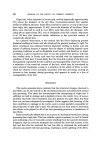
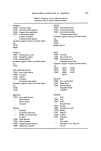
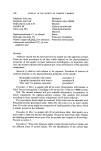
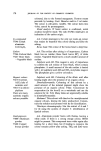
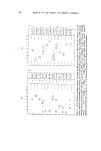
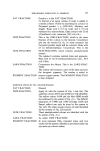
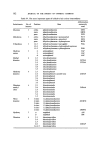
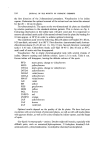
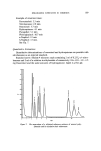
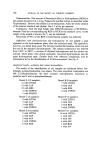
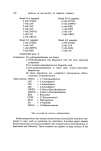
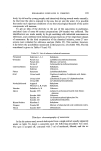
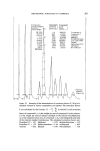
180 JOURNAL OF THE SOCIETY OF COSMETIC CHEMISTS The choice of the tic systems is not difficult, because many excellent systems exist. After some preliminary work a final choice was made which is given in detail in Fig. 2(a)-(e). Tlc matching with reference colours will be much aided by these tables, and also by Fig. 1. Confirmation should always be made by tic of mixed spots, namely the sample extract + reference standard. Analytical results: lipstick colours THE ANALYSIS OF OXIDATIVE HAIR COLOUR INTERMEDIATES It is well known that the oxidative hair colour intermediates have a significant potential toxicity. More than 100 compounds are mentioned in literature (13, 15, 16, 18). Most of them are substituted derivatives of benzene, naphthalene or pyridine. Table IV lists the most important possibilities. It is not likely however that all of them are used in modern hair colour preparations. To get an idea of the compounds most frequently in use, 80 samples of 10 brands of the hair colourants for home use as well as for professional use were examined. Most were cremes in tubes and some of them were viscous liquids. Twenty-five reference compounds were selected based on the most recent papers on this subject (see Table V). The second step was to build up an analytical scheme. There exists a number of excellent tlc identification systems (14, 16, 17, 19) in the literature. The final choice was made after careful preliminary experi- mentation. Analytical scheme for the identification of hair colour intermediates Tic Preliminary tlc: estimation of the concentration levels. 20 min precoated plates, 10 cm, one-dimensional. Two-dimensional tlc: main identification. Self-made 20 x 20 cm plates, Silica H, visualization iodine vapour. 2« h. Glc-aromatic For confirmation. amines No clean-up of extract necessary. Selective column. Separation of OFD. MFD. PFD. 26DAP. 34TDA. 25TDA. 24TDA. 2CPFD. 24DAA. Polyphenols and aminophenols do not respond. Quantitative estimation possible. Glc-polyphenols For confirmation. Special clean-up necessary. Removal of amines, aminophenols, etc. Silylation of the phenols. OV-210 column. Separation of PCT. RES. HCH. PGL. PHL. AN. BN. (130øC) (HCH and CRES cannot be separated at 130øC, but at 100øC resolution is good). A quantitative estimation is possible.

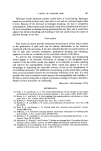
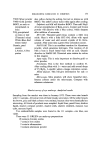
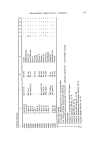
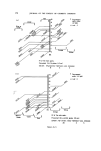
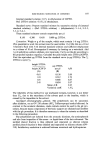
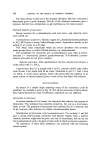
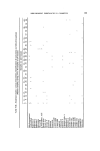
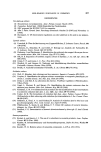
RISK-BEARING SUBSTANCES IN COSMETICS 181 Sample numbers column numbers i5585 i585o i588o 42090 45170 45396 Figure 3. Analytical results: lipstick colours. Analysis of the colour com- position of 38 commercial lipstick samples. Experimental The determination starts with a quick (ca 20 min) estimation of the concen- tration levels by tic on 10 cm precoated plates and visualization by iodine vapour. This makes it possible to determine optimum amounts for the spots of the main identification procedure. Thin-layer chromatography. Two-dimensional tlc on 20 x 20 cm silica plates was chosen for this main identification. The 'crude' extracts were 'cleaned-up' in the first direction, thus permitting excellent resolution in the second. The spots are easily visualized by iodine vapour, which colours all the classes of intermediates, the aromatic diamines, the aminophenols as well as the polyphenols.
Purchased for the exclusive use of nofirst nolast (unknown)
From: SCC Media Library & Resource Center (library.scconline.org)