RISK-BEARING SUBSTANCES IN COSMETICS 199 xxx x xx x x x x x x x x x x x xx x x x x x ' ,- x ,'K X e-. x x x ,,' x

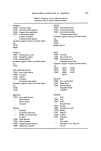
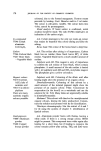
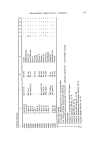
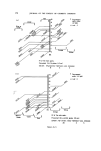
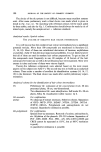
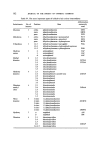
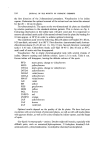
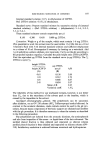
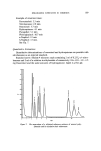
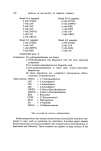
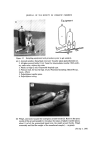
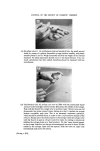
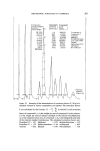
200 JOURNAL OF THE SOCIETY OF COSMETIC CHEMISTS the compounds. It was of interest to study the aerosol cosmetics on the market in order to estimate the real danger of these products. The composition of some 60 samples of hair spray aerosols was examined in Spring 1973. Gas chromatographic analysis is the method of choice and excellent papers have been published in this field (28, 29). Several columns have been described which give a satisfactory resolution of the propellants and solvents used. The difficulty of the analysis, however, is in the sample handling prior to the gas chromatographic analysis. To transfer the pressurized liquid of an aerosol from the container to the injection port of the gas chromatograph, one can use a closed system, such as has been described by Cannizzaro and Lewis (28). The aerosol can is pierced below the liquid level by a special 'can piercing unit'. The pressurized liquid is then led via a metering liquid sampling valve to the injection port of the gas chromatograph. An alternative way of bringing the pressurized liquid to the gas chromatograph is the use of an intermediate transfer vessel made of glass, without damaging the can, and injecting the pressurized liquid by means of a special syringe. Schubert and Keitel (29) used a small glass serum bottle for this intermediate transfer. The work described used a small all-glass aerosol bottle (10 ml), such as is used for perfume aerosols, but without a dip tube. This system has been described in another paper and only the most important points are noted here, (Fig. 11). The outfit is simple and inexpensive. The special gas syringe (0-25 pl) has a small Teflon sliding valve at the end. The glc system used is the same as that of Cannizzaro and Lewis, with small modifications. The column was only 4 m in length. A precolumn was used to Table IX. Glc-conditions Gas chromatograph Carlo Erba, Fractovap 2200. Catharometer-detector: bridgecurrent 150 mA. Temp. 200øC. Inj. port: 125øC. Precolumn attached before the main column to prevent fouling: 30 cm in length, 4x 6 mm diameter, stainless steel, Chromosorb WHP 60/80. To be replaced after 100 injections. Main column: 400 cm in length, 4x 6 mm in diameter, filled with 20% Hallcomid M18 on Chromosorb WHP 60/80. Column temp. 65øC isotherm. Carrier gas: Helium 50 ml/min. Time for one injection: 30 min. Example of retention times (min): Propane 1.9 Acetone 8.1 Propellant 12 2.0 Methanol 12.5 isoButane 2.2 Dichloromethane 14.6 Dimethylether 2.2 Cyclohexane (i. stand.) 18.4 Propellant 11 5.1 Ethanol 20.4 norm. Butane 2.8 Methylchloroform 23.0 isoPropanol 25.5
Purchased for the exclusive use of nofirst nolast (unknown)
From: SCC Media Library & Resource Center (library.scconline.org)