J. Soc. Cosmet. Chem. 27, 257-269 (1976) ¸ 1976 Society of Cosmetic Chemists of Great Britain Sex attractants in primates ERIC BARRINGTON KEVERNE* Presented at the Symposium on 'A Sensory Approach to Cosmetic Science' organized by the Society of Cosmetic Chemists of Great Britain at Manchester on 7-9th April 1975 Synopsis The importance of OLFACTORY communication in SEXUAL ATTRACTION among primates is clear from our previous studies, which led to the term 'PHEROMONE' being used to describe these olfactorily acting ATTRACTANTS. It is perhaps debatable whether such a term, originally defined to explain insect behaviour, can now be applied to the complex behaviour of a higher PRIMATE or man, where responses are not stereotyped. Such olfactory stimulants in these primates can produce mounting, masturbation and ejaculation, increase grooming behaviour and reduce aggression. Moreover, the ingredients in the composition of the stimulant may be added to, and produce improvements in the responsiveness of certain males. Since both the nature of the stimulants and the type of response produced can be varied, this clearly illustrates the complexity of defining an olfactory response in these higher primates. Among the primates, communication of female sexual attractiveness appears to involve olfactory mechanisms, and a number of field and laboratory studies have observed sniffing of the female's genital region prior to copulatory behaviour. This is particularly true of the macaques where Carpenter (4) first observed that the vaginal overflow of the rhesus monkey possessed a characteristic odour which he thought might provide additional stimuli attracting males to females. Jay (7) perceived a strong smelling vaginal discharge in toque macaques, Macaca sinica, and observed males to examine the genitalia of females in the group each day. Bonnet macaques, Macaca radiata, have rarely been seen to present for copulation unless solicitated by the male (14). This involved flipping the tail aside, olfactory examination of the genitalia, and on occasions, insertion of the * Department of Anatomy, University of Cambridge. 257

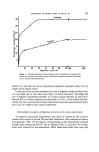
258 JOURNAL OF THE SOCIETY OF COSMETIC CHEMISTS finger into the vagina followed by smelling and tasting of the secretion (13). In the pigtail macaque, Macaca nernestrina, the male displayed the Flehmen posture following olfactory inspection of the female's genitalia (6). In the stumptail macaque, Macaca arctoides, sniffing, fingering and licking of the perineal region occurs following female presentation (2) and prior to copula- tion (3). Although olfactory cues from the urine of receptive females are not ruled out, it would appear from these observations that in the macaques, communication of sexual status is by way of vaginal secretions. To test this proposition use was made of operant conditioning tech- niques, in which male rhesus monkeys were required to press a lever in order to raise a partition which physically separated them from a female partner, but through which they could both see and smell the partner. Males had to work with some dedication, pressing the lever 250 times to gain access to the female. They regularly responded for ovariectomized partners treated with oestrogen, but rarely performed when faced with untreated ovariectomized females (9). Temporarily depriving these males of their sense of smell did not markedly affect either their pressing for or behaviour with the oestrogen-treated females these females were presum- ably remembered as being attractive because of previously rewarding sexual experiences with them. However, the temporarily anosmic male failed to respond for unfamiliar ovariectomized females after these females were administered oestrogen, and shown to be sexually stimulating to normal males. When the olfactorily deprived males had their sense of smell restored they readily began pressing for access to these females. That is to say, anosmia did not impair males' sexual arousal and sexual activity with familiar oestrogenized females, but anosmic males were not able to detect the onset of attractiveness which oestrogen promoted in their unfamiliar partners. These results were consistent with the hypothesis that oestrogen- ized female rhesus monkeys produced substances which stimulated the sexual interest of their partners via the olfactory sense. The preoccupation of males with the female's genital region suggested this might be an obvious place at which to start looking for male sex attractants. We therefore studied the effects on male behaviour of trans- ferring vaginal secretions from oestrogenized 'donor' monkeys to ovariec- tomized, unattractive 'recipient' partners. Application of vaginal secretions to the sexual skin area of recipients, which were themselves quite unrecep- rive to males, nevertheless resulted in a marked stimulation of the male partner's sexual activity (10). Oestrogen-primed vaginal secretions have
Purchased for the exclusive use of nofirst nolast (unknown)
From: SCC Media Library & Resource Center (library.scconline.org)