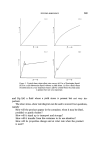
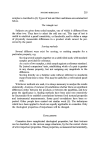
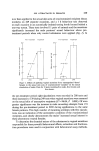
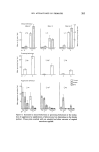
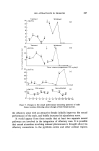
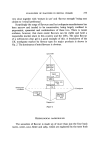
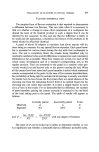
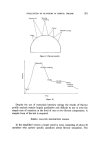
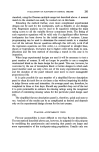
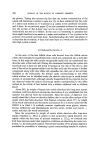
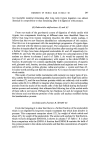
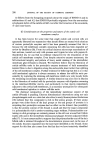
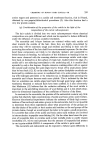
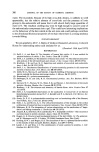
SEX ATTRACTANTS IN PRIMATES 265 Sexual behaviour Male 67 Pre-treat Treatment N: 9 12 Graomlng behaviour 25- N= 7 5 Male 41 Pre-treat Treatment 7 7 •79' 7 7 Male 68 ,.----, Pre-treat Treatment 4 5 •78 Aggressive behavlaur [] Threat ß i O Attack - k [] Bite •, 15 c•79 , C•78 • io Pre- treat Treatment Pre- treat Treatment Pre- treat Treatment N: 8 7 7 7 8 I0 Figure 6. Increases in sexual behaviour or grooming behaviour or the reduc- tion of aggression by applications of pheromone but depending on the female partner. Those pairs marked with an asterisk had ether extracts of vaginal secretions applied.

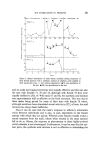
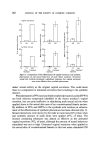
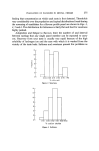
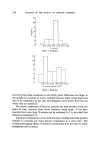
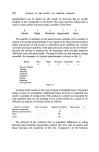
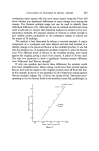
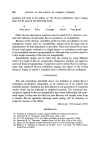
266 JOURNAL OF THE SOCIETY OF COSMETIC CHEMISTS the olfactory cue, but is integrated in higher areas of the neocortex. This opinion is reinforced by the variability in the male's response both to ether extracts of secretions (Fig. 6, those pairs marked with an asterisk), and in some cases to the synthetic acid mixture itself, which clearly rules out different odour cues. It is most important that this lack of a stereotyped response is empha- sized in this highly evolved social primate, particularly if consideration is to be given to the human situation and a search for human pheromones started. These aliphatic acids are present in human vaginal secretions (12) and the human male can distinguish variance in these odours between the phases of the menstrual cycle of the rhesus monkey. This does not, however, imply any causal relationship between these odour cues and the sexual behaviour of the human male. If we are to consider the complexity and plasticity in the response of the male rhesus monkey, then the further social and cultural evolution of man may make the search for an olfactory aphrodisiac with sexual releasing properties a fruitless task. Indeed, it may be argued that stimulation or provocation by female odours could be dis- ruptive to our social order, and perhaps this is why we take such pains to disguise our body odours. This is not to say that these odours play no part in human sexual behaviour, but to give them significance at the level of sex attractants underestimates the complexity of human behaviour. What then might be the effect of these odour cues in human behaviour? Fig. 7 shows data which has been extracted from a number of experiments which I feel has some bearing on the kind of level these odour cues might be seen to act on the human. Following withdrawal of the sex attractant from the female partner, males usually lose sexual interest in the female and make no further mounts, but occasionally (Fig. 7(a) and (b)) males maintain their sexual arousal and, paradoxically, show increased mounting and thrusting prior to a loss of sexual interest. Moreover, if the oestrogenized female donor is given progesterone, her vaginal secretions lose their sexual stimulating properties when applied to the recipient. However, prior to the male's loss of sexual interest there is a marked increase in the male's mounting and thrusting (Fig. 7(c)). Since the only change in all these experiments is the odour of the female partner, I interpret this increased mounting behaviour as an increase in male sexual performance to compensate for the odour deficit of the female partner that is, an increase in tactile input compensat- ing for decreases in another sensory cue, namely olfactory. Similarly, following reversal of anosmia there may be an increase in male ejaculations with no marked increase in mounting (Fig. 7(d)). Here the introduction of
Purchased for the exclusive use of nofirst nolast (unknown)
From: SCC Media Library & Resource Center (library.scconline.org)