278 JOURNAL OF THE SOCIETY OF COSMETIC CHEMISTS In the case of toothpastes it is more realistic to insist that the panel brushes with the creams rather than tastes the cream straight from the tube. This type of test is very general in its application. It is used in the food industry and can be used without difficulty for cosmetics such as lipstick (8). All panel members should be persuaded to make a decision on the pairings in this form of testing because 'Don't Knows' cannot be treated in the analysis and are a waste of everybody's time. If necessary the test can be repeated on two or three successive days so as to give the panel a better chance of finding a difference. The non-expert nature of the panel, the fact that it is run completely blind and the realism introduced by brushing with the creams being spread over a whole day make this test method very useful for assessing whether flavour differences which can be picked up by an expert are, in fact, likely to be perceived by the consumer. Another version of this test uses two samples of the control cream and one of the cream under investigation. The statistical analysis can be worked out in a similar way to that described above. FLAVOUR PROFILES If a description is sought of how a flavour is perceived by the user it is necessary to use some form of flavour profile panel (9). Members of such a panel must be expert and will have to be trained over a considerable time in recognition of flavour notes and sensations in the mouth and the accurate description of intensity and the order in which the sensations appear. Potential panel members must first be thoroughly screened for taste thresholds, as described above, and for the ability to recognize and describe a wide range of odours. As only five or six members are needed for a panel it should be possible to select two or three panels from 60 or so applicants. Screening tests have revealed no convenient rules of thumb or short cuts that can be used in panel selection. Men and women appear to perform more or less equally and under-30's and over 30's show no significant differences in taste thresholds. Smokers, however, tend to have a higher bitterness threshold than non-smokers, but are no different for the other three tastes or for odour recognition. This may be due to some form of nicotine tolerance in the smokers. Laboratory workers have been found to be significantly better than others at identifying odours, but this appeared to be due to the screening being slanted towards odour description for which laboratory workers, not surprisingly, had a better vocabulary.

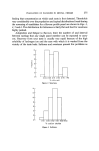
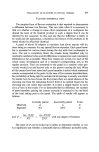
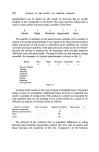
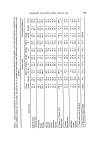
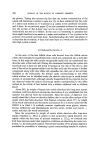
EVALUATION OF FLAVOURS IN DENTAL CREAMS 279 Thresholds for the four basic tastes are quite independent. Sensitivity to one particular taste does not necessarily imply sensitivity for any other taste. This effect is well known (10). As the four tastes are perceived by four totally separate systems of taste buds this is only to be expected. Tests designed to show whether phenylthiourea was perceived as bitter or tasteless and whether sodium benzoate was tasted as sour, sweet, salty or bitter gave the results shown in Fig. 7. These are what would be expected of an average population and the responses to the two compounds are again completely independent. Perception of phenylthiourea as bitter did not mean that sodium benzoate would also taste bitter to the same person. Sodium benzoate Sweet Sour Salt Bitter Total Phenylthiourea Bitter 9 2 3 14 28 Tasteless 4 2 1 4 11 Total 13 4 4 18 39 Figure 7 Having chosen the panel it is then necessary to train it. Training takes the form of running practice sessions on specially prepared toothpastes consisting of unflavoured bases of various types to which flavour com- ponents are added singly and in increasingly complicated combinations. In this way the panel builds up a vocabulary of flavour notes and gains practice in describing events in the mouth in terms of these notes. Sessions are best held in the hour before lunch and panel members should refrain from drinking, eating or smoking for at least 30 min before a tasting session. Hands should be washed before a session using water only and no soap. The session itself is composed of two parts. Aroma is evaluated first and flavour second. In both parts the odours, flavours and other sensations are identified and described as accurately as possible. An intensity rating from the scale 0 1 2 3 4 Not present Just noticeable Slight Moderate Strong is then awarded to each sensation. The order in which the sensations occurred is recorded and finally, aftertaste and after effects are noted. In the first session with any flavour a considerable amount of time will be spent on discussion within the panel to settle on an agreed nomenclature
Purchased for the exclusive use of nofirst nolast (unknown)
From: SCC Media Library & Resource Center (library.scconline.org)