CHEMISTRY OF HUMAN HAIR CUTICLE--III 293

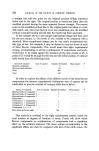
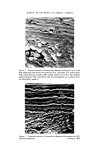
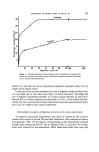
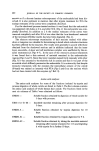
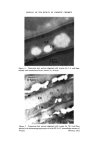
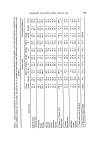
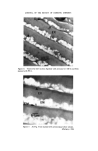
294 JOURNAL OF THE SOCIETY OF COSMETIC CHEMISTS ENDO B- Soluble fraction obtained by taking the insoluble material remaining after trypsin treatments for 10 days and digesting it in pronase for 5 days. NB. In the case of all the soluble fractions appropriate corrections were made to the amino acid analyses for the contributions due to the presence of the enzymes. All the data listed in columns 1-7 of Table I were obtained from duplicate amino acid analyses of the various fractions. Although not listed, analyses were also obtained for all the corresponding insoluble fractions and of soluble material obtained by digesting with pronase for 5 days the insoluble material remaining after trypsin treatment for 15 h. It is worthy of mention that the analyses of the soluble fractions inferred by taking the appropriate differences in analysis of these additional fractions were in general agreement with the more accurate direct analyses for the corresponding fractions shown in Table I. In the last three columns of Table I are reproduced for comparative purposes the analyses for various fractions obtained by Bradbury and Ley (3) in their work on the pronase digestion of wool cuticle. DISCUSSION Since several distinct subfractions of the human hair cuticle have been identi- fied in the present work it is convenient to subdivide most of this discussion according to the morphological origins of the subfractions. (a) Whole endocuticle (ENDO) From the electron microscope examinations of hair sections treated with pronase for 5 days it was clear that virtually all the endocuticle had dissolved and that no other cuticular components had been degraded. Only sparse material remained in the endocuticular regions and since this appeared to contain cystine at least some of it may be diffuse exocuticle. It could also contain some of the non-proteinaceous components derived from the membranous organelles of the original follicle cells, such as endoplasmic reticulum, Golgi apparatus, mitochon- dria etc. which are compressed into this part of the cell during the keratinization process. It is striking that the percentage by weight of cuticle which dissolves in pronase after 5 days (i.e. 35•o) is similar to the percentage of endocuticle in whole cuticle determined from a large number of measurements of the cross-sectional areas occupied by the same components in electron micrographs of transverse sections of untreated human hair (i.e. 33-35•o).
Purchased for the exclusive use of nofirst nolast (unknown)
From: SCC Media Library & Resource Center (library.scconline.org)