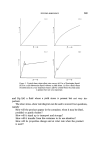
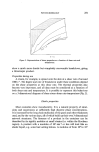
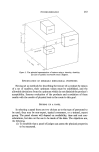
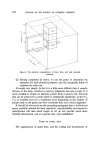
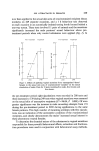
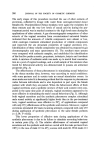
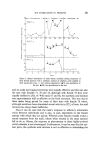
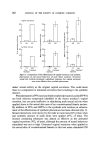
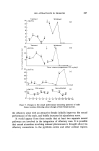
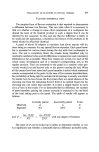
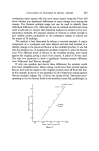
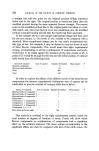
284 jOURNAL OF THE SOCIETY OF COSMETIC CHEMISTS a straight line with the point for the original product falling somewhat below and to the right. The original product is dearly less bitter than the modified product having the same apparent flavour strength. The nearest point on the modified product line to the original point was taken as a suit- able match and when that flavour level was substituted into the modified product consumer testing showed that the match had been successful. In the example above a very simple experimental design had been used for the test creams, i.e. five levels of one variable to be compared with a standard. More complicated designs can be very easily incorporated into this type of test. For example, it may be desired to test two levels of each of three flavour components. This would mean that eight experimental creams, corresponding to all the combinations of components and levels, would have to be tested against the standard giving nine creams in all. A panel of 27 would be enough for this test and the initial analysis of variance table would have the following form: Source of variation Sum of squares Degrees of freedom Mean square F Between toothpastes ........... 8 ........... Between panel members ........... 26 ............ Error ............. 208 ........ Total ............. 242 In order to explore the effects of the different levels of the three flavour components the between experimental toothpastes sum of squares can be subdivided to give the analysis of variance table shown below. Source of variation Between levels of component 1 ......... Between levels of component 2 ......... Between levels of component 3 ......... Interactions: Component 1 x Component 2 .......... Component 1 x Component 3 .......... Component 2 x Component 3 .......... Components 1 x 2 x 3 .......... Error (from previous table) .......... Sum of squares Degrees of freedom Mean square F 1 1 1 1 208 This analysis is confined to the eight experimental creams, hence the total number of degrees of freedom of seven. F-tests will show which flavour components or combinations of components had a significant effect on the attribute analysed. The mean ratings corresponding to the significant effects can then be compared with that of the ninth cream, the

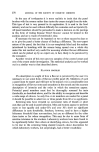
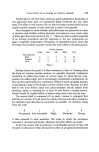
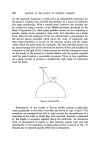
EVALUATION OF FLAVOURS IN DENTAL CREAMS 285 standard, using the Duncan multiple range test described above. A nearest match to the standard can easily be worked out on this basis. Extending the method further, even more complicated experimental designs can be used for the toothpastes, such as Simplex or star designs (14). Regression analysis can be used to fit equations relating the main rating scores to all the variable flavour component levels. The fitting of such regression equations will be valid only if a significant effect between toothpastes has been shown by the initial analysis of variance. Linear programming can be used to determine the nearest match to a standard over all the relevant flavour questions although this will only work if all the regression equations are first order, i.e. correspond to straight lines, planes or hyperplanes. Curvature due to higher order terms leads to com- plications and the best method of choosing a match in this case is by inspection. When large experimental designs are used it will be necessary to test a great number of creams. It will no longer be possible to use a complete randomized block as the basic design for the panel. This can, however, be overcome by the use of incomplete block or lattice designs in which each panel member need use only a few out of the many experimental creams, and the duration of the panel reduced once more to more manageable proportions (14). It is quite possible for any member of a simplified flavour description panel to clean his teeth five or six times a day without impairing his ability to judge flavour notes and intensities. An average panel can, therefore, be completed in three or four days. Should any panellist drop out of the test it is quite permissible to estimate his missing ratings using the recognized method of calculating missing values for the particular panel design used 02). The simplified flavour description panel is, therefore, quick and easy to run. Analysis of the results can be as complicated as desired and depends only on the experimental design chosen for the test creams. FLAVOUR ACCEPTABILITY TESTS Flavour acceptability is more difficult to test than flavour description. The test method described above can, however, be adapted for this purpose by modifying the questionnaire and ensuring that panels are larger and more representative of the toothpaste-using population. Usually only one
Purchased for the exclusive use of nofirst nolast (unknown)
From: SCC Media Library & Resource Center (library.scconline.org)