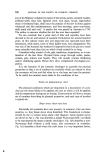
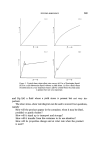
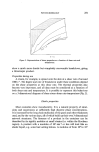
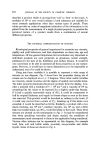
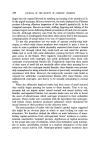
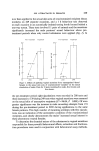
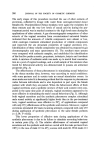
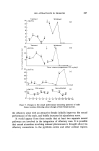
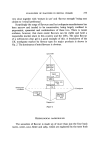
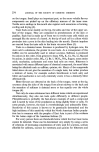
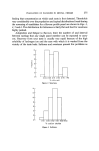
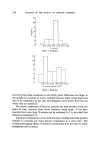
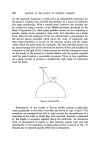
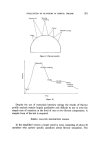
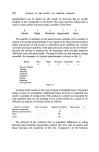
280 JOURNAL OF THE SOCIETY OF COSMETIC CHEMISTS for the observed sensations. At this point an independent supervisor for the panel is essential since forceful personalities on a panel can influence this stage considerably. With a trained panel, however, this problem can be avoided by using a version of the Delphi technique developed by the Rand Corporation (11). Each panel member carries out his evaluation in private, noting down sensations, time order and intensities on a blank form. After the first tasting the forms are collected and a questionnaire for the second tasting compiled which shows the order of sensations with their mean intensities as scored on the previous session and the ranges within which the panel rated the intensities. The panel member carries out his second tasting with all this information in front of him and modifies his evaluation in the light of this. Questionnaires for the third tasting are based on the results of the second in a similar fashion and the process repeated until the panel reaches a reasonable consensus. Three or four repetitions are usually enough to produce a satisfactorily tight range of evaluations from the panel. Peppermint Figure 8. Odour profile. Presentation of the results of flavour profile analysis traditionally made graphically in the form of profiles are shown in Figs. 8 and 9. The sensations are arranged from left to right around the circumference of a semicircle in the order in which they were recorded. Intensity is indicated by the length of sensation segment above the semicircle. An alternative form of presentation is merely to plot intensity against time and add descriptions of the sensations at appropriate points as shown in Fig. 10. Results can be depicted equally effectively as histograms.

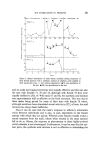
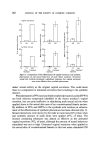
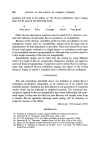
EVALUATION OF FLAVOURS IN DENTAL CREAMS 281 Peppermlni Burning lx -numbing holky ooih-syrupy Figure 9. Flavour profile. Peppermint Burning-numbing C halk-•.___ Smooth• texture Bitter -burning -cooling• Sweet ? Time Figure 10 Despite the use of numerical intensity ratings the results of flavour profile analysis remain largely qualitative and difficult to use in even the simple case of variation in the level of one or two flavour components. A simpler form of the test is required. SIMPLE FLAVOUR DESCRIPTION PANELS In the simplified version a larger panel is used, consisting of about 30 members who answer specific questions about flavour sensations. The
Purchased for the exclusive use of nofirst nolast (unknown)
From: SCC Media Library & Resource Center (library.scconline.org)