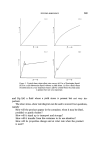
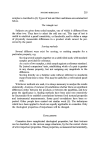
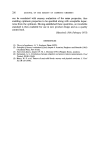
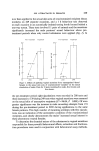
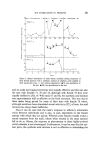
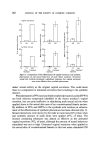
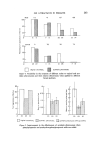
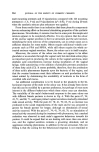
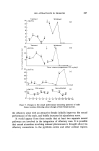
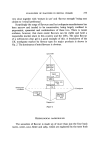
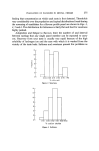
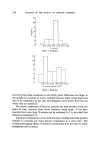
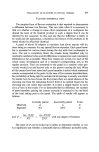
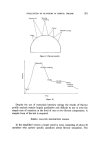
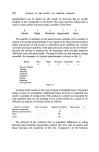
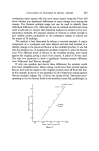
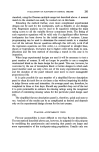
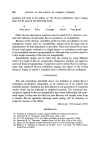
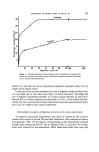
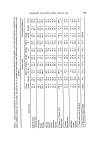
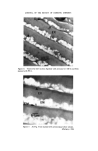
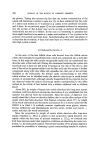
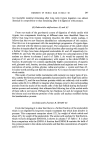
SEX ATTRACTANTS IN PRIMATES 263 IOO 6o 2o o N 100 2O v•ale 41 67 68 113 6 5 7 5 20 26 22 24 Zemale 76 74 78 21 26 7 8 71 23 22 ]•] Vaginal secretians •'• Synthetic pheramones Figure 4. Variability in the response of different males to vaginal and syn- thetic pheromones and their relative effectiveness when applied to different female partners. 80 .• 6o ,• 40 .•_ -- • 20 -• 0.75 B 0,5 -•. e- • 0.25 0 20 69 20 0 N 20 69 20 • 12 0-- 20 69 20 I-• Vaginal secretions [• Synthetic pheromones i:i• Synthetic pheromones+PPA and HPPA Figure 5. Improvement in the effectiveness of synthetic pheromones when phenylpropanoic and parahydroxyphenylpropanoic acids are added.

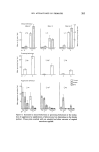
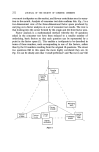
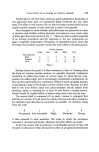
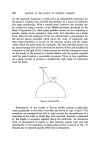
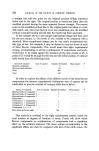
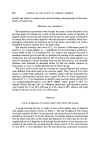
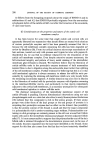
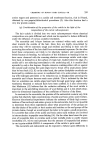
264 JOURNAL OF THE SOCIETY OF COSMETIC CHEMISTS male mounting attempts and 15 ejaculations compared with 123 mounting attempts (t= 1.6, P ns) and 9 ejaculations (Z2=0.82 P ns) during 20 tests when the synthetic mixture plus enhancers was applied. From these results there is an indication that these phenolic components have an enhancing effect on the sexual stimulating properties of the synthetic pheromones. Nevertheless, it remains true that in some pairs the simple acid mixture appears to be completely effective. It is my opinion that the odour of the oestrus vaginal secretion is the true attractant and the acid mixture, mimicking the most odorous of the components, can in certain cases act as sufficient stimulus for some males. Others require additional volatile com- ponents such as PPA and HPPA, while still others require the whole un- treated oestrous vaginal secretion. Hence, the odour cue is in itself complex. Moreover, the source of the odour cue does not appear to be either glandular or an exudate through the vaginal wall, but microbial action plays an important part in producing the odours in the vaginal secretions, since aliphatic acid concentrations increase during incubation of the vaginal lavage, while autoclaving or the addition of penicillin prevents production of these fatty acids (12). It seems probable, therefore, that the production of these acidic pheromones depends upon the bacteria of the vagina, and that the ovarian hormones exert their influence on acid production in the intact animal by determining the availability of nutrients in the form of cornified cells and mucus. An additional complication is to be found in the plasticity in the be- havioural response of the male to the odour cue. It has already been shown that this can be modified by a partner preference, but perhaps of even more interest is the different behaviours which these odour cues can sitmulate. The variability of the male's behavioural response to the same odour cue with different female partners is shown in Fig. 6. With the pairs 67, 76 41, 71 and 68, 71, oestrogen primed vaginal secretions markedly sitmulated male sexual activity. With the pairs 67, 78 41, 79 68, 78, an increase was produced in the social responsiveness of the male and he was prepared to groom his female partner for longer, although no sitmulation of sexual activity occurred. With the pairs 67, 74 41, 79 68, 78, no stimulation of sexual activity occurred during the treatment with pheromone, but a marked reduction was observed in each male's aggressive behaviour towards his partner. It could be argued that we are dealing with more than one odour cue, and the vaginal secretion contains a grooming stimulant, and an aggression reducing pheromone, in addition to the sex attractant. My own feeling is that the coding for the behavioural response is not restricted to
Purchased for the exclusive use of nofirst nolast (unknown)
From: SCC Media Library & Resource Center (library.scconline.org)