J. Soc. Cosmet. Chem., 27, 333-344 (August 1976) Inhibition of palmar skin conductance in mice by antiperspirants relative anhidrotic activities RENE MARCY, M.D., D. PHARM. and MARIE-ANNE QUERMONNE, D. PHARM.* Synopsis-In order to systematically test the ANHIDROTIC ACTIVITIES of potential ANTIPERSPIRANTS in relation to a standard or to cross-co•npare various formulations, an experimental method that uses mice was developed. The antiperspirant was applied to footpads with a rotating applicator which was gripped by mice thus preventing the animals from removing it by grooming. The anhidrotic effect was evaluated by lowering PALMAR SKIN CONDUCTANCE. T'his was read wi•h a conductance-meter built so that the mice the•nselves could grasp the electrodes by reflex action. Several topical an- hidrotics were tested to determine the intensity, duration, and after washing persistence of their anhidrotic activity. The calculation of the concentrations, which inhibit sweating by 50 per cent (weight/volume and molar anhidrotic concentrations 50) and of the rela- tive activities, allows the objective comparison •of the anhidrotics. Reliability and utility of the test are discussed in this paper. INTRODUCTION In testing antiperspirant formulations, different procedures may be used (1-5). A paper (6) concerned with skin conductance measurement failed to show any activity of locally applied aluminum salts, so doubt was cast on this type of method (2). However, we have recently developed (7-9) a method measuring palmar skin conductivity in mice in relation to palmar sweating. Consequently, this has been extended to antiperspirant testing, and a short preliminary note (10) has been published. *Dennopharmacological Department, Pharmaceutical Sciences Unit and Institute of Dermobiology and Cosmetodynamics, The University, 14032 Caen-Cedex France. 333

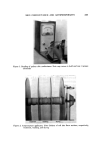
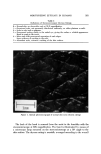
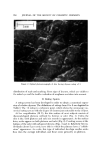
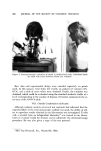
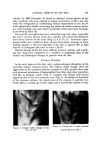
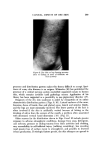
334 JOURNAL OF THE SOCIETY OF COSMETIC CHEMISTS MATERIALS AND METHODS Animals Swiss Orl mice* were kept in our laboratory for 4 days. The animals were given a continuous water supply and a standard diet (standard rat food pel- lets number 103-UAR 913601). Animals of both sexes were used indiscrimi- nately because we had previously (8) established that males and females respond in a similar way. When their weight reached 16 to 20 g, the mice were randomized into groups of 10 or 20. A different group was used with each concentration of the chemical tested. Antiperspirants The following chemicals were used, dissolved in distilled water at the con- centrations noted in brackets: tannic acid (1,000, 5,000, and 20,000) trichloracetic acid (500, 1,500, and 5,000), zinc chloride (1,000, 10,000, and 30,- 000) zinc phenolsulfonate (1,000 and 10,000), aluminum sulfate (1,000, 10,- 000, and 40,000) aluminum hydroxychloride (100, 500, 1,000 5,000, and 10,- 000) formaldehyde (500, 5,000, and 30,000) glutaraldehyde (780, 1,560, 6,250, and 25,000) and isopropamide iodide (100, 250, and 1,000). All concen- trations are weight/volume (mg/100ml). Mouse Palmar Skin Conductance Meter A special apparatus, which has already been fully described (7-8), was used to evaluate the palmar skin conductance. The essential feature of this apparatus is the two electrodes, which are installed at a height of 17 cm above the work surface (Fig. 1). The de current (4.5 V, 15 to 20/xA) is to- tally painless. Topical Solutions Applicator To apply the topical solutions to the palmar skin, we used a rotating ap- plicator. This apparatus was comprised of a horizontal rod 30 mm in diam- eter and 180 mm in length 4 plates perpendicular to the rod to divide it into 3 partitions. The rod w• covered with 12 thicknesses of surgical gauze. From left to right, the 3 partitions were, respectively, treatment, washing, and dry- ing partitions. The gauze in the first partition was soaked with a topical solu- tion to be tested and the gauze in the second partition was soaked with dis- stilled water. The gauze in the third partition was left dry. The rotating rod was turned by an electric motor at 17 rpm (Fig. 2). *Elevage Charpentier, 14320 Fontenay-le-Marmion, Caen, France. ?Villemoissen-sur-orge, France.
Purchased for the exclusive use of nofirst nolast (unknown)
From: SCC Media Library & Resource Center (library.scconline.org)