35-2 JOURNAL OF THE SOCIETY OF COSMETIC CHEMISTS across isolated stratum corneum and in vivo measurement of transepidermal moisture loss have been used by several authors as an index of moisturizing efficacy (1, 2, 3, 4, 5, 6). Laden and Morrow (7), Park and Baddiel (8, 9), and Reiger and Deem (6, 10) studied the rheology of the stratum comeurn in re- lation to its water content. The water binding capacity of the stratum corncure has been thoroughly investigated (11, 12, 13, 14). The efforts of the above in- vestigators have stimulated research on moisturization and increased our knowledge concerning the dynamics of stratum corncure water. However, these techniques are not suitable for screening large numbers of ingredientg and cosmetic formulations for moisturizing efficacy, for reasons which will be discussed later. Additionally, they do not directly relate to the signs of dry skin, familiar to many consumers. Johnson et al. (15) and Gibson (16) in clinical studies, developed rating systems for determining the severity of dryness of volunteers' hands. Scaling, cracking, and redness were used as criteria of dryness. Because the paramet- ers studied by Johnson et al. and Gibson relate directly to the signs of dry skin as they are experienced by the consumer, their use in the assay of mois- turizers designed to combat this problem is indicated. The subject of the present paper is the development of a stereomicro- scopic test for moisturizing agents, which is based upon their ability to overcome soap-induced dry skin, using the back of the hand as the substrate. The following definitions are fundamental to the development of this tech- nique. 1. Dry skin is a condition characterized by the presence of upraised edges of groups of stratum corncure cells, which reflect or refract light in a manner that is different from normal skin. 2. A moisturizer is an ingredient or product which prevents or alleviates the signs of dry skin. By means of the procedure described here, any type of ingredient or for- mulation can be tested, regardless of water content, using relatively small panels of individuals who are prone to the development of dry skin. This per- mits the ranking of ingredients or products in order of their effectiveness and head to head comparison of two or more products for moisturizing efficacy. Results obtained using the stereomicroscopic procedure have been corrobo- rated by an independent testing laboratory. EXPERIMENTAL DESIGN AND RESULTS I. Stereomicroscopic Evaluation of Hands It is essential that one uses trained observers for the stereomicroscopic evaluation of dryness. It has been our experience that up to 3 weeks of train- ing may be required before dependable results are obtained.

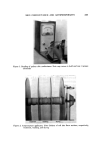
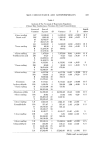
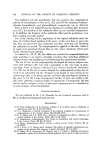
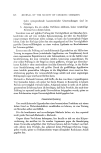
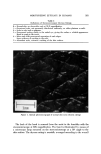
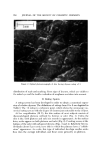
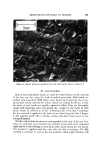
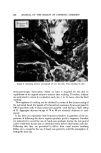
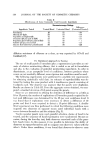
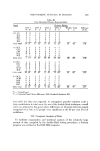
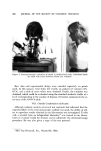
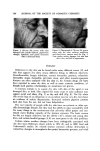
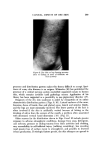
MOISTUBIZING EFFICACY IN HUMANS Table I Definitions of Stereomicroscopic Dryness Batings 353 0 • Normal skin, no observable scale at 30 X magnification. I = Occasional scale, not necessarily distrilmted nniformly, on either plateaus or sulci. 2 • Scale in sulci and on plateaus. 3 = Pronounced scaling visible to the naked eye, giving the surface a whitish appearance. Hand is rough to the touch. 4 = More scale with pronounced separation of scale edges. Some evidence of cracking in the sulci. 5 = Abundant scale, extensive cracking of the skin surface. Figure 1. Optical photomicrograph of normal skin (zero dryness rating) The back of the hand is scanned from the wrist to the knuckles with the stereomicroscope at 30X magnification. The hand is illuminated by means of a microscope lamp mounted on the stereomicroscope at a 30 ø angle to the skin surface. The dryness rating is mentally averaged according to the overall
Purchased for the exclusive use of nofirst nolast (unknown)
From: SCC Media Library & Resource Center (library.scconline.org)