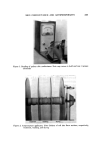
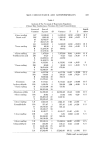
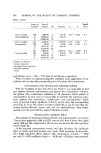
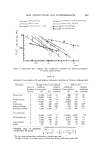
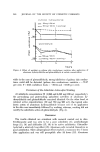
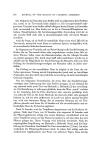
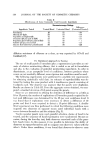
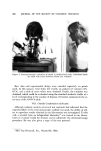
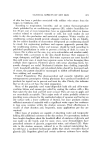
358 JOURNAL OF THE SOCIETY OF COSMETIC CHEMISTS Table II Effectiveness of Some Commonly Used Cosmetic Ingredients Ingredients Tested Stereomicroscope Balings Difference Treated Hand Untreated Hand (Untreated-Treated) Petrolatum 18 Mineral oil-light 24 Vegetable oil triglyceride 42 Glycerine (25 per cent in H20) 34 Propylene glycol (25 per cent in H.) 71 Sorbitol (25 per cent in H_o0) 73 Silicone fluid (dhnethyl polysiloxane) 58 72 +54 73 +49 76 +34 68 +34 70 -- 1 87 +14 78 +20 diffusion resistance of silicones as a class, as was reported by O'Neill and Goddard (17). \71. Statistical Approach to Testing The use of small panels (5 members plus a supernumery) provides an esti- mate of relative moisturizing efficacy, that is useful as an aid to formulation and also, in the evaluation of potential moisturizing ingredients. In order to discriminate, at an acceptable level of confidence, between products whose scores are not markedly different, more rigorous test conditions must be used. The following experiments were performed to establish test requirements for obtaining statistically valid data. An estimate of reproducibility was ob- tained by testing the same product with 4 simultaneous panels consisting of 5 subjects each. The observer was unaware that the panels were duplicates. Results are shown in Table III. From the aggregate scores obtained, we com- puted a standard deviation of 6.8 points among the panels. Since we are interested in refining the detection of difference to as little as 10 or 15 points, the number of replications of 5-member panels required to de- tect such differences •vas determined for the 95 per cent confidence level. It was found that 5 replications were necessary to detect a difference of 10 points and that 2 were required to detect a 15-point difference. A double- blind experimeut was then performed in which the following conditions were imposed: two observers in separate rooms rated individual hands with a screen between themselves and the subjects (Fig. 5). Twelve-member panels were used panelist selection, choice of hand to be treated, and the sequence of hand examination were randomized. On one oc- casion, during the four-day test, both observers examined each of the pane- list's hands twice. In this manner, it was possible to determine the ability of observers to repeat themselves and to compare one observer's values with the other's. Under these conditions, it was found that observer-to-observer error

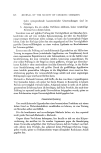
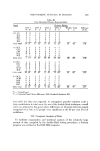
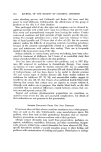
MOISTURIZING EFFICACY IN HUMANS 359 Table III Five-Membered Panels-Reproducibility Panel DAY 1 T ß U • DAY 9. DAY 3 T U T U Dryness Rating DAY 4 Weekly Total T U T U Differene (U-T) #l I.e. 9, 9. R.N. 4 3 R.C. 4 4 T.V. 5 3 B.H. 1 2 Daily total 16 14 -.•2 H.Z. I 4 C.G. I 1 J.M. 9. 1 R.A. 3 4 w.s. '2 3 Daily total 9 1:3 •3 H.C. 4 3 R.G. 3 3 A.C. 2 3 W.M. I 3 M.U. 3 4 Daily total 1•' 1•- #4 M.Y. 3 4 W.W. 2 0 M.H. 2 3 R.H. 3 2 H.C. 1 9. Daily total 1•' 1•- I 4 3 4 5 4 4 5 4 0 3 0 oe 5 2 11 22 13 1 4 3 3 4 15 5 3 4 4 5 21 3 5 4 5 3 5 2 5 3 5 15 25 5 1 4 5 5 5 5 4 5 4 1 3 5 0 5 24 11 22 2 5 0 5 1 5 1 4 2 5 3 5 2 5 4 5 2 5 3 5 10 9.5 11 24 3 5 4 5 2 5 0 4 3 5 2 5 2 5 2 5 1 5 1 5 11 25 9 24 3 5 1 4 I 5 3 5 3 5 I 5 I 5 0 5 1 5 1 3 I 4 I 2 0 4 0 3 0 5 8 22 5 21 4 22 51 82 +31 45 83 +38 48 90 +42 29 76 +47 '•T = Treated hand. bU = Untreated hand: Mean difference: 39.5 Standard deviation: 6.8. xvas nluch less than was expected. As anticipated, panelist variation made a large contribution to total error. By use of the double-blind technique, overall error was reduced to the point where differences of 10 points between panels colnprised of as few as 19, people were significant at the 95 per cent level of confidence. VII. Computer Analysis o[ Data To facilitate organization and statistical analysis of the relatively large amount of data compiled by the double-blind testing procedure, a Fortran program was written for the IBM 1800 computer.
Purchased for the exclusive use of nofirst nolast (unknown)
From: SCC Media Library & Resource Center (library.scconline.org)