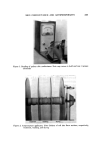
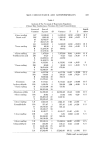
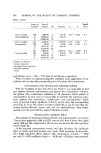
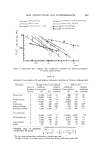
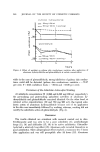
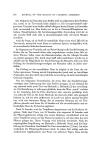
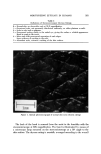
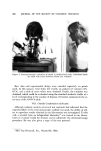
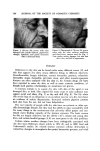
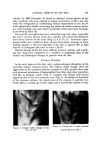
360 JOURNAL OF THE SOCIETY OF COSMETIC CItEMISTS Figure 5. Stereomicroscopic evaluation of hands in double-blind study. Individual hands are rated vith screen bet veen subject and evaluator Raw data and experimental design were encoded separately on punch cards. In this manner, total 4-day test results, an analysis of variance (AN- OVA), and a table of mean values were obtained. Finally, the t-statistic was obtained, which could be evaluated using the standard student's t-table at a level corrresponding to the number of degrees of fl'eedom contained in the er- ror term of the ANOVA table. VIII. Outside Confirmation of Results Although replicate analysis of several test materials ha.d indicated that the reproducibility of the stereomicroscopic method was good, the ability of oth- ers to reproduce results obtained in our laboratories was investigated. To this end, a scientist from an independent laboratoLl* was trained in our labora- tories to evaluate hands for dryness and to administer the stereomicroscope procedure. He was also given a copy of the test protocol. *Hill Top Research, Inc., Mianfiville, Ohio.

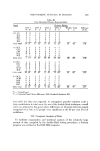
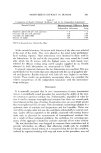
MOISTURIZING EFFICACY IN HUMANS 361 Table IV Comparison of Resnlts Obtained "In-House" and by An Independent Laboratory a Material Tested Stereomicroscopic Difference Rating Independent Laboratory Avon Propylene glycol (25 per cent aqueous) Clyeerine (25 per cent aqueous) Vegetable oil triglyceride Mineral oil (light) --7 +31 +34 4-24 4-34 +31 +49 "Hill Top Research, Inc. Miamiville, Ohio. At the outside laboratory, 54 women with histories of dry skin were selected at the start of the study. They were placed on the usual 4-day preliminary hand washing regimen. Their instructions were identical to those used in our laboratories. At the end of the test period, they were rested for i week after which the 48 women with the highest scores on both hands were selected for efficacy testing using coded samples supplied by us. Results obtained in both laboratories are summarized in Table IV. In general, agreement between the two laboratm4es was excellent. This was particularly true for results that were obtained with the use of propylene gly- col and glycerine. Results obta ned with both oils xvere higher in our labo- ratories. These results are particularly encouraging when one considers the relative inexperience of the independent laboratory with the stereomicro- scope technique. Discusslox It is generally accepted that 'in vivo' measurement of water transmission rates is a scientifically sound procedure for measuring the ability of the strat- um corneum to prevent moisture loss. Unfortunately, regardless of what de- vice is used to measure transepidermal moisture loss, there are several prob- lems inherent in this type of testing. Perspiration rates are severalfold greater than transepidermal loss of water. This necessitates maintaining subjects in a quiescent state at constant cool temperature and low humidity. Water con- tent of the sample under test can also contribute substantially to control read- ings. Laden (18) has reported on the pitfalls associated with testing humec- tants such as •lycerine by measurement of transepidermal moisture loss. As a result of these technical problems, the usefulness, for screening pur- poses, of this approach is limited to occlusive materials of low water content. The test described here was designed to overcome these restrictions and to provide information on efficacy that otherwise would only be available, through extensive clinical testing. It is recognized that the dry skin condition, induced by repeated washing with soap and water in this procedure, may not
Purchased for the exclusive use of nofirst nolast (unknown)
From: SCC Media Library & Resource Center (library.scconline.org)