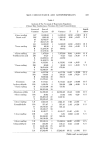
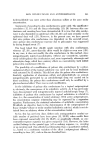
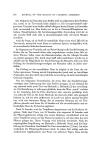
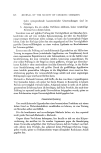
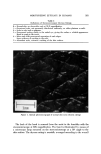
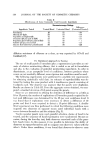
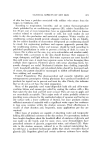
SKiN CONDUCTANCE AND ANTIPEBSPIRANTS Table I Analysis of the Variance of Begression Equations Pahnar Skin Conductance Variation Per Cent/Concentration 337 Source of Sum of Variation Squares df '• Variance F Signffi- canoe 4-hour reading Tannic acid 7-hour reading LR b 11,392.00 1 11,392.00 19.52 DR c 1,203.22 1 1,203.22 2.06 R a 15,752.07 27 583.41 T"28,347.29 29 LR 6,165.22 i 6,165.22 14.80 DR 62.38 i 62.38 0.14 R 11,243.34 27 416.42 T 17,470.94 29 0.001 O.O5 0.001 0.20 HS NS HS NS 4-hour reading Trichloracetic acid 7-hour reading LR 7,875.89 1 7,875.89 18.81 DR 97.27 1 97.27 0.23 R g3,859.63 57 418.59 T 31,832.79 59 LR 4,332.01 i 4,332.01 6.40 DR 80.68 i 80.68 0.11 R 38,534.28 57 676.04 T 42,946.97 59 o.ool 0.20 o.o5 0.20 HS NS S NS 4-hour reading Aluminum hydroxychloride 7 hour reading LR 4,617.56 1 4,617.56 24,03 DR 344.55 2 176.27 0.89 R 6,916.32 36 192.12 T 11,878.43 39 LR 9,734.23 i 9,734.23 22.27 DR 1,056.59 2 528.28 1.20 R 15,733.08 36 437.03 T 26,523.90 39 0.001 O.2O 0.001 0.20 HS NS HS NS Aluminum sulfate 4-hour reading LR 24,558.25 i 24,558.25 23.46 DR 10.82 I 10.82 0.01 R 28,269.36 27 1,047.01 T 52,838.43 29 0.001 H S 0.20 N S 4-hour reading Formaldehyde 7-hour reading LR 3,824.16 i 3,824.16 DR 571.67 i 571.67 R 30,849.54 57 541.22 T 35,245.37 59 LR 6,140.17 i 6,140.17 DR 3.39 1 3.39 R 29,992.83 57 526.19 T 36,136.39 59 7.06 0.05 S 1.05 0.20 N S 11.66 0.01 S 0.006 0.20 N S 4-hour reading Glutaraldehyde LR 29,540.14 1 29,540.14 DR 204.86 2 102.43 R 34,013.80 76 447.55 T 63,758.80 79 LR 27,242.88 i 27,242.88 66.OO 0.001 H S 0.22 0.20 N S 59.72 0.001 H S ('Fable con't on next page)

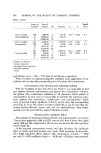
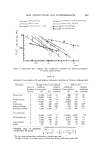
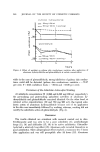
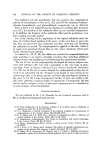
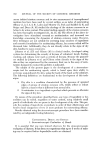
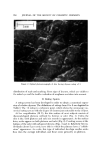
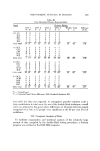
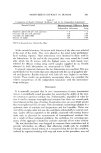
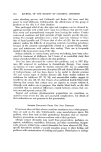
338 JOURNAL OF THE SOCIETY OF COSMETIC CHEMISTS Table I (con't) Source of Sum of Signifi- Variation Squares df a Variance F P cance 7-hour reading DR 1,954.76 2 977.38 2.14 •0.20 (Glutaraldehyde) R 34,668.16 76 456.16 T 63,865.80 79 NS 4-hour reading LR 4,798.82 I 4,798.82 11.39 0.01 Isopropamide DR 176.85 i 176.85 0.41 •0.20 R 11.371.32 27 421.16 T 16,346.99 29 LR 8,507.76 I 8,507.76 14.34 0.001 7-hour reading DR 932.08 i 932.08 1.57 • 0.20 R 16,017.21 27 533.23 T 25,457.05 29 S NS HS NS Degrees of Ireedom. Linear regression. Deviation from regression. Residual variation. Total. and 2.40 per cent (- 2.88, + 7.70) after 15 and 30 min, respectively. When sweating was pharmacologically inhibited, local application of an- hidrotics did not alter the corresponding level of palmar skin conductance. Concentration of the Solutions and Anhidrotic Activity With the exception of zinc derivatives, for which it was impossible to find any relation between concentration and palmar skin conductance variation, the palmar skin conductance inhibition of all chemicals tested related to concentration. In most cases, it was possible to calculate the regression equa- tions "palmar skin conductance variation/per cent concentration," which were, in general, highly significant (Table I) and to draw the corresponding lines (Fig. 3). From the relative activities (Table II), it can be seen that alu- minum hydroxychloride, tam•ic acid, and the anticholinergic drug isopro- pamide were the most effective topical anhidroties tested. Duration of the Anhidrotic Effect The activities of aluminum hydroxychloride and isopropamide were greater 7 hours after application (369 and 455, respectively) than 4 hours after appli- cation (100 and 164, respectively). The reverse was true for the other products tested (Table II). At the maximal concentration tested, and after 24 hours, the anhidrotie effect of tannic acid had become very weak. With aluminum hydroxychlo- ride, slight anhidrotic effects (palmer skin conductance variation =- 19.26 per cent, P = 0.05 confidence limits = - 10.16 and -28.36 per cent) persisted,
Purchased for the exclusive use of nofirst nolast (unknown)
From: SCC Media Library & Resource Center (library.scconline.org)