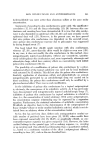
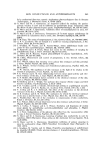
SKIN CONDUCTANCE AND ANTIPERSPIBANTS 343 (11) (12) (13) (14) (15) (16) (17) (18) (19) (20) (21) (22) (23) /24) (25) (26) (•,7) (28) (32) de la conductivit6 61ectrique cutan6e. Applications phannacologiques dans le domaine cholinergique, J. Pharmacol. (Paris), 4, 69-80 (1973). (8) R. Marcy and M. A. Quermonne, An improved method for studying the psycho- galvanic reaction in mice and its inhibition by psycholeptic drugs. Comparison with the effects of other pharmacological agents, Psychopharmacologia, 34, 335-49 (1974). (9) R. Marcy and M. A. Quermonne, An.hidrotic effect of benzodiazepines in mice, Ex- perientia, 30, 783-4 (1974). (10) R. Marcy and M. A. Quermonne, Comparaison de l'activit• topique anhidrotique de trois d6riv6s de l'aluminium ehez la souris, Ann. Dermatol. Syphiligrie, 101, 288-90 (17'/4). C. M. Papa, The action of antiperspirants, I. Soc. Cosmet. Chem., 17, 789-800 (1988). A. B. G. Lansdown, The rat footpad as a model for examing antiperspirants, I. Soc. Cosmet. Chem. 24, 677-84 (1973). J. Sivadjian, M. Vautrin, and H. Vautrin-Matge, Action anhidrotique locale eom- par6e de deux antiehlinergiques, Thdrapie, 22, 1015-20 (1967). E. Kaszynski and S. B. Friseh, Mouse foot screen for the inhibition of sweating by anticholinergic drugs, ]. Invest. Dermatol., 62, 510-13 (1974). L. Juhlin and H. Hansson, Topical glutaraldehyde for plantar hyperhidrosis, Arch. Dermatol., 97, 327-30 (1968). M. Uttley, Measurement and control of perspiration, J. Soc. Cosmet. Chem., 23, 23-43 (1972). R. C. Wi]cott, Palmar skin sweating versus pahnar skin resistance and skin potential, J. Comp. Physiol. Psychol., 55, 327-31 (1962). R. C. Wilcott, Arousal sweating and electrodennal phenomena, Psychol. Bull., 67, 5'8-72 (1967). C. W. Darrow, The significance of skin resistance in the light of its relation to the mnount of perspiration, J. Gert. Psychol., 11, 451-2 (1934). P. E. Thomas and I. M. Korr, Relationship between sweat gland activity and elec- trical resistance of the skin, J. Appl. Physiol., 10, 505-10 (1957). C. P. Richter, Physiological factors involved in the electrical resistance of the skin, Amer. J. Physiol., 88, 596-615 (1929). R. Edelberg and D. J. Wright, Two galvanic skin response effector organs and their stimulus specificity, Psychophysiology, 1, 39-47 (1964). P. H. Venables and M. J. Christie, Electrodermal activity in psychological research, W. E. Prokasky and D.C. Raskin, ed., Academic Press, Oxford, 1973, Pp. 1-124. F. Aveling and R. J. S. McDowall, The effect of the circulation on the electrical resistance of the skin, J. Physiol. (London), 60, 316-21 (1925). H. B. Densham and H. M. Walls, The mechanism by which the electrical resistance of the skin is altered, Quart. J. Exp. Physiol. Cog. Med. Sci., 18, 175-84 (1927). A. Woolicy-Hart, The role of the circulation in measurements of skin conductivity, British J. Dermatol., 87, 213-226 (1972). R. C. Wilcott, Effects of local blood removal on skin resistance and potential, J. Comp. Physiol. Psychol., 51, 295-300 (1958). K. J. Collins, F. Sargent, and J. S. Weiner, Excitation and depression of eccrine sweat glands by acetylcholine acetyl-fi-methylcholine and adrenaline, J. Physiol. (London), 148, 592-614 (1959). (29) B. J. Prout, Independence of the galvanic skin reflex from the vasoconstrictor reflex in man, J. Neurol. Neurosurg. Psychiat., 30, 319-24 (1967). (30) R. Marcy and M. A. Quermonne, Lowering of pahnar skin conductivity in mice by ephedrine, IRCS (Pharmacol. Drugs acting on the Autonomic Nervous System), 73-4, 7-8-5 (1973). (31) R. Marcy and M. A. Quennonne, Quantitative inhibition of palmar sweating in mice by a-adrenolytic drugs, IRCS (Neurobiol. Neurophysiol. Basic Pharmacol.), 2, 1022 (1974). J. Sivadjian, M. Vautrin, and H. Matge, Propri6t•s neuroleptiques et anhidrotiques du trip6ridol (R.2498). Etudes pharmacologiques et hygrophotographiques, Therapie, 18, 1279-85 (1963).

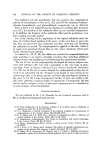
344 JOURNAL OF THE SOCIETY OF ,COSMETI,C CHEMISTS (33) (34) (35)• (36) (37) (38) (39) (40) (41) (49.) (43) j. Sivadjian, M. Vautrin, and H. Vautrin-Matge, Etudes n•urophysiologiques sur la s•cr•tion sudorale. Introduction •t rhidrophannacologie, Th•rapie, 20, 1389-1402 (1965). J. Sivadiian, Hygrophotographische Untersuchungen kosmetischer Mittel insbesondere Antihidrotike, Pattiira. Kosmet, 46, 162-6 (1965). M. M. Blozovski and J. Sivadjian, Action de la s•rotonine, de la r•serpine et d'autres agents l•harmacologiques sur la s6cr6tion sudoral. Etudes hygrophotographiques, Arch. Int. Pharmacodyn. Then, 123, 58-66 (1959). G. W. Fredell and J. Longfellow, Evaluating antiperspirant and deodorant products, J. Soc. Cosmet. Chem., 9, 108-11 (1958). R. S. Alphin, J. A. Vecac, D. Saunders, and J. W. Ward, Effects of some lignosulfo- nates on sweat gland activity, I. Pharm. Sci., 58, 902-3 (1969). E. G. Helton, E. W. Daley, and J. C. Ervin, Zirconium oxychloride a new ingredient for antiperspirants, Proc. Sci. Sect. Toilet Goods Ass., 26, 27-31 (1956). R. J. James, A new and realistic electronic approach to the evaluation of antiperspiran activity, J. Soc. Cosmet. Chem. 17, 749-67 (1966). A. Winkler, Zur Methodik der Testung von Antitranspirantien, Fette Sei[en Anstrich., 70, 893-5 (1968). D. J. Finney, Statistical Method in Biological Assay, Ch. Griffin Ltd., London, 1952, p. 58. R. S. Alphin, D. Saunders, and J. W. Ward, Method for the evaluation o{ an. hidrotic substances in the anesthetized cat, J. Pharm. Sci. 56, 449-52 (1967). H. Hayashi, Functional activity of the sweat glands o{ the mouse, Tohoku J. Exp. Med., 95, 289-95 (1968).
Purchased for the exclusive use of nofirst nolast (unknown)
From: SCC Media Library & Resource Center (library.scconline.org)