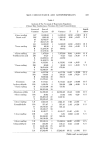
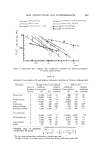
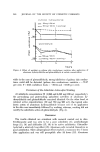
SKIN CONDUCTANCE AND ANTIPERSPIRANTS 341 hydroxychloride was more active than aluminum sulfate at the same molar concentration. Assessment of sweating by skin conductance is quite valid. The significative correlation (17, 18) and the linear relationship (19, 20) between skin con- ductance and sweating have been demonstrated. It is true that skin conduc- tance is also dependent on epidermal cells (21, 22) and most certainly on the epidermal duct wall (23). However, in the present case, we have proved that mice palmar skin conductance was dependent on the excreted sweat, since palmar skin conductance increase due to pilocarpine was suppressed by drying footpad sweat (7). The local blood flow (24-26) might interfere with skin conductance, whereas (27, 28), assert that this effect would be slight or even zero (29). In any case, it does not modify the skin conductance in this method, since intraperitoneally injected psycholeptics, without any vasoactivity, quantita- tively inhibit palmar skin conductance and, more importantly, adrenergic and adrenolytic drugs, which have contrary effects on vasomotricity, both inhibit palmar skin conductance (30, 31). The possibility of a modification of palmar skin conductance by a physi- cochemical effect of the topical anhidrotic was ruled out by local treatment with saturated Na C1 solution. This did not alter the palmar skin conductance. Similarly, application of aluminium sulfate and glutaraldehyde on animals intraperitoneally pretreated by an anticholinergic drug was carried out in these conditions, the palmar skin conductance could only be modified by a physicochemical effect. There was no such modification. So the inhibition of palmar skin conductance by a topical antiperspirant is, obviously, the consequence of its anhidrotic activity. As it has previously been demonstrated with intraperitoneally injected anticholinergic drugs (7), inhibition of palmar skin conductance by topical anhidrotics is related to dose, (i.e., the concentration of tested solutions). With active antiperspirants, the concentration response relationship may be expressed by a regression equation. Furthexna•ore, the statistica] ca]cu]ation of anhidrotic concentration 50 affords an objective basis to the determination of the antiperspirant ef- ficacy (weight/volume or molar standard anhidrotic activity), which is not ob- tained from an arbitrary choice of the concentrations tested. So far, this has not been done. Either only semiquantitative results(var- iable number of positives) have been given (13, 32-35), when results have been expressed numerically (12, 15, 36-37), or graphically (38-40), no con- centration-response equation was given except for (14). However, the latter method belongs to the quantal type (all or nothing response, i.e., sweating or no sweating)and thus affords less information than a quantitative method, i.e., based •n a continuous variation of the effect (antiperspirant efficacy) according to dose (41), such as the one described here.

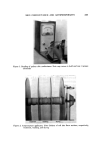
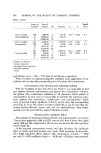
342 JOURNAL OF THE SOCIETY OF COSMETIC CHEMISTS The method is not only quantitative, but also sensitive: the antiperspirant activity of concentration as low as 0.1, 0.5, and 0.78 for aluminum hydroxy- chloride formaldehyde, and glutaraldehyde, respectively, can be detected. Since activity is not inferred from the duration of sweating after treatment as in (12), the duration of the anhidrotic effect can be recorded independent- ly. In addition, the duration of the anhidrotic effect and its persistence, even after washing, are easily studied. Use of the rotating rod for application of the topical anhidrotic takes the place of a tedious hand painting of the paws. As the mice have to grasp the rod, they are prevented from grooming and thus removing and absorbing the anhidrotic by mouth. The antiperspirant is applied on the skin, which is of much more practical interest than in (14), where chemicals tested were locally subcutaneously injected. In contrast to (12, 37, 42), the effects are recorded in unanesthetized ani- mals, and there is no need to stimulate sweating thus excluding additional sore ces of error and simplifying (and shortening) the experimental schedule. The use of mice to test antiperspirants developed for human subjects may meet with criticism (39), but such a procedure is the very basis of phar- macology. Tests on human volunteers have obvious drawbacks themselves (5). The use of the rat or mouse footpad for antiperspirant testing has al- ready been advocated (12-14). Footpad sweat glands of mice belong to the eccrine type (43), as do human glands, and their pharmacological reaction is the same (7, 13, 43). Large, homogenous batches of mice are readily avail- able, thus, allowing a rational design of experiments. Consequently, the test can be used to compare a series of potential antiperspirants to a standard or to cross-compare various formulations. ACKNOWLEDGMENTS We are indebted to Mr. J. M. E]issalde for his technical assistance and to Mr. J. Scullard for helping to draft the text. REFERENCES (1) R. Brun, Recherches sur la s•crfition sudorale et la s6crfition s•bac6e. M•thodes et expfiriences, Arch. Sci., 7, 243-302 (1954). (2) T. A. Bakiewicz, A critical evaluation of the methods available for measurement of antiperspirancy, J. Soc. Cosmet. Chem., 24, 245-258 (1973). (3) P. A. Majors and J. E. Wild, The evaluation of antiperspirant efficacy. Influence of certain variables, J. Soc. Cosmet. Chem., 25, 13-152 (1974). (4) E. Jungermann, Antiperspirants: New trends in formulation and testing technology, J. Soc. Cosmet. Chem., 25, 621-38 (1974). (5) R. Marcy, Antiperspirant efficacy testing: a critical review, Cosmet. Perrum., 90, 33- 40 (1975). (6) D. J. Perry, G. E. Mount, and J. Malimer, The effects of topically administered com- pounds on the galvanic skin response, J. Invest. Dermatol., 36, 7-9 (1961). (7) R. Marcy, M. A. Quermonne, H. Marqais, and J. C. Chateau, M•thode d'fivaluation quantitative rapide de la s•cr•tion sudorale palmaire chez la souris •veillbe par roesure
Purchased for the exclusive use of nofirst nolast (unknown)
From: SCC Media Library & Resource Center (library.scconline.org)