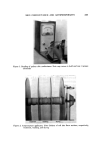
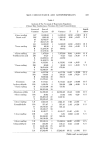
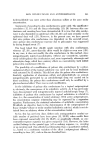
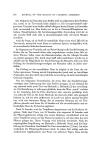
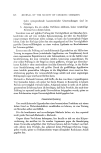
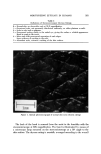
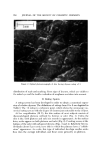
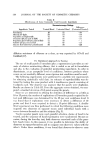
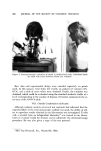
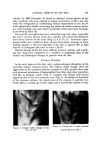
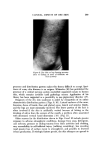
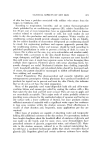
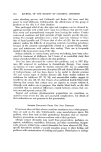
SKIN CONDUCTANCE AND ANTIPERSPIRANTS 335 Figure 1. Reading of palmar skin conductance. Note way mouse is held and way it grasps electrodes ß ...•'•, •,.• .•i ::.::• ... ::•.•,.:,::-:•:•.:•,•.•:•:::•,:?.../":5 .!:?.•?•-• V:•........... .... •.::•':• ...... ß ::.:.:' •..:•.,.•, ........ • .... • .......... • ............. . ............... •. •..•,_.•-•:: ___ •- Figure 2. Antipe•pirant applicator. Note division of rod •to three sections respectively, treatment, washing, and d•ing

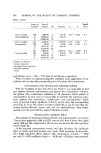
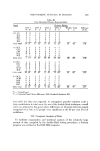
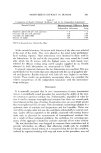
336 JOUBNAL OF THE SOCIETY OF COSMETIC CHEMISTS Method The first reading of the palmar skin conductance (ro) was taken by plac- ing a mouse held by its nuchal skin against the electrodes, which it immedi- ately grasped (Fig. 1). The rotating rod was then switched on, and the mouse was placed on the rod in the treatment partition for 30 sec. During this time, due to the rod's rotation, the mouse was forced to run on the rod to avoid falling. Depending on the particular experimental schedule, the mouse was then either placed in the washing partition for 3 min, and in the drying partition for the same length of time, or placed directly in the drying partition. New palmar skin conductance readings were taken 1, 4, 7, and, if necessary, 9,4 hours after treatment (rt = r•, r4, r7, and r24). The anhidrotic activity for each animal at the time of each reading, was calculated by the formula rt -- ro ---- x 100 ro The mean figure for a group, corresponding to a particular concentration, was then calculated. Whenever possible, the regression equation y = a log x +b (where y stood for palmar skin conductance the variation per cent and x stood for the logarithm of the concentration) was established. By taking y as- 50 per cent, the corresponding value of x (i.e., the anhidrotie eoneentratiom which lowered sweating by 50 per cent) was calculated. This figure was called anhidrotie concentration 50 and was determined in weight/ volume (m•/100 ml) and in moles. The relative anhidrotie activities (weight/ volume and molar relative anhidrotie activities) were calculated, taking the anhidrotie activities of aluminum hydroxyehloride as 100 after 4 hours. Reliability Tests Saturated Na C1 solution was locally applied to 10 mice, without washing them, according to the above described method. A reading of palmar skin conductance was taken 15 and 30 min after application. Two batches of 10 mice were (intraperitoneally) dosed with atropine sudfate (2 mg/kg). Ten min later, palmar skin conductance was recorded and local treatment with either aluminum sulfate or glutaraldehyde was carried out. A new reading of palmar skin conductance was taken 10 min after this. RESULTS Reliability of the Method Palmar skin conductance was not altered by saturated Na C1 solution, which was applied in the same way as the anhidrotics, palmar skin conduc- tance variations were 1.33 per cent (confidence limits P = 0.05: - 4.04, + 7.32)
Purchased for the exclusive use of nofirst nolast (unknown)
From: SCC Media Library & Resource Center (library.scconline.org)