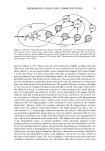
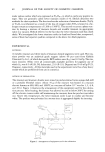
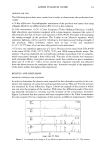
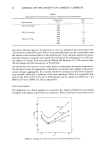
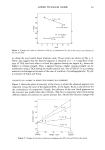
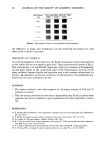
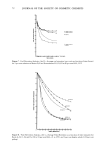
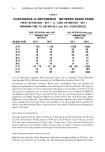
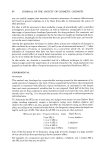
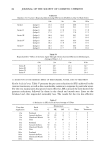
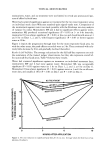
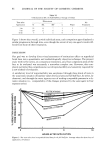
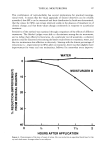
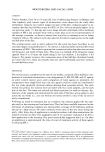
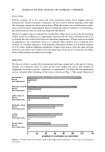
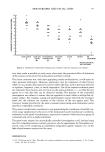
64 JOURNAL OF THE SOCIETY OF COSMETIC CHEMISTS Black Pigments White Pigment/Black Pigment (by Weight) ,,sed •ZS/2• so/so 2s/zs Fe304 ' 'ø'1 Ti2:104 Figure 6. Photographs ofslurries including different black pigments the difference in shade, then modification of each individual formulation for each shade of the cosmetic is necessary. HOMOGENEITY OF A DISPERSION As to the homogeneity of the dispersion, the FeaO4 slurries gave some striped patterns on the surface but the new pigments gave none. These phenomena are shown in Fig. 6. This characteristic is of considerable importance since it is a measure of homogeneity and has great impact on the commercial value of the final products. In terms of the safety problem, titanium dioxide has long been used in the cosmetic industry and is a proven, safe ingredient. In the test, carried out in this laboratory, the synthesized ma- terials were of course confirmed to be safe. SUMMARY 1. The authors obtained a new black pigment by calcining a mixture of TiO2 and Ti powders in vacuum. 2. This new product was noted to have better dispersibility than FeaO4 or carbon black pigments and can be considered a good replacement for these materials in cosme- tics. REFERENCES (1) P. Ehrlich, Phasenverhiiltnisse und magnetisches verhalten im system titardsauerstoff, Zeit. Elektrochem., 45,362 (1939). (2) P. Ehrlich, L6sungen von sauerstoffin metallischem titan, Zeit. Anorg. Chem., 247, 53 (1941). (3) B. Yoshiki, in "Kobutsu Kogaku," Gihodo, Tokyo, p 269, 1963. (4) R. C. Devries and R. Roy, A phase diagram for the system Ti - TiO., constructed from data in the litera- ture, Bull. Am. Cer. Soc., 33,370 (1954). (5) T. L. Hill, in Thermodynamics of SmallSystems, Part I (1963), Part II (1964) W. A. Benjamine Pub. (6) C. Herring, Effect of change of scale on sintering phenomena, J. AppL Phys., 21,301 (1950).

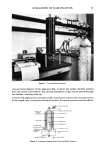
J. Soc. Cosmet. Chem., 29, 65-78 (February 1978) Evaluation of hair fixatives a new technic utilizing torsional measurements STUART H. GANSLAW and F. THEODORE KOEHLER, National Starch and Chemical Corporation, 10 Finderne Avenue, Bridgewater, NJ 08876. Received October 18, 1976. Presented at Ninth IFSCC Congress, June 1976, Boston, Massachusetts. Synopsis A new laboratory test, TWIST RETENTION ANALYSIS (TRA), utilizing a TORSIONAL BRAID ANALYZER, is described as a tool for EVALUATING HAIR FIXATIVE set holding ability under humid conditions. Excellent statistical correlation to traditional laboratory Curl Retention testing is demonstrated. Twist Retention Analysis is shown to give more precise measurements than earlier evaluation techniques and allows the use of smaller sample populations. This new test is shown to give statistical correlation (90 to 100 min), to long-term (5 to 21 hr) Curl Retention testing, allowing rapid evaluation of fixative performance. Conclusions about fixative differences can be made at a faster rate. Statistical differences between fixatives are determined that could not be established by Curl Retention testing. INTRODUCTION Laboratory measurements of fixative curl holding ability under humid conditions have been described in the literature (1-4) over the past decade. These techniques employ visual observations of vertically positioned hair swatches and measure percent drop as a function of time. These test procedures require multiple samples, usually 7 to 15, to give statistically significant measurements. Due mainly to physical handling of curls during preparation and reliance upon visual measurements to record results, substantial error factors can be introduced. Bogaty (5) has suggested that hair frequently assumes a helical coil configuration in the course of its being combed into style. Curl holding, previously described, has generally not taken these torsional configurations into consideration in analysis of test results. This paper will present a new performance test, Twist Retention Analysis (TRA), for evaluating hair fixatives, utilizing torsional measurements of hair/resin composites under humid conditions. Evaluation is automated with the use of a Torsional Braid Analyzer. It will be demonstrated that Twist Retention Analysis is a precise measurement of the set holding capacity of hair fixatives, permitting the use of a small sample size in order to obtain statistically significant conclusions. 65
Purchased for the exclusive use of nofirst nolast (unknown)
From: SCC Media Library & Resource Center (library.scconline.org)