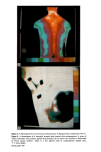
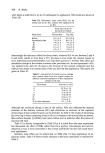
414 W. B. Davis and A.M. Rees-Jones Clothes are intended primarily as a means of adjusting the balance of heat gain and loss. Civilisation and fashion often interfere with this freedom to adjust our clothing, therefore products such as antiperspirants and deodorants become necessary. Sweating is a mechanism by which the body can involuntarily lose heat by the evaporation of sweat in a short time in order to dissipate heat that would otherwise cause a rise in blood temperature. For every gram of sweat that is evaporated up to 2 kJ is extracted from the environment at the skin surface. This heat extraction occurs only when the sweat evaporates, which is why a slightly elevated ambient temperature such as 38øC, can be almost unbearable when the relative humidity is near 100•o, but pleasant and even exhilarating when the humidity is low. The sources of copious, watery sweat are the eccrine glands (atrichial) situated 1-3 mm below the skin surface, connected to the surface via spiral ducts in the epidermis. The eccrine glands are distributed generally over the body surface but are more dense on the palms and soles. The eccrine sweat glands in the axillary vault can be activated as a result of emotional or thermal stress. The sweat produced in the axillae can be particularly troublesome because sweat evaporation is limited except when the arms are raised, thus liquid sweat may accumulate, wetting surrounding clothing and inducing feelings of discomfort. To reduce the output of sweat in the axillae manufacturers provide solutions of aluminium salts, in easily used dispensers. The mode of action of aluminium salts has not yet been established unequivocally. Three possible modes of action involve (a) blockage of the ducts, (b) increased perme- ability of the duct wall, and (c) reduced activity of the gland. In measuring the efficacy of antiperspirants it is not necessary to know how or where the product is working, provided that the parameters used to define efficacy are realistic in terms of user perception. If, however, research leads to the mode of action being elucidated, subsequent improvements in efficacy may be anticipated. The efficacy of an antiperspirant is best defined as the percentage reduction in the rate of sweating in the axilla that may be achieved after a realistic application or series of applications of the test product. There are three basic methods by which we measure efficacy: (1) gravimetric, tared pads collect sweat for a fixed period (2) hygrometric, the increased humidity of air passing over the skin is recorded at a fixed flow rate. (3) thermographic, the extent of localised lack of cooling when an antiperspirant treatment is working is imaged and quantified using a scanning camera sensitive to infrared radiations. It is the aim of cosmetic chemists to produce a product that will consistently achieve a temporary decrease of the sweat rate in the axillae in the order of 20-60•o reduction. Such treatment would reduce the formation of liquid sweat on the skin surface without the risk of undesirable side effects. Although it is possible to achieve this efficacy in the majority of subjects, some do not respond well to treatment and some are even induced to sweat more. This type of reaction to a product is described as 'properspirant'. SWEAT INDUCED BY THERMAL AND EMOTIONAL STRESS In order to determine the efficacy of a product and its consistency in action from subject to subject it is necessary to standardise the experiment without making it unrealistic or non-representative of the whole population

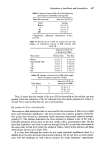
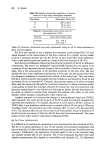
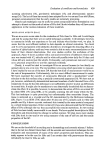
Evaluating the performance of antiperspirants 415 Panels should consist of at least twenty subjects (for adequate statistical analysis of data), randomly selected, who are screened as being fit to withstand thermal stresses. According to Majors and Wild (1) only about 1• of volunteer subjects are found to be unsuitable. Kuno (2) showed that eccrine sweating can be affected locally and centrally by the magnitude of the thermal stress. It can also be induced by emotional stimuli such as anger, frustration, embarrassment and even the mental stress associated with mental arithmetic as shown in the work of Quatrale, Stower and Felger (3). In order to prevent emotional sweating causing excess scatter in our thermal stress data, we impose the following restrictions on the test. (1) Subjects are asked to sit quietly in a waiting room held at 23øC for 1 h after they have changed into shorts and suntop plus a towelling robe. During this stabilisation period they are allowed one cup of hot coffee and are provided with magazines to read. (2) Groups of subjects are thermally stressed without their towelling robes whilst sitting in a warm room at an air temperature of 38-5 + 1 øC and relative humidity 35 _+ 5•. (3) Subjects are asked to keep both feet on the floor and maintain an upright posture. They are asked to avoid discussing emotive subjects. (4) Liberal applications of antiperspirant product are applied to the whole of the axillary region by experienced staff, at least 1 h before subjects are thermally stressed. Shelley and Hurley (4) showed that even hyperhidrotic subjects could be treated effectively if an antiperspirant treatment was applied before going to bed and occluded overnight. What we suggest happens during the night is that at some stage the sweat glands are inoperative, giving the active, available ions the opportunity to diffuse down the sweat ducts to the zone of action. If applied when the subject was sweating the active ingredient might be flushed away to avoid scatter in antiperspirant efficacy tests, applications should only be made when the glands in the area are inactive and at least 15 rain should be allowed for the product to dry. It is not clear whether or not the sweat glands responsible for thermal regulation in the axillae are the same ones that respond to emotional stimuli, neither is it known whether an effective antiperspirant causes (a) all glands to operate at a reduced rate, (b) all glands to operate for only a part of the time, or (c) some glands to cease functioning temporarily. Antiperspirants may cause a combination of (a), (b) and/or (c) to occur. Transient physiological factors make sweating difficult to control precisely. An example of this is the fact that the body thermostat setting changes quite markedly over a 24 h cycle. In addition, subjects who are suffering from an infection, such as the common cold, can have a high blood temperature without sweating, for a day or so before other symptoms appear. GRAVIMETRIC DETERMINATIONS OF ANTIPERSPIRANT EFFICACY Having defined potential sources of variation in the sweat rate in the axilla and ways of limiting their effect there are certain precautions that must be taken to ensure that useful data are obtained from gravimetric sweat collection procedures. Majors and Wild (1) showed that the right axilla (particularly if he is right-handed) in an individual may consistently sweat more than the left. Therefore it is necessary to establish a subject's right: left ratio before a test product is applied to one axilla. It is also accepted that even under well controlled temperature and humidity conditions a
Purchased for the exclusive use of nofirst nolast (unknown)
From: SCC Media Library & Resource Center (library.scconline.org)