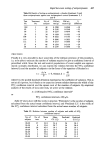
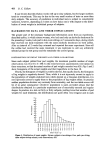
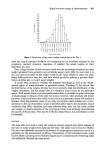
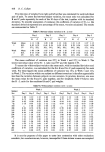
J. $oc. Cosmet. Chem. 29 433-440 (1978) Techniques for the evaluation of emollients and keratoltios R. MARKS Department of Medicine, Welsh National School of Medicine, Heath Park, Cardiff, Wales Presented at the Symposium on 'Product Evaluation', 18 April 1958, at Eastbourne Synopsis Established and new technologies were evaluated to assess the efficacy of emollients and keratolytics. The newer techniques included the use of (a) an instrument designed to measure in vivo intracorneal cohesion, (b) an instrument to assess the point penetrability of the stratum corneum in vivo and (c) an instrument designed to apply a standard stimulus in order to quantRate the number of squames' that are released in vivo. The established methods used included surface contour analysis of skin surface replicas and morphological assessments using macrophotography and scanning electron microscopy. The kera- tolytics so far evaluated included preparations of salicylic acid and urea and the emollients evaluated included three commercially available preparations. The results thus far showed that keratolytics are difficult to evaluate in entirely normal skin but that morphological assessments are best in abnormal skin and physical measurements are of more help in abnormally scaly skin. Emollients have proved much easier to evaluate and their effects can be detected by all the techniques described. Emollients and keratolytics account for a large proportion of the topical applications prescribed by dermatologists and a not inappreciable proportion of products that are directly available to the public for skin care It is, therefore, astonishing that com- paratively little atter•tion has been paid to methods for the assessment of the effectiveness of these products. This has been in part due to the intrinsic difficulties in quantitating events taking place at the skin surface, in part due to lack of understanding of how emollients and keratolytics work and in part due to the empirical approach previously adopted by dermatologists and cosmetic scientists. The subject is now, however, of considerable widespread interest and the author would point out the excellent review of Quattrone and Laden (1) which concentrated on in vitro methods for evaluation of emollients. It is the purpose of this paper to discuss several of the techniques available for assessment, to point out those in vivo techniques that appear to be most useful and at the same time to document the author's experience in this subject. TERMS AND DEFINITIONS It is worth while at the outset to define some terms. The term 'emollicnt' implies (from the Latin derivation) a material designed to soften the skin. The only true emollients in this sense are destructive agents that chemically change the usually hard stratum corncum into a softer less protective substance. What we actually mean by the term 'emollient' is a material that 'smooths' the surface to the touch (and makes it look smoother to the eye). 0037-9832/78/0400-0433 :$02.00 ¸ 1978 Society of Cosmetic Chemists of Great Britain 433

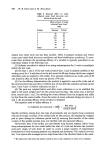
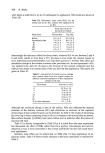
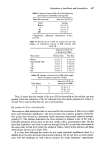
434 R. Marks This is important to remember as it should help in designing techniques for the evalu- ation of emollients. Keratolytics are even less appropriately named. This term taken literally signifies a material which 'lyses keratin'. It should not be necessary to remind you that keratin is an intracellular alpha fibrous protein suspended in a matrix of unknown composition and surrounded by the tough plasma membrane of the corneocyte wall. It seems most unlikely that this component is involved in the action of keratolytics. We probably mean by 'keratolytic' an agent that enhances desquamation. It is even more confusing when one realises that by enhancing desquamation one may also 'smooth' so that keratolytics may be also emollients! We probably need different terms and new definitions and I would suggest that we come nearer to the actual action that we seek in choosing them. If we drop the term 'emollient' and substitute 'hydrating agent' we more accurately describe the action of these substances and can define them as agents whose action is to smooth the surface by hydrating it and which is reversible and short lived. 'Descaling agent' is more appropriate than 'keratolytic' and this term may be defined as a substance that acts irreversibly to alter abnormal desquamation such that hyperkeratosis and scaliness are decreased. Thus, water is only a 'hydrating agent' and not a 'descaling agent', even though it may enhance desquamation in the short term, because its action is reversible and short lived. Similarly, salicylic acid is purely a descaling agent as although it may 'smooth' it does not hydrate and its action is irreversible. HYDRATING AGENTS (HA) (a) SUBJECTIVE TECHNIQUES The palparing finger and the eye are remarkably sensitive and the user of the HA or the clinical observer can easily tell whether the skin is more or less smooth than before application. This effect cannot be accurately quantified, however, and is subject to 'bias' and the placebo effect. Middleton and Roberts (2) optimised this method during the evaluation of a 'hand cream' containing PCA, by employing a 'double blind technique' and a complex clinical scoring system. We have also been able to show that there is a difference in the 'clinical score' after the use of an emollient cream for 1 and 2 weeks in twenty patients with dry skin (Table I). Although these results are not statistically significant the trends are undeniable. Table L Results of use of aqueous cream on skin 'dryness' in subjects with dry skin Time (weeks) Subject assessment* Observer assessmenr[' 0 2.2+0.9 1 1'6+0'8 3.1+0.9 2 1-8+0.9 3.4+0.7 * Mean and S.D. of arbitrary scores: 1 = 25•o, 2 =25-50•o, 3 = 50•o improvement. -1' Mean and S.D. of arbitrary scores: 1 =very dry and scaly, 2 = moderately dry and scaly, 3 =slightly dry, 4 =normal. (b) MORPHOLOGY The simplest morphological technique is that of macrophotography. Here the surface of
Purchased for the exclusive use of nofirst nolast (unknown)
From: SCC Media Library & Resource Center (library.scconline.org)