J. $oc. Cosmet. Chem. 29 441-446 (1978) Evaluation of mechanical stresses set up in lipstick during application R. G. DREW Beecham Products, Applied Research Laboratories, Randalls Road, Leatherhead, Surrey, KT22 7RX Received 19 January 1978 Presented as part of a lecture for the Society of Cosmetic Chemists of Great Britain, London, January, 1977 Synopsis A device is described which measures the stresses set up when lipstick is applied this device is used to assess the application properties of two ranges of commercially available lipsticks. The values obtained facilitate definition of the strength requirements of a lipstick. Knowledge of the in-use stresses will enable formulators to avoid fracture problems during lipstick application. A trial of ten commercially the available lipsticks indicates that the application force is related to the ease of colouring of the lips be applied lipstick. Application forces were greater when the lipstick was applied by older subjects. INTRODUCTION A lipstick consists essentially of a solid stick in a retractable applicator. In recent years lipstick formulations have altered considerably hard sticks with high levels of staining dye have been almost completely superseded by softer sticks in which soluble dye has been largely replaced by insoluble dye in lipsticks (pigments). With the reduction in level of staining dye in lipsticks much easier transference is required in order to achieve adequate colouration of the lips. Elliott (1) indicated that this has been achieved by introducing oilier bases. The increased liquid and semi-solid content of recent formu- lations has made the mechanical strength requirements of the stick critical. A common method of lipstick strength assessment described by Lauffer (2) is to hold the lipstick horizontally in a socket fitting over 1 cm of its base and to apply weights at a measured distance from the edge of the socket. The weight is increased by increments (suitably 0.1 N) every 30 min until the lipstick breaks. At least four readings are needed for each batch of lipstick and broken surfaces must be examined to ensure that no weakening flaws reduce the strength. Breaking point measurements must be carried out at a known temperature (suitably 25øC) on sticks stored at that temperature for at least 30 min. This technique is unrealistic as the method of loading involves a disproportionately large shear component and a small bending moment when measuring the total force to fracture. Lauffer (2) also described a method of roughly measuring the force of appli- cation. A strip of smooth paper is drawn between two flat lipstick ends at constant speed. The force required to pull the paper when a given total weight is applied to the upper lipstick is recorded. 0037-9832/78/0700-0441 $02.00 ¸ 1978 Society of Cosmetic Chemists of Great Britain 441

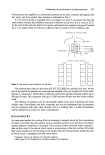
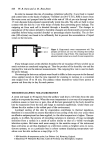
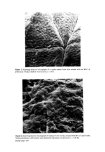
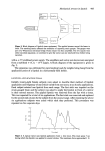
442 R. G. Drew This paper describes an apparatus giving realistic measurements of the force of (ease of) application and force to fracture. EXPERIMENTAL MATERIALS Ten lipsticks manufactured for retail distribution were selected for examination from two lipstick ranges*. They were chosen to cover a range of colours from clear gloss, through shades of pink, red and light brown to dark brown. These lipsticks were then arbitrarily coded. The first range was coded a, b, c, d and e, and the second range was coded v, w, x, y and z. All lipsticks tested were 41 mm long and 11 mm in diameter at their base. APPARATUS The apparatus consisted of a brass beam carrying strain gauges, spike and base onto which the lipstick was impaled (Fig. 1). A conventional polystyrene holder to match the base diameter of the lipstick was fixed to the beam with epoxy resin. Figure 1. Brass beam, with semiconductor strain gauges, used to hold the lipstick. Sample lipsticks were impaled on the spike set in a cylindrical holder on the left. Applied forces were transmitted to two pairs of strain gauges fitted on opposing sides of the beam. A semiconductor strain gauge** was fixed to each of the four sides of the square- sectional beam. The strain gauges formed two half Wheatstone resistance bridges. The other half of each Wheatstone bridge circuit was a balancing variable resistor incor- porated in the main recording equipment situated away from the device. In the recording equipment the outputs from the two bridge circuits were amplified by a factor of 1000 and fed into a vector sum computation unit.'• Hence, by carrying out a vector sum treat- ment of the two messages the resolved load on the lipstick at any instant could be com- puted electronically and the output fed to the pen recorder.** The bridges were powered * Margaret Astor Silver Frost and Ultra Soft lipstick from Cola GmbH, Cosmetik-Fabrikations- Gesellschaft mbH 612 Michelstadt/Odenwald, Bundesrepublik Deutschland. ** The strain gauges used were encapsulated axiaMead type supplied by Kulite Ltd, 20 Wote Street, Basingstoke, Hampshire, U.K. (Code No. DCP-120 090). t The vector sum circuit was designed by Analog Devices Inc., Norwood, Massachusetts 02062, U.S.A., and based on an integrated circuit chip, ADS31 KD. :• Phillips pen recorder PM 8221.
Purchased for the exclusive use of nofirst nolast (unknown)
From: SCC Media Library & Resource Center (library.scconline.org)