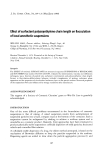
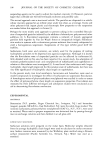
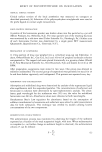
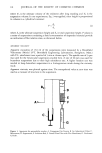
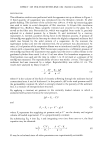
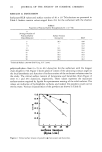
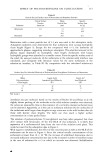
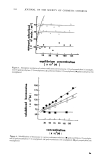
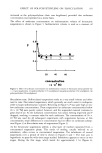
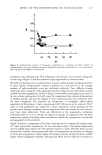
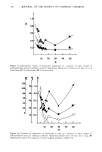
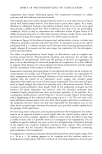
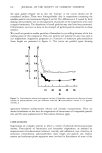
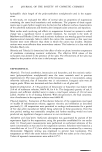
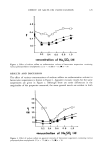
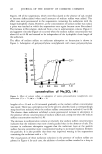
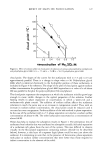
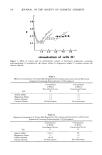
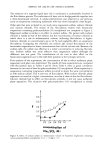
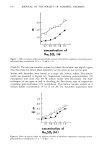
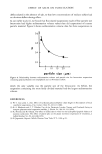
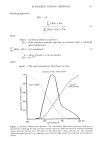
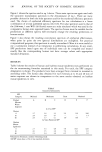
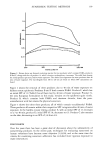
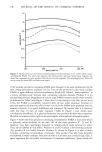
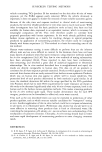
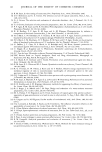
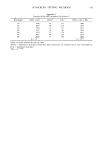
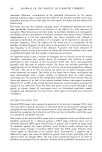
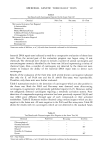
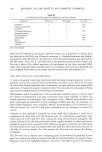
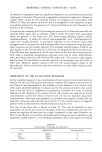
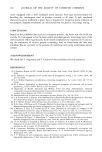
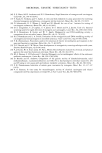
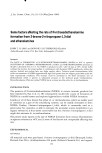
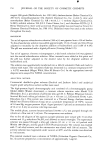
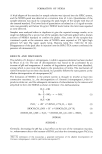
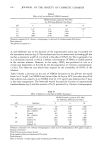
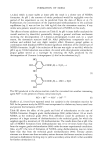
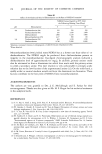
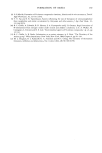
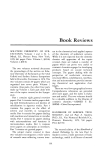
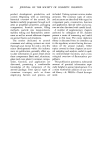
EFFECT OF POLYOXYETHYLENE ON FLOCCULATION 117 0.8 0.6 0.4 0.2 I I I I I 10 20 30 40 50 n Figure 8. Sedimentation volume of benzocaine suspensions as a function of mean number of polyoxyethylene units per surfactant molecule. Suspensions standing undisturbed. (o) 2.3 •t benzocaine (A) 7.6 •t benzocaine (e) 20.3 •t benzocaine. subsidence was relatively fast. The subsidence rate became much slower during the second stage (Figure 7) and the sediment height approached a constant value. The effect of particle size on sedimentation volume is demonstrated in Figures 8 and 9. In these figures, sedimentation volume is plotted as a function of n, the average number of polyoxyethylene units per surfactant molecule. Two different storage treatments were compared. The suspensions shown in Figure 8 were permitted to stand undisturbed after preparation. Those in Figure 9 were shaken thoroughly once every 24 hr over a three-week period. In both cases, the suspensions that contained benzocaine in smallest particle size had the highest F values, indicating that their sediments were the least compacted. For purposes of cornparison, a completely deflocculated suspension of benzocaine, 7.6/am, was prepared with 10% acacia as the medium. The F value of this suspension was about 0.17, which represents closest packing for the powder used. Storage conditions did not drastically affect the results for very short or very long chain surfactants. There are differences in the suspensions containing surfactants with n=12 to n=30 that do depend on storage. It is apparent that, for these suspensions, physical handling after manufacture affects the arrangement of particles and aggregates in the sediment. Figure 10 shows a comparison of the three methods used to evaluate flocculation state of 2.3/am benzocaine suspensions. As was discussed earlier, flocculated suspensions tend to exhibit large values of F. The particles interact to form networks which can be detected by viscosity measurement and other techniques that are sensitive to changes in structural arrangement. More highly flocculated systems should therefore exhibit higher values of apparent viscosity, although this effect may be difficult to measure in

118 JOURNAL oF THE SOCIETY OF COSMETIC CHEMISTS 0.6 0.4 0.2 I ! 10 20 30 40 50 Figure 9. Sedimentation volume of benzocaine suspensions as a function of mean number of polyoxyethylene units per surfactant molecule. Suspensions shaken every 24 hours for 21 days. (o) 2.3/z benzocaine (•x) 7.6/a benzocaine (©) 20.3/a benzocaine. K 120 50 100 80 40 60 30 40 20 20 0 10 10 20 30 40 50 n Figure 10. Properties of suspensions of benzocaine, 2.3 /am, as a function of mean number of polyoxyethylene units per surfactant molecule. Suspensions shaken every 24 hours for 21 days. (©) sedimentation volume, F (o) apparent viscosity, r/ (&) permeability coefficient, K.
Purchased for the exclusive use of nofirst nolast (unknown)
From: SCC Media Library & Resource Center (library.scconline.org)