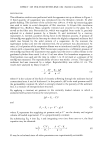
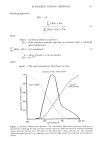
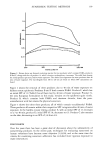
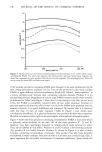
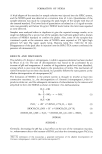
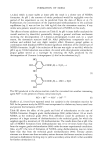
FORMATION OF NDE1A 155 A 30 •tl aliquot of the standard or sample solution was injected into the HPLC system, and the NDE1A peak was detected at a retention time of 4 min. Quantitation of the sample solutions was made by comparing the peak height of the sample with that of the external standard. The lower limit of quantitation calculated at a 3:1 signal-to-noise ratio was generally well below 50 ng/ml. NDE1A levels below this limit were reported as none detected. Samples were analyzed either in duplicate to give the reported average results, or in single run followed by a second run of the samples that had been spiked with a known amount of NDEIA standard to confirm the peaks. Also, some of the samples that contained a peak at the retention time of NDE1A were exposed to UV light (high pressure 325 watt Hg vapor quartz lamp, Hanovia lamp No. 7420) for 30 min. Disappearance of the peak after re-injection into the HPLC-TEA system confirmed the presence of nitrosamine (4). RESULTS AND DISCUSSION The stability of 2-bromo-2-nitropropane-l,3-diol in aqueous solutions has been studied by Bryce et al. (5). The rate of decomposition was found to be accelerated by an increase of pH and temperature. A number of degradation paths have been identified, among which is one route that leads to the production of nitrite. The mechanism of nitrite formation has not been elucidated, but possibly follows the same pattern as the alkaline decomposition of nitropropanes (6). 1 The formation of NDEIA in the present system is thought to involve at least two consecutive reactions, i.e., the decomposition of 2-bromo-2-nitropropane-l,3-diol to produce nitrite ion, and the subsequent nitrosation of ethanolamine by the nitrous acid anhydride to form the NDE1A as shown in Scheme 1 for diethanolamine. H2C--O}-•[ Br--C--NO2 -•- -•- NO2-- (1) I H2C--OH 2NO 2- + 2H + • 2HNO2 • N20 3 + H20 (2) (HOCH,CH,),NH + H + • (HOCH,CH,)2N+H, (3) (HOCH2CH2),NH + N,O3----(HOCH2CH2),N--NO + HNO2 (4) (NDE1A) SCHEME Generally, decreasing the pH has a dual effect on the rate of the nitrosation reaction, i.e., enhancement due to the increase of HNO 2 and thus the nitrosating agent N20 3 (eq •After the submission of this manuscript, a proposed mechanism of the alkaline decomposition of 2-bromo-2-nitropropane-l,3-diol to yield nitrite was reported (7).

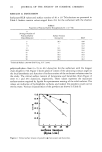
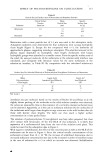
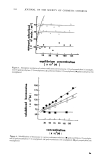
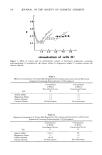
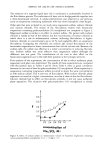
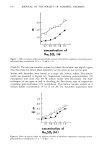
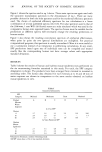
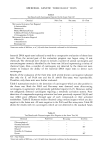
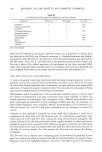
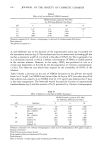
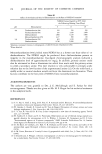
156 .JOURNAL OF THE SOCIETY OF COSMETIC CHEMISTS Table I Effect of pH on the Rate of NDEiA Formation • NDE1A Formed (ng/ml) at 50øC After the Following Heating Time (Days) pH 6 13 20 25 2.0 n.d. 2 n.d. n.d. 1,7453 4.0 291 2,320 3,260 -- 5.0 663 3,220 3,190 -- 6.0 3,069 8,750 9,860 -- •Solutions contained 0.1% 2-bromo-2-nitropropane-l,3-diol and 2% triethanolamine (85% grade). 2None detected. 3The pH was increased to 6. 2), and inhibition due to the decrease of the unprotonated amine (eq 3) available for the nitrosation reaction (eq 4). The resultant rate thus increases with decreasing pH but reaches a maximum at pH of 3.4, which is the pKa of HNO2 (8). This is generally true in a nitrosation reaction in which a definite concentration of HNO 2 is initially present in the reaction mixture. However, in this study, HNO 2 was produced in situ, at a certain rate dependent on the pH, by the decomposition of 2-bromo-2-nitropropane- 1,3-diol. The observed rate would then depend on the availability of HNO 2 in the solution. Table I shows a decrease on the rate of NDE1A formation as the pH was decreased from 6 to 4. At pH 2 no NDE1A was formed after 20 days at 50øC, but when the pH of that solution was raised to 6, an NDE1A level of 1,745 ng/ml was detected after 5 days at the same temperature. The lower pH would decrease the fraction of unprotonated triethanolamine (eq 3) and the amount of N203 produced by 2-bromo-2-nitropropane- Table II Effect of Additives on the Rate of NDEIA Formation • NDEIA Formed (ng/ml) at 50øC After the Following Heating Time (Days) pH Additives 6 13 20 4.0 Control2 291 2,320 3,260 Citrate buffer 0.1M 1,540 5,560 10,520 PG + EDTA 3 n.d. 4 n.d. 125 5.0 Control 663 3,220 3,190 PG + EDTA 124 310 357 6.0 Control 3,069 8,750 9,860 Sorbose 5% 1,922 5,120 13,900 4.05 Control 182 250 450 Sorbitol 7% 208 487 473 •Solutions contained 0.1% 2-bromo-2-nitropropane-l,3-diol and 2% triethanolamine (85% grade) except as denoted in footnote 5. 2Only HCI was used to adjust the pH. 3propyl gallate (0.03%) and disodium EDTA (0.1%). 4None detected. 5Same as footnote 1 except reagent grade triethanolamine (99%) was used.
Purchased for the exclusive use of nofirst nolast (unknown)
From: SCC Media Library & Resource Center (library.scconline.org)