146 JOURNAL OF THE SOCIETY OF COSMETIC CHEMISTS mutations. However, consideration of the published information on the various bacterial mutation assays reveals that the Ames (9) test has been studied much more intensively than any of the other tests. For this reason, the Ames test was selected for further study. The Ames test uses five histidine requiring strains of Salmonella typhimurium which were specifically constructed to be sensitive to the effects of a wide spectrum of mutagens. These strains have lost their ability to synthesize histidine and consequently are unable to grow in the absence of histidine. However, each strain reverts to histidine independence at a low but reproducible rate. Since revertants arise through a mutational mechanism, the presence of a mutagen can be expected to increase the reversion frequency. Thus, the essence of the Ames test is a comparison of the histidine reversion frequency of each strain in the presence of a chemical substance to that frequency in the absence of the chemical. A positive test result, indicative of mutagenic activity, occurs if the number of chemically induced revertants in any strain is significantly higher than the number of spontaneous revertants. An important point is that a number of mutagens are not directly active but require metabolic conversion into reactive forms. In mammals, this function is usually performed by liver enzymes of the microsomal P-450 type. Since microorganisms generally lack this type of enzyme system, the Ames test includes provisions for supplying this activity through the use of a rat liver microsomal preparation called an "S-9 mix." The use of an S-9 mix allows the Ames test to detect mutagens which would otherwise be missed. The ability of the Ames test to detect carcinogens has been demonstrated with a larger number of chemicals than any other genetic toxicology test. The results of five independent studies (10-15) have indicated that the Ames test detects 65 to 90% of the several hundred known carcinogens examined. Moreover, 75 to 90% of the several hundred presumed noncarcinogens examined are negative in the Ames test. Thus, the Ames test seems to be accurate although it does poorly in certain classes of carcinogens such as chlorinated pesticides, metals, estrogens, and nitrosamines. For this reason, other types of microbial tests were also considered. BACTERIAL DNA REPAIR TESTS Bacterial DNA repair tests measure the potential of a chemical to damage DNA. Such tests may detect a broader spectrum of chemicals which produce genetic damage than mutagenicity tests. Based on the literature search, three bacterial DNA repair tests were selected for evaluation: the Escherichia coli PolA test (16), the Bacillus subtilis Rec-assay (17), and the E. coli RecBC test (18). The essence of the bacterial DNA repair tests is a comparison of the size of the zone of inhibition produced by a chemical against a DNA repair deficient strain and an otherwise identical DNA repair normal strain. A positive test is shown by larger zones of inhibition against the repair deficient strain. Positive results indicate that the chemical causes damage to bacterial DNA which the DNA repair deficient strain cannot repair as effectively as the normal strain. Alternatively, a negative test is reflected by equal size zones of inhibition against both strains, indicating that the chemical does not damage DNA. The test is also considered negative if no zones of inhibition are produced by the chemical. Analysis of the published information on the

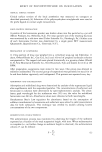
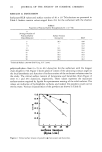
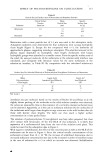
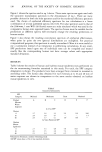
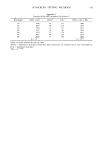
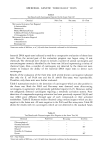
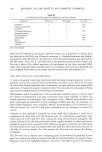
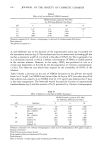
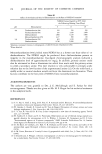
MICROBIAL GENETIC TOXICOLOGY TESTS 147 Table I Test Results with Carcinogens Detected by the Ames Test (10) • Chemical PolA Test Rec-assay D-4 Test Microsomal Activation Not Required 9-Aminoacridine Daunamycin Methyl Methanesulfonate N-Methyl-N'-Nitro-N-Nitrosoguanidine 4-Nitroquinoline-N-Oxide Microsomal Activation Required Aflatoxin-B1 2-Aminofluorene Benzo(a)pyrene + + + + + + -1- + + 1Ames test results of McCann, et aL, (10) with these chemicals confirmed in this laboratory. bacterial DNA repair tests indicated a need for a co•nparative evaluation of these three tests. Thus, the second part of the evaluation program was begun using 24 test chemicals. The chemicals were chosen to include a number of animal carcinogens and noncarcinogens correctly identified by the Ames test (10) and representing a variety of chemical types. Also, a number of carcinogens not detected by the Ames test were chosen to evaluate the ability of the bacterial DNA repair tests to detect such carcinogens. Results of the evaluation of the three tests with several known carcinogens indicated that only the E. coli PolA test and the B. subtills Rec-assay were reproducible. Therefore, only these tests were further evaluated. Table I summarizes results in the detection of carcinogens which are also positive in the Ames test. Both the PolA and Rec-assay tests detected most direct-acting carcinogens, in agreement with previously published reports (16,17). However, neither test adequately detected carcinogens requiring a metabolic activation system. Poor detection of compounds requiring activation has been previously reported (19,20) and may reflect poor diffusion through agar of such compounds or their activated metabolites. Table II illustrates results obtained using noncarcinogens which are also negative in the Ames test. All were negative in the PolA and Rec-assay tests. Table III shows the results with ten carcinogens which are not detected in the standard Ames Table II Test Results with Noncarcinogens Also Negative in the Ames Test (10) Chemical PolA Test Rec-assay D-4 Test Chloramphenicol - - - Dimethyl sulfoxide • - - - Diphenylnitrosa•nine - - NT Ethanol 1 - _ _ Penicillin G, Potassium -- - - Pyrene - - NT NT = Not Tested. 1Ames test results of McCann, et al., (10) with these chemicals confirmed in this laboratory.
Purchased for the exclusive use of nofirst nolast (unknown)
From: SCC Media Library & Resource Center (library.scconline.org)