SUNSCREEN TESTING METHODS 135 The results presented in this paper are significant extensions of our previous efforts which further indicate the versatility of using skin as a matrix for studying sunscreen product behavior. In this paper, we report the results of studies testing the resistance of sunscreening products to removal by water exposure by comparable in vivo and in vitro techniques. MATERIALS AND METHODS Solar simulator light source. The solar simulator used in this study consisted of a 2500 W xenon arc filtered by a dichroic mirror to remove visible and infra-red radiation and by a secondary cut-off filter (1.0mm WG-320) to shape the short wavelength portion of the spectrum similar to that of natural sunlight. Five independent, electronically timed, 1 cm 2 exposures can be administered with this instrument simultaneously. All exposures in this study were based on a geometric progression, each 25% greater than the previous one, i.e., T• = 1.25 T O T n = 1.25 T n_• The advantages of such incremental exposures are described by Hoppe et al. (12) and by Van der leun (13). Products tested in the study: A. Eversun 2, Roche Products, Ltd.--2.4% octyl methoxy cinnamate .02% guanine B. Irma Shorell Protective Sun Creme, Irma Shorell, Inc.--3.5% PABA titanium dioxide C. Sundown Moderate Protection, Johnson & Johnson--3.3% octyldimethy PABA D. Sundown Extra Protection, Johnson & Johnson--3% benzophenone-3 4% octyldimethyl PABA E. Shade Plus Lotion, Schering-Plough, Inc.--7% octyldimethyl PABA, 3% benzo- phenone-3 F. Creamy PreSun, Westwood Pharmaceuticals--5% para-aminobenzoic acid In vivo human sunscreen testing. For each product tested, 10 to 20 healthy volunteers were selected who were free of any conditions that might abnormally affect test results. Informed consent was obtained from each volunteer before beginning the sunscreen test. The methods used in this study follow those previously described (1). Two test sites which were uniform in pigmentation and free of any observable defects were selected on the arms of each volunteer. On the first site, a series of five graded exposures measuring 1 X 1 cm each was administered with the xenon arc solar simulator. This graduated series of exposures given on untreated, unprotected skin was used to determine the subject's minimal erythemal dose (MED). The results of these exposures were evaluated the next day to determine the lowest exposure which produced a minimally perceptible redness.

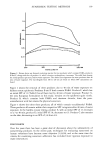
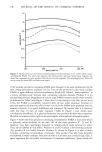
136 JOURNAL OF THE SOCIETY OF COSMETIC CHEMISTS After the MED had been determined, an area 5 x 10 cm was outlined in ink on the second tested site 100 /al of the product being tested was applied as uniformly as possible by finger, resulting in an overall average application of 2 $zl/cm 2. The product was then allowed to dry for 15 min. After this period, five graded exposures were given using the solar simulator to determine an MED for the protected area. These exposures were likewise read the next day and an SPF calculated. A Sun Protection Factor (SPF) is the ratio of the product-treated MED to the untreated (control) MED. SPF results for each product were then averaged for all volunteers tested. To test for water resistance, the procedure outlined above was followed but included immersion of the product-treated arm into a circulating 35øC whirlpool bath for either 10 or 40 min. The treated area was carefully air-dried before solar simulator exposures were given. SPF values were calculated as before. For two of the products examined, D and E, the outdoor swimming test proposed by the Food and Drug Administration was performed (14). This consists of two 20-min swimming sessions with a 20-min rest in between. The backs of the volunteers were used in this study, and solar simulator exposures were given as described above, following water exposure. Hairless mouse studies. Male and female Skh-1 and Skh-2 strain hairless mice (Skin and Cancer Hospital, Philadelphia), 5-6 weeks old, were sacrificed by cervical dislocation and the skin removed from the dorsal area of the body. After immersion in 60øC water for 30 sec, the epidermis was removed intact from the dermal layers by careful blunt dissection following the method of Blank (15). The epidermal layer was then floated onto a quartz carrier plate and the excess moisture carefully removed. Each piece of epidermis used ranged from 5 cm 2 to over 10 cm 2. Forward scattering scans were run from 400 to 250nm in the Beckman Acta MVI recording spectrophotometer fitted with a diffuse reflectance sphere. Additional 2 mm UG-5 filters were used in both the sample and the reference beams to remove visible fluorescence from the epidermis and from some of the sunscreen formulas tested. For each piece of epidermis examined, the first measurement obtained was a forward scattering scan of the unprotected epidermis. The carrier plate with the epidermis was then removed from the reflectance sphere and the epidermal area measured. The sunscreen to be tested was applied at a concentration of 2 /al/cm 2 and the forward scattering scan repeated for the epidermis with its applied product. To determine the absorption of the sunscreening product alone, the absorption of the untreated mouse epidermis was subtracted from the values for the product-treated epidermis point by point at 5 nm intervals. This method has been previously described in detail (1). Following this initial scanning procedure, the holder containing the mouse epidermis was placed into a shaking 35øC water bath. At 10 and at 40 min, the holder was removed, dried and rescanned to determine how much sunscreen had been lost. Calculations were performed as above. For each formula tested, at least three separate scans were run on different epidermal sections. The absorption values were then averaged and the difference spectra plotted so that the absorption spectra could be compared. Prediction of sunscreen e•cacy from in vitro data. The SPF of a sunscreen is equivalent to the reciprocal of the transmission of erythemic light by a sunscreen film, at least in the monochromatic approximation. The model used in this study is based on the
Purchased for the exclusive use of nofirst nolast (unknown)
From: SCC Media Library & Resource Center (library.scconline.org)