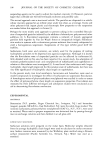
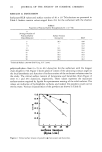
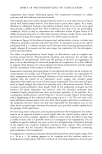
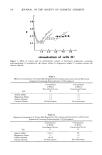
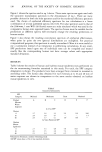
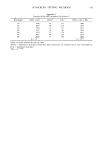
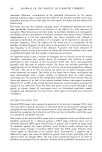
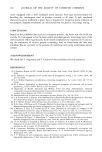
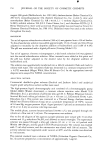
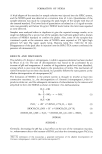
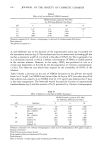
148 JOURNAL OF THE SOCIETY OF COSMETIC CHEMISTS Table III Test Results with Carcinogens Not Detected in the Ames Test (10) Chemical PolA Test Rec-assay D-4 Test Auramine + - NT Carbon tetrachloride - - NT p,p'-DDE - - - 1,2-Dimethylhydrazine + - NT Diethylnitrosamine + + - Diethylstilbestrol - - NT p-Rosaniline - - NT Safrole - - NT Thioacetam•de - -- - Thiourea - - - NT = Not Tested plate test. In contrast to previously reported results (21), p-rosaniline or safrole were not detected in the PolA test. However, auramine, 1,2-dimethylhydrazine and diethyl- nitrosamine were detected by the PolA test. Only diethylnitrosamine was detected by the Rec-assay. Thus, the E. co/i PolA test is the preferred bacterial DNA repair test because it detects the widest spectrum of carcinogens of the three bacterial DNA repair tests evaluated. Improved detection of carcinogens when results of the PolA test are combined with results of the Ames test has been recently documented (21). TESTS WITH EUKARYOTIC MICROORGANISMS A variety of genetic toxicology tests have been developed using eukaryotic microor- ganisms, such as the common yeast Saccharomyces cerevisiae (22,23). Since the cell type of yeast more closely resembles that of mammals, an assay utilizing yeast might allow detection of chemicals missed by bacterial tests. Yeast also has the advantage of being easy to grow using standard microbiological techniques. The literature search revealed that, of the several tests available using S. cerevisiae, tests for mitotic recombination and gene conversion have been reported to detect the widest spectrum of carcinogens and mutagens (24,25). Mitotic recombination and gene conversion are indicators of direct damage to DNA and they are observed at a much higher frequency than mutations. Mitotic recombination can be measured in S. cerevisiae strains D-3'and D-5 and gene conversion can be measured in strain D-4 (22,23). Analysis of the published literature on these tests also indicated a need for a comparison of these tests with the bacterial tests. In a preliminary experiment, tests with strains D-3, D-4 and D-5 were conducted using several known mutagens. The results indicated that the three tests were about equally sensitive in detecting known mutagens, as previously reported (23,26). However, the gene conversion test with strain D-4 was found to be more convenient than tests with the other two strains because of the ease of scoring results. For this reason, the D-4 test was chosen for further evaluation. The D-4 test uses a diploid yeast containing pairs of nonidentical mutations in two gene loci causing the strain to require both adenine and tryptophan for growth. These mutations revert at a negligible frequency. However, cells able to grow in the absence

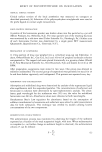
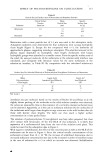
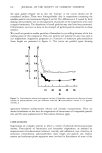
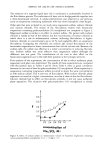
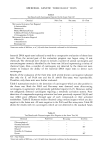
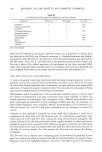
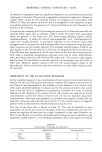
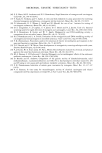
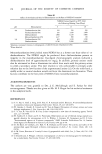
MICROBIAL GENETIC TOXICOLOGY TESTS 149 of adenine or tryptophan arises at a significant frequency via a recombinational process called gene conversion. This process is apparently increased in response to damage in cellular DNA caused by the chemical reaction of mutagens and carcinogens with DNA (27). Thus, the essence of the D-4 test is a comparison of the frequency of gene convertants produced in the presence of a chemical substance to that observed in the absence of the chemical. The process of evaluating the D-4 test using the same set of 24 chemicals used with the bacterial DNA repair tests is underway. Table I shows the results with carcinogens which are positive in the Ames test. The direct-acting alkylating agents, methyl methanesulfonate, N-methyl-N'-nitro-N-nitrosoguanidine and 4-nitroquinoline-N- oxide were readily detected, as previously reported (23,27). However, frame-shift mutagens such as daunomycin and 9-aminoacridine and compounds requiring meta- bolic activation are not readily detected. The standard noncarcinogens, Table II, are also negative in the D-4 test. Only four of the ten carcinogens missed by the Ames test, Table III, have been examined in the D-4 test. None of the four were found positive. This result is somewhat disappointing, especially since one of these, diethylnitrosa- mine, was found positive by the PolA and Rec-assay tests. The results to date suggest that the yeast D-4 test detects a narrower spectrum of carcinogens than the Ames or PolA tests. However, positive results in the D-4 test would support results in the bacterial tests. Similar conclusions have been reached in a recent study using the yeast D-3 test (28). OPERATION OF THE EVALUATION PROGRAM In this evaluation program, five concentrations of each chemical were tested with and without S-9 mix and with positive and solvent controls. The highest concentration of test chemical was determined by the solubility of the chemical in the solvent used, either water, dimethyl sulfoxide or ethanol, and by the amount of solvent that can be used in the test (9,16,22). Additional concentrations consisted of a series of tenfold dilutions of the chemical in the solvent. If low cell survival was observed at several concentrations in either the Ames or the D-4 test, the test was repeated using lower concentrations. Tests were also repeated if the positive and negative controls did not meet the criteria described for the test (9,16,22) or if the chemical gave an apparent positive result as determined by statistical analysis using the t-test. The cost of the three tests is shown in Table IV. The cost of materials is quite reasonable. As can be seen from the estimates of the time required for each test, one person can perform all three tests on a single compound in one week. However, we find it more efficient to have three individuals each running one test. In addition to the equipment usually found in a microbiology laboratory, these tests require an isolated Table IV Cost of Genetic Toxicology Screening Tests Test Materials/Test Man-Hours/Test Ames $20.00 8 PolA $10.00 7 Yeast D-4 $40.00 16
Purchased for the exclusive use of nofirst nolast (unknown)
From: SCC Media Library & Resource Center (library.scconline.org)