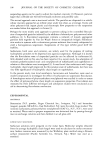
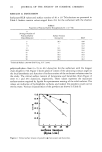
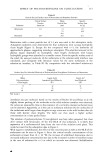
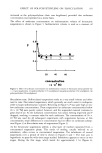
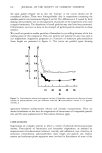
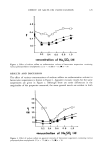
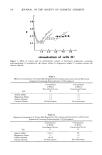
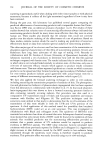
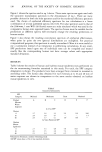
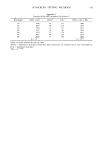
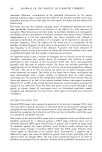
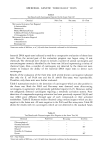
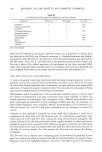
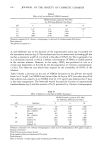
128 JOURNAL OF THE SOCIETY OF COSMETIC CHEMISTS 0.8 0.6 0.4 0.2 ,. i i i ! I 1.0 2.0 3.0 4.0 5.0 concentration of salts Figure 5. Effect of various salts on sedimentation volume of benzocaine suspensions containing polyoxyethylene (15) nonylphenol. (•x) sodium sulfate (o) magnesium sulfate ([]) sodium chloride (v) calcium chloride. Table I Minimum Concentration of Various Salts Required for Flocculation and Coacervation in Benzocaine Suspensions Containing Polyoxyethylene (15)Nonylphenol Salt Concentration Concentration at Which at Which Flocculation Occurs, Coacervation Occurs, N N Sodium Sulfate 1.2 1.6 Magnesium Sulfate 1.4 1.4 Sodium Chloride 3.4 3.4 Calcium Chloride No Flocculation No Coacervation Table II Minimum Concentration of Various Salts Required for Flocculation and Coacervation in Benzocaine Suspensions Containing Polyoxyethylene (7.5) Nonylphenol Salt Concentration Concentration at Which at Which Flocculation Occurs, Coacervation Occurs, N N Sodium Sulfate 0.8-1.2 0.8 Magnesium Sulfate 1.2 1.0 Sodium Chloride 2.8-3.0 2.2 Calcium Chloride No Flocculation No Coacervation

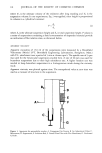
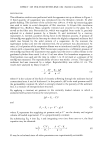
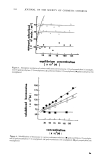
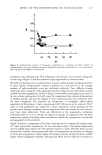
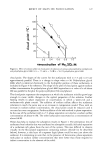
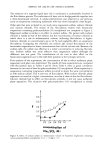
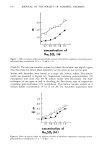
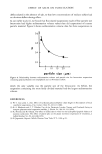
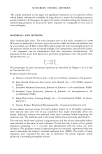
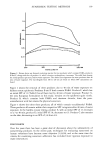
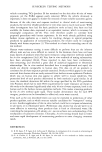
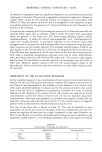
EFFECT OF SALTS ON FLOCCULATION 129 The existence of a separate liquid layer rich in surfactant is undoubtedly involved in the flocculation process. The surfactant-rich layer acts to bridge particles together into a three-dimensional network. A similar phenomenon was observed in our previous study on suspensions containing surfactants with very short hydrophilic chain length. Other salts that were included in our study were magnesium sulfate, sodium chloride and calcium chloride. The results of the flocculation studies with benzocaine suspensions containing polyoxyethylene (15) nonylphenol are compared in Figure 5. Magnesium sulfate is similar in its effect to sodium sulfate. The pattern with sodium chloride is similar to that of the sulfates, but the concentration of sodium chloride at which there is a rise in sedimentation volume, indicating flocculation, is higher. Calcium chloride, in concentrations up to 4.8 N, had negligible effect on suspension flocculation. Comparing the chlorides, the sodium salt caused flocculation of the benzocaine suspensions at lower concentration than did the calcium salt. Between the sodium salts, the sulfate was effective at a lower concentration in inducing floccula- tion. Sodium sulfate was more effective than magnesium sulfate although the difference was not great. The contributions of the ions in their effect on the benzocaine suspensions are in line with their position in the lyotropic series (4). From analysis of the supernatant, the concentration of salt at which surfactant phase separation took place was determined. The results of these experiments are compared with flocculation data in Tables I and II. From Table I, there is good correlation between the two sets of data for polyoxyethylene (15) nonylphenol. Phase separation in suspensions containing magnesium sulfate occurred at about the same concentration as with sodium sulfate. This is also true of flocculation. With sodium chloride, phase separation occurred at a higher concentration, one that is close to that for flocculation. Calcium chloride had no effect on flocculation similarly, it did not cause surfactant phase separation. The situation with polyoxyethylene (7.5) nonylphenol is similar 0.6 0.5 F o.4 0.3 0.2 I I i i I 0.2 0.4 0.6 0.8 1.0 concenfrafion o! Na: $04 (M) Figure 6. Effect of sodium sulfate on sedimentation volume of butamben suspensions containing various polyoxyethylene nonylphenols. ([2) n = 7.5 (&) n = 15.
Purchased for the exclusive use of nofirst nolast (unknown)
From: SCC Media Library & Resource Center (library.scconline.org)