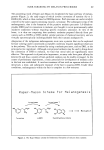
J. Soc. Cosmet. Chem., 40, 65-74 (March/April 1989) Hair coloring by melanin precursors: A novel system for imparting durable yet reversible color effects K. BROWN, A. MAYER, B. MURPHY, T. SCHULTZ, and L. WOLFRAM, Clairol Research Laboratories, Stam•brd, CT 06922. Received July 18, 1988. Synopsis This paper describes an approach to hair coloration which is different from any currently available system. It is based on formation within the hair of deposits of a melanin pigment, very similar in character to that responsible for the color of natural hair. The hair coloring process consists of two steps: a shampoo during which a dye initiator (Cu II) is introduced into the hair structure and, following a rinse, treatment with an aqueous solution of a colorless melanin precursor, 5,6-dihydroxindole. The coloring process is usually complete within five to ten minutes. The melanin deposits are formed in the peripheral regions of hair and thus are readily available for color modification or even total removal. INTRODUCTION While the texture and geometry lie at the roots of hair styling, there is little doubt that the essence of hair's beauty manifests itself in the color. This has been well recognized as much in the distant past as it is now. It is truly remarkable how, using the melanin pigment (a substance without an identifiable chromophore) as its primary colorant, nature via the unique combination of chemistry and physics has been able to generate hundreds if not thousands of shades ranging from the Scandinavian blondes through Scottish red-heads to the intense black hair of Africans and Orientals. Still, the need for color enhancement or, indeed, its change, exists and is the driving force of the hair coloring market as reflected by the variety of products available to the consumer. Setting aside the diversity of claims and application techniques, hair coloring products fall into two general categories: those which are based on materials that are inherently colored and those that use colorless precursors which only develop their hair coloring characteristics on interaction with an oxidant. Dyes of the first category are used in temporary (or shampoo removable) coloring products and semi-permanent formulations (color stable to several shampooings). The second category is the mainstay of the so- called permanent or oxidative hair color. Their importance lies not only in color dura- bility and versatility in producing color change, but also in that the natural hair color can be modified, almost at will, to any desirable hue or shade, whether lighter or darker than the original. This is accomplished through a combination of bleaching of the 65

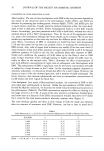
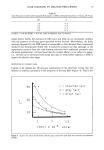
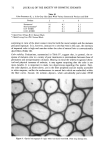
66 JOURNAL OF THE SOCIETY OF COSMETIC CHEMISTS natural melanin pigment and simultaneous color formation. Such shade manipulation is clearly not available in the temporary and semi-permanent products, the function of which is primarily the building up of color intensity. However, while the semiperma- nent colorants lack the versatility of oxidative dyes as well as their durability, they are generally recognized as being gentler to the hair since no peroxide is required in the process. In each hair coloring category a sizeable number of dyes (or precursors) is required to attain a viable palette of shades. These dyes differ not only in their chromophoric char- acteristics but also in their affinity to hair, water solubility, and overall photostability. In color impartation, a delicate balance of constituent dyes is essential to obtain uniform and desirable results. However, subsequent exposure of the dyed hair to shampooing, sunlight, perspiration, and simple wear and tear, often highlights the differences in dye properties which can result in unpredictable color changes. As the natural color of hair is not based on a mixture of dyes, hair care regimens have virtually no effect on hair color, and the latter shows only on-shade fading on prolonged exposure to light (1). It is primarily this wear characteristic of the natural hair pigment that prompted us to explore the feasibility of using melanin as a hair colorant for use under cosmetic conditions. MATERIALS AND METHODS MELANIN PRECURSORS 5,6-Dihydroxyindole, DHI, was prepared by reductive cyclization of the dinitrostyrene as described elsewhere (2,3). The purity of the compound was 99% as determined by tic analysis and Proton NMR. METAL SALTS Reagent quality metal salts were obtained from Fluka Chemical, Switzerland. Unless otherwise specified, the metal salt compositions were prepared by dissolution of the appropriate salt (0.08 M) in a commercial shampoo. If required, the pH of the shampoo was adjusted with either hydrochloric acid to pH 5 or monoethanolamine to pH 9. HAIR TRESSES These were prepared from intact and bleached human hair purchased from DeMeo Brothers, New York. Approximately two grams of hair were used for each tress. The hair was shampooed prior to use, rinsed well with water, and air dried. HAIR DYE!NG Hair coloring involving formation of melanin from DHI was carried out in two consecu- tive steps. First the hair tresses were shampooed with a metal salt-containing shampoo (lathering time was five minutes), rinsed with tap water, and then treated for a specified time with an aqueous composition containing DHI. Both the shampoo and the dyeing steps were carried out at a 1:1 liquor ratio. After coloring, the dyed tresses were thor- oughly rinsed under running tap water and air dried. Commercial hair coloring products were used according to instructions supplied in the kits.
Purchased for the exclusive use of nofirst nolast (unknown)
From: SCC Media Library & Resource Center (library.scconline.org)