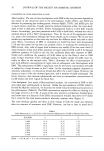
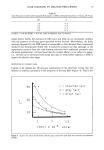
j. Soc. Cosmet. Chem., 40, 91-99 (March/April 1989) Electrophoretic analysis of alkylated proteins of human hair from various ethnic groups C. NAPPE and M. KERMICI, L'Oreal, Laboratoires de Recherche Fond•mentale, 1 Avenue Eugene Schueller, 93600 Aulnay sous Bois, France. Received February 1, 1988. Synopsis The general appearance of hair is influenced by many factors, among which the genetic inheritance (ethnic groups) plays a primary role. The structural modification between a blond hair and a curly black hair could be due to either a different genetic protein expression and/or to a different post-translational arrangement during the hair maturation. One approach for addressing such an issue has been to compare the composition of the hair proteins from various human races according to a procedure previously developed by Marshall and Gillespie (1,2). In agreement with the results of these authors, the electrophoresis of Caucasian brown hair shows two groups of proteins: the low-sulfur proteins (LSP), with a MW ranging from 75 Kd to 35 Kd, and the high-sulfur proteins (HSP), with MW ranging from 30 Kd to 14 Kd. The constitutive S-polypeptides of HSP and LSP show the same molecular weights and mobilities for the different samples (European, African, Indian, and Asiatic hairs), but the intensity of HSP was found rather constant, whereas the LSP displayed a very marked difference. The yield in solubilized proteins increases from 0.3% for a Belgian blond hair sample to 19.5% for one sample of French dark brown hair. The darker the hair, the larger the yield in proteins. The variability of intensity of the bands of LSP was found to correlate with the amount of extracted proteins. This study shows that HSP and LSP behave differently with regard to the reducing buffer. These polypep- tides undergo modification after synthesis, and the formation of cross-links in the hair structure might be involved. This study shows that the hair sulfur-containing proteins are identical whatever their racial origin but that the relationship between HSP and LSP varies according to hair color, suggesting different ways of post-translational modification. INTRODUCTION Skin appendages, such as hair, nail, or wool, are composites containing keratin fila- ments embedded in an intracellular matrix (3). Hair proteins can be extracted by re- ducing agents and then derived to more stable derivatives by S-carboxymethylation (SCM). Several approaches to separate SCM proteins have been reported. Using Seph- adex chromatography (4) or analytical electrophoresis (1,5), the alkylated proteins were separated into two major groups: low-sulfur proteins (LSP) and high-sulfur proteins (HSP). From a number of physicochemical studies reviewed by Fraser and Mac Rae (6), it has been concluded that LSP are mostly fibrillar, whereas HSP derive from the hair matrix. Nutritional deficiencies (7), chemical treatments (2), weathering (8), or genetic disorders (9) may induce modification of distribution of SCM proteins which lead to 91

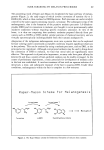
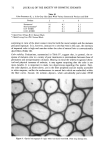
92 JOURNAL OF THE SOCIETY OF COSMETIC CHEMISTS abnormalities in the hair structure. But few data (10) have been reported about the composition of proteins from the hair of humans belonging to different ethnic groups. The purpose of this study was to characterize sulfur protein electrophoretic patterns of hair from individuals of various ethnic groups. Our investigations suggest that the variability observed is related to hair color independently of the donor's racial origin. MATERIALS AND METHODS HAIR SAMPLES Natural tresses free from previous cosmetic treatments from European, African, Indian, and Asiatic subjects were washed with 10% sodium lauryl sulfate (SDS), rinsed with tap water, and air dried. Hairs were cut in the middle part of the tresses (3 to 4 cm length at about 1.5 cm from the proximal root part of hair). To control a possible effect of weathering, a natural Caucasian brown hair tress was exposed for three months under daylight this tress was mounted on a specimen rack and directly exposed to climatic conditions. The total solar energy delivered was about 150 KJ/cm 2. The effect of normal weathering was studied on 1 cm of the proximal root part of hair and 1 cm of the distal end of natural Caucasian hair (hair length about 10 cm). EXTRACTION AND ALKYLATION PROCEDURE Three milligrams of hair were delipidized by immersion in successive baths of petro- leum ether and ethanol and subsequently rinsed with water. Fibers were cut into small pieces. Soluble proteins were extracted with 300 •1 0.05 M Tris HCI, pH 9.3, con- taining 8 M urea and 0.05 M dithiothreitol for 18 hours at room temperature and then treated with 6 •Ci of 2-(•4C)iodoacetic acid (specific activity 57 •Ci/mmole, Amer- sham, U.K.) according to Marshall and Gillespie (1). ELECTROPHORESIS OF SCM PROTEINS SDS-PAGE was performed in the system described by Laemmli (11) but using a step- wise separating acrylamide gel (10-15%) as reported in (1). For the 2-D electrophoresis analysis, the first-dimension separation was carried out in 8 M urea at pH 8.9 in a glass tube using the method of Davis (12). The gel rod was then equilibrated in 0.06 M Tris HCI buffer, pH 7.0, containing 2.3% SDS before being placed on the top of the polyacrylamide slab (11). DETECTION OF PROTEINS Gels were revealed by the fluorographic method of Laskey and Mills (13). Autoradiog- raphy was performed at -80øC using an X-Omatt Kodak film. ESTIMATION OF EXTRACTED PROTEINS Protein amounts were determined by the colorimetric method of Bradford (14) using a Biorad standard kit.
Purchased for the exclusive use of nofirst nolast (unknown)
From: SCC Media Library & Resource Center (library.scconline.org)