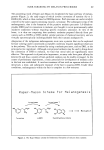
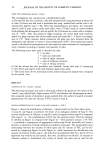
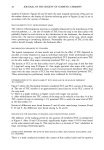
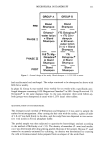
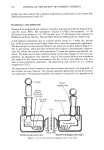
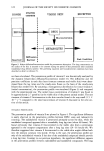
HAIR COLORING BY MELANIN PRECURSORS 69 The pioneering work of Raper and Mason (4) deciphered the basic pathway of melano- genesis (Figure 2), the early stages of which involve conversion of tyrosine (A) to L- DOPA (B), which is then oxidized to DOPAquinone. Both processes are under catalytic control by the same copper-containing enzyme, tyrosinase. The subsequent steps of the melanogenesis, that is the formation of the putative melanin precursor 5,6-dihydrox- yindole (DHI) and its conversion to melanin, are thought to occur spontaneously under oxidative conditions without requiring specific enzymatic assistance. In view of the latter, it is thus not surprising that synthetic melanins prepared directly from pre- cursors such as DOPA or DHI exhibit similar patterns of chemical reactivity and are virtually spectroscopically indistinguishable from their natural analogues (5). Adaptation of the indigenous melanogenesis route into a process that can be exploited for hair coloring under cosmetically acceptable conditions requires significant shortcuts in the pathway. This can be attained by using a melanin precursor, such as DHI, as the principal active ingredient. Although conventional oxidants may be used to bring about the conversion of DHI to melanin, we find that metal salts are significantly more effective. This approach is of particular importance, as many salts have great affinity for keratin (6) and thus a system of hair-anchored catalysis can be readily envisaged. In the course of preliminary experiments, a basic procedure for development of melanin color in the hair was established. It involves treatment of hair with an aqueous solution of a metal salt, a rinse, and subsequent exposure of the hair to aqueous DHI. Under these conditions, melanogenesis within the hair is complete in a few minutes. Raper-Mason Scheme ?or Melanosenesis tyr•oslnase ty•oslnase ? " laX•[•...•c%" • NH• HO/•,,,• NH• Tyrosine L-DOPfl 5•6-Dihydroxyindole Melanin Figure 2. The Raper-Mason scheme for biochemical formation of melanin from tyrosine.

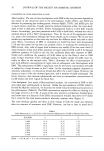
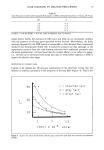
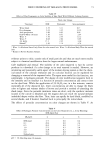
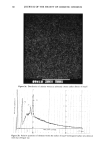
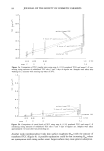
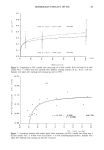
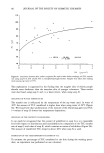
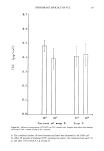
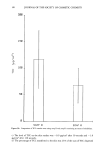
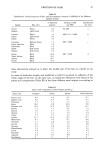
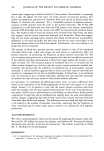
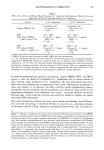
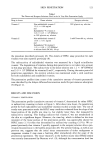
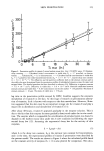
70 JOURNAL OF THE SOCIETY OF COSMETIC CHEMISTS PARAMETERS OF COLOR FORMATION IN HAIR Metal catalysis. The rate of color development with DHI as the dye precursor depends on the nature of the metal ion used in the pretreatment: Cu(II), Fe(II), and Ni(II) are effective in promoting fast melanogenesis, whereas Mg(II), Ti(IV), and AI(III) give rise to much slower coloration. Usually when the melanin formation is fast, the color devel- oped in hair is dark grey to black. Slower melanogenesis leads to a color shift towards brown. Accordingly, grey hair pretreated with Cu(II) is dyed black, whereas the color is medium brown with a Ti(IV) pretreatment. Thus, by the use of the appropriate metal ion, some color modulation through the brown shades can be attained. We do not have satisfactory explanation at this time why and how the different metal ions lead to these color effects. Conversion of DHI to eumelanin by Cu(II) has been well documented (7,8) and this metal ion has been our primary choice in studying the melanization of DHI on hair. Also, salts of copper bind to keratin very readily (6) so that even a brief (5 min) treatment of hair with dilute solutions of copper salts (0.04 M at pH 9.0) deposits sufficient quantity of Cu(II) to dye the hair uniformly black after exposure to DHI. Under such conditions the,'quantity of Cu(II) taken up by the fiber is close to 1000 ppm. Longer treatment times, although leading to higher uptake of Cu(II), have vir- tually no effect on the attained color. Table I illustrates the effect of pretreatment of hair with different concentrations of cuptic salts on subsequent color development with DHI. The melanization of DHI is significant even for the lowest concentration of Cu(II) as judged by a large decrease in the L value. As the eumelanin pigment dispersion is relatively achromatic, its deposition should also affect the a and b values. However, the former is close to 0 for the untreated grey hair, and it remains virtually unchanged. The latter, however, does decrease substantially and even at intermediate concentrations of Cu(II) reaches the level typical for black hair. Color development. As a result of fiber-anchored catalysis, the conversion of DHI to mel- anin takes place preferentially in the hair. Unlike the auto-oxidation of DHI, which is favored by alkaline conditions, we find that the metal-induced melaninization process is less pH-sensitive (Table II). The DHI concentration required for effective coloring is in the range of 0.02 to 0.13 M. A study of the color intensity on bleached, blended grey, and brown hair as a function of the DHI concentration revealed that above 0.07 molar the L value for the dyed tresses reached a relatively constant value (Figure 3). The color develops quickly and there is little change in both the shade and intensity after ten minutes of treatment with DHI. However, one has to bear in mind the L Table I Color Parameters (L, a, and b) for Cu(II)-Catalyzed Melanization of DHI on Blended Grey Hair [Cu(II)]M L a b 0.000 33.4 -0.35 5.33 0.001 18.5 0.15 2.12 0.010 15.4 0.21 1.05 0.025 15.5 0.13 0.55 0.040 16.0 0.15 0.85 0.050 14.8 -0.10 0.95 0.100 14.7 -0.15 0.72 [DHI] = 0.07 M pH = 9.5 color development time = 15 minutes.
Purchased for the exclusive use of nofirst nolast (unknown)
From: SCC Media Library & Resource Center (library.scconline.org)