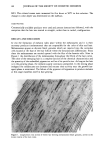
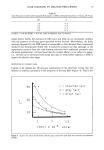
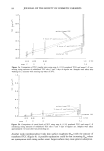
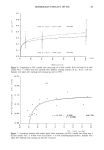
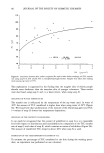
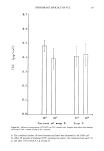
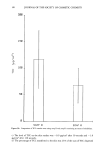
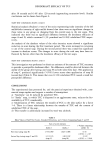
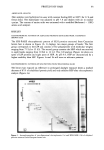
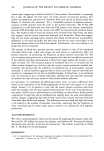
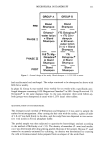
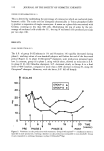
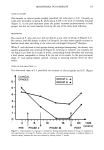
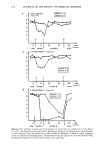
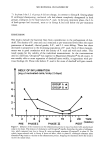
MICROFLORA IN DANDRUFF ! 15 7). In phase I the I.I. of group A did not change, in contrast to Group B. During phase II antifungal shampooing, nucleated cells had almost completely disappeared in both groups, analogous to the final values for P. ovale. In the post-treatment phase, the I.I.s of both groups had increased, more so in Group A but still below the pre-treatment values. DISCUSSION The results exclude the bacterial flora from consideration in the pathogenesis of dan- druff. The density ofP. acnes and cocci remained at pre-treatment levels when the major parameters of dandruff, clinical grades, S.P., and I.I. were falling. These last three decreased in proportion to the decreasing population of P. ovale. Each of these measure- ments was in good correlation with the density of P. ovale and with each other. This result speaks for the validity of the individual measurements. At the concentrations used in a LES base, Octopirox © was superior to Magnesium Omadine © by all counts. It was notably able to cause regression of dandruff more swiftly, in agreement with pre- vious findings (4). Those who believe P. ovale is the cause of dandruff will gain consid- INDEX OF INFLAMMATION (mg of nucleated cells/scalp/2 days) 5 [GROUP A ß 4 • ß G R 0[•.•..•. ß 3 2 1 o (weeks) PRE PHASE • PHASE Tr POST Figure 7. Influence of the treatments on the inflammatory process (in mg of nucleated cells produced per scalp in two days). The mixture of clindamycin and Octopirox © rapidly diminishes the index of inflamma- tion, which remained very low in Group B, using antifungal treatment (Octopirox ©) in phase II. The vehicle (water-ethanol) used in Group A shows no effect, while in phase II, antifungal treatment alone (Omadine © Mg) leads to a decline in the inflammatory process. Stopping the treatments shows the trend to recover the initial values.

116 JOURNAL OF THE SOCIETY OF COSMETIC CHEMISTS erable support from our findings. While we do not deny its commanding importance, the evidence is not complete that dandruff is simply an infection by P. ovale. It is noteworthy that, in our study, Group B in Phases I and II showed threshold values of scaling despite the absence of the yeast at the skin surface. Dandruff cannot be induced by inoculating normal scalps with P. ovale or with dandruff scales. We have repeatedly failed in such attempts. In animals, when P. ovale is topically applied daily in a lipidic medium, scaling and inflammatory reactions are induced (13-15). However, all that scales is not necessarily dandruff, since scaling is a non-specific response to inflamma- tion. In these animal models, scaling resolves when treatment stops. Besides, the con- dition, rapidly regresses, unlike human dandruff which persists in a stable fashion for many decades of adult life. Then, too, dandruff can be caused to regress by therapies which have no effect on P. ovale, [for example, topical corticosteroids and tar shampoos (16)]. In our experimental conditions, a possible cytostatic action on the epidermis is unlikely since Octopirox © acts only via an antifungal mechanism (17). Hereditary influences cannot be ruled out. In our view, dandruff is a multifactorial condition whose initiation is still a mystery. Once scaling begins, P. ovale has increased living room and prolif- erates accordingly. Its products perpetuate the process, an amplification role rather than an inductive one. According to Shuster (6), there is no controversy. P. ovale is the sole cause of dandruff. We continue to be puzzled by the unsolved problems of pathogenesis, acknowledging meanwhile that controlling P. ovale is sensibly the major aim of anti-dandruff therapy. REFERENCES (1) (2) (3) (4) (5) (6) (7) (8) (9) (10) (11) (12) E. W. Brauer, D. L. Opdyke, and C. M. Burnett, The anti-seborrheic qualities of zinc pyrithione in a cream vehicle,J. Invest. Dermatol., 47, 174-175 (1966). G. Imokawa, H. Shimizu, and K. Okamoto, Antimicrobial effect of zinc pyrithione, J. $oc. Cosmet. Chem., 33, 27-37 (1982). R. Marks, A.D. Pearse, and A. P. Walker, The effects of a shampoo containing zinc pyrithione on the control of dandruff, Br. J. Dermatol., 112, 415-422 (1985). E. Futterer, Untersuchungen zur Wirksamkeit Loslicher Antischuppenwirkstoffe, Aerztl-Kosmetol., 15, 421-435 (1985). J.J. Leyden, K.J. McGinley, and A. M. Kligman, Role of microorganisms in dandruff, Arch. Dermatol., 112, 333-338 (1976). S. Shuster, The aetiology of dandruff and the mode of action of therapeutic agents, Br. J. Dermatol., 111, 235-242 (1984). A. B. Ackerman and A.M. Kligman, Some observations on dandruff, J. $oc. Cosmet. Chem., 20, 81-92 (1969). P. W. Belew, E. W. Rosenberg, and B. R. Jennings, Activation of the alternative pathway of com- plement by Malassezia ovalis (Pityrosporum ovale), Mycopathologia, 70, 187-191 (1980). E. W. Rosenberg and P. W. Belew, Improvement of psoriasis of the scalp with ketoconazole, Arch. Dermatol., 118, 370-371 (1982). D. Saint-Leger, A. M. Kligman, and T. J. Stoudemayer, A new method to quantify scaling dandruff, J. Soc. Cosmet. Chem., 39, 179-190 (1988). P. Williamson and A. M. Kligman, A new method for the quantitative investigation of cutaneous bacteria, J. Invest. Dermatol., 45, 498-503 (1965). K. J. McGinley, J. J. Leyden, R. R. Marpies, and A.M. Kligman, Quantitative microbiology of the scalp in non-dandruff and seborrheic dermatitis,J. Invest. Dermatol., 64, 401-405 (1975).
Purchased for the exclusive use of nofirst nolast (unknown)
From: SCC Media Library & Resource Center (library.scconline.org)