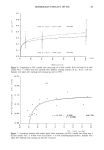
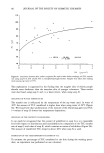
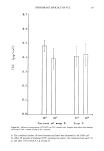
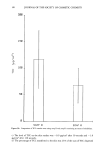
106 JOURNAL OF THE SOCIETY OF COSMETIC CHEMISTS exacerbated allergic contact dermatitis via the alteration of Ia+ epidermal immune cells. In the present study we were able to demonstrate that a short-term application of MBEH could significantly increase the density of Langerhans cells (1.4% to 3.3%) as well as the mean phenotypic expression of the Ia antigenic marker. Several investigators have reported that the increase in Ia q- antigen or analogue in man, HLA-DR, can be directly correlated with an intensified allergic contact dermatitis reaction. Further, our current studies examine more ubiquitous antioxidants, namely BHT and BHA, using an in vitro cell culture system. Results from these experiments strengthen our earlier findings that antioxidants can play a role in altering epidermal immune reactivity. Further, this reponse could be reproduced using a biologically relevant molecule, ara- chidonic acid. In summary, we have presented the results of experiments which demonstrate the use of FACS as a sensitive and precise tool to measure small yet significant identifiable changes in epidermal immune molecules residing in the epidermis. This technique, along with the use of human epidermal cell suspensions obtained from various sources (i.e., sur- gical specimens), theoretically provides one with a technique to determine which cos- metics and/or pharmaceutical formulations may alter the epidermal immune homeo- stasis, thereby potentially leading to exacerbated allergic contact dermatitis both in the home and in the workplace. ACKNOWLEDGMENTS This study was supported in part by NIH Grant AM25252, NIOSH Grant ROI OH02091, and the Elma Margaret Lapp Foundation, Cincinnati, Ohio. The authors are grateful to Ms. Catherine Goldschmidt for her assistance in the prepara- tion of the manuscript. REFERENCES (1) L. A. Rheins and J. j. Nordlund, Modulation of the population density of identifiable epidermal Langerhans cells associated with enhancement or suppression of cutaneous immune reactivity. J. Immunol., 136, 867-876 (1986). (2) L. A. Rheins, E. M. Young, M. L. Nordlund, R. B. Berning, and J. J. Nordlund, Rapid induction of Thy-1 antigenic markers on keratinocytes and epidermal immune cells in the skin of mice fol- lowing topical treatment with common preservatives used in topical medications and in foods, J. Invest. Dermatol., 87, 489-494 (1987). (3) C. A. Janeway, A. K. Bottomly, J. Babich, P. Conrad, S. Conzen, et al., Quantitative variation in Ia antigen expression plays a central role in immune regulation, Immunol. Today, 5, 99-104 (1984). (4) L. K. Roberts, G. G. Krueger, and R. A. Daynes, Correlation between the inducible keratinocyte expression of Ia and the movement of Langerhans cells into the epidermis, J. Immunol., 134, 3781-3784 (1985). (5) L. K. Roberts, G. J. Spangrude, R. A. Daynes, and G. G. Krueger, Correlation between keratino- cyte expression of Ia and the intensity and duration of contact hypersensitivity responses in mice, J. Immunol., 135, 2929-2936 (1985). (6) V. B. Morhenn, B. J. Nickoloff, and J. N. Mansbridge, Induction of the synthesis of Triton-soluble proteins in human keratinocytes by gamma interferon, J. Invest. Dermatol., 85, 27-29 (1985). (7) L. A. Rheins, L. Barnes, S. Amornsirpanitch, C. E. Collins, and J. J. Nordlund, Suppression of the

ANTIOXIDANTS IN IMMUNITY 107 (8) (9) (lO) (11) (12) (13) (14) cutaneous immune response following topical application of the prostaglandin PGE2, Cell Immunol., 106, 33-42 (1987). V. B. Morhenn, C. J. Benike, D. J. Charron, A. Cox, G. Mahrle, G. S. Ward, and E. B. Engle- man, Use of the fluorescence-activated cel sorter to quantirate and enrich for subpopulations of human skin cells, J. Invest. Dermatol., 79, 277-282 (1982). G. Cardier, C. Dezuttev-Dambuyant, R. LeFebure, and D. Schmitt, Flow cytometry sorting of unlabeled epidermal Langerhans cells using forward and orthogonal light properties, J, Immunol. Methods, 79, 79-88 (1985). J. J. Nordlund, Chemical agents which mimic the effects of ultraviolet radiation on the epidermis: A possible role for oxidation of arachidonic acid on expression of surface markers on epidermal cells, in The Effect of Radiation of the Immune System, J. Parrish, ed. (Johnson &Johnson Baby Products and New Mexico Health Coalition, 1983), pp. 161-180. D. L. Archer, J. A. Weiss, and B. G. Smith, Inhibitory effect of an antioxidant, butylated hydroxy- anisol, on the primary in vivo immune response. Proc. Soc. Exper. Biol. Med., 154, 289-294 (1977). D. L. Archer and J. A. Weiss, Chemical dissection of the primary and secondary in vivo antibody responses with butylated hydroxyanisole and gallic acid, Drug Chem. Toxicol., 2, 155-166 (1979). D. L. Archer, J. A. Weiss, and B. G. Smith, Suppression of macrophage-dependent T-lymphocyte function(s) by gallic acid, a food additive metabolite, Proc, Soc. Exper. Biol. Med., 156, 456-469 (1977). I. Lang, K. McKam, R. G. Cabella, P. Cergeley, and P. Feher, Immunosuppressive effect ofantioxi- dants. 6th International Congress of Immunology, Toronto, Canada, 608 (abstr.)(1986).
Purchased for the exclusive use of nofirst nolast (unknown)
From: SCC Media Library & Resource Center (library.scconline.org)