j. Soc. Cosmet. Chem., 42, 351-359 (November/December 1991) Cationic-anionic surfactant interactions on wool: Implications for the conditioning of human hair LEO A. HOLT, The Textile and Fibre Research Institute, 23 Cumberland Rd., Pascoe Vale 3044, Australia. Received April 16, 1991. Presented at the 24th Annual ConJ•rence of the Australian Society of Cosmetic Chemists, South Australia, 1989. Synopsis Pretreatments of wool with an anionic surfactant influenced the uptake of cationic surfactants. When the amount of anionic surfactant on the wool was greater than the amount of cationic surfactant applied subsequently at pH 7, the initial sorption was followed by desorption of both anionic and cationic surfactants. Desorption of cationic surfactants was not observed when a large excess was applied. When wool was treated first with a cationic surfactant and then with an anionic surfactant at pH 3.5, similar sorption/ desorption effects were observed. The formation of an anionic-cationic complex that slowly desorbs from the fiber may be important in the mechanism of conditioning of hair with cationic surfactants. Procedures such as washing hair with non-ionic surfactants or cold acetone/salt water mixtures are shown to be ineffective for removing ionic surfactants from hair. Previous experiments investigating the conditioning of hair may, therefore, have been misin- terpreted. INTRODUCTION The mechanism of the conditioning of hair is not well understood (1). The action of cationic surfactants as conditioning agents for hair has been attributed to their greater binding by comparison with anionic surfactants and to their durability to rinsing treatments (2). However, structural rearrangement of the sorbed cationic at the fiber surface has been proposed (3) as being essential for conditioning, so as to explain the effects that can be obtained on hair by dodecyltrimethylammonium chloride treatment only when the hair is subsequently warmed. Robbins et al. (4) found that the uptake of cationic surfactants by hair was faster if the hair had been pretreated with an anionic surfactant, and that equilibrium sorption occurred at a lower level than with untreated hair. The uptake of surfactants by wool has been well documented for both anionics and cationics. Length of surfactant side-chain, and time, temperature, and pH of applica- tion, all affect the amount of surfactant bound to wool (5-8). The extraction of anionic surfactants from wool has also been extensively studied (9). 351

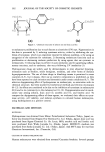
352 JOURNAL OF THE SOCIETY OF COSMETIC CHEMISTS The treatment of wool with anionic and cationic surfactants, alone and consecutively in either order, is the subject of this paper. The results are considered in the light of the rearrangement proposed by Finkelstein and Laden (3) to account for conditioning of human hair with cationic surfactants. EXPERIMENTAL MATERIALS Merino wool top that had been further extracted with light petrol, ethanol, and water was used for all wool experiments. Hair samples were obtained from a hairdresser. Sodium dodecylsulphate (SDS, molecular weight 288) and cetyltrimethylammonium bromide (CTAB, m. wt. 364) were pure commercial samples. Fluorescent anionic (P-6, m. wt. 391) and cationic (CP-6, m. wt. 391) surfactants, based on the pyrazoline chromophore, were prepared by Dr. I. W. Stapleton of this laboratory as their ammo- nium salts (7,10). P-6 has been shown to have surfactant properties similar to those of sodium cetyl sulphate (7,9,10). Based on molecular weight and length of hydrophobic side-chain, CP-6 would be expected to have properties similar to CTAB. METHODS Wool top samples (5 g) were treated with SDS or P-6 at pH 3.5 (0.01 M acetic acid) in an Ahiba Turbomat dyeing machine, liquor/wool ratio 60:1. The samples were treated for 60 min at 60øC, then brought to 80øC over 30 min and heated at 80øC for 30 min. Wool treatments with CTAB were carried out at pH 7.0 (0.05 M phosphate) using the same dyeing cycle as for SDS. Both SDS and CTAB were completely taken up by wool under these conditions. After-treatments with CP-6 or CTAB were carried out at pH 7.0 (0.05 M phosphate), 60øC, liquor/wool 40:1. After-treatments with P-6 were carried out at pH 3.5 (0.01 M acetic acid), 60øC, liquor/wool 40:1. CP-6 and P-6 contents of wool were analyzed by measuring the optical density at 350 nm of the treatment solutions after dilution with 50% aqueous ethanol. This method determines the total of free and complexed fluorescent surfactant because the anionic-cationic surfactant complexes are dissociated in this solvent. Anionic and cationic surfactant contents of hair samples were measured by extracting duplicate samples (0.25 g) with isopropanol/pH 7 buffer 1:1 (10 ml) at 60øC for 60 min. The extracted samples were rinsed with water (2 ml) and the rinsings added to the extracts. Each extract was evaporated to dryness by heating to approximately 80øC in a stream of nitrogen. One part was then treated for 1 hr in a steam bath with 1 M HC1 (1 ml) and then evaporated to dryness as previously. This procedure was shown to be effective in hydrolyzing sodium dodecylsulphate. The hydrolyzed and unhydrolyzed extracts were then analyzed for surfactant content by carrying out two-phase titration (11) using sodium dodecylsulphate (10-3 M) or Hyamine 1622 (10- 3 M), respectively. Cationic surfactant content was determined from the SDS titer for the hydrolyzed samples. Anionic surfactant content was determined by adding the SDS titer for the hydrolyzed samples to the Hyamine 1622 titer for the unhydrolyzed sample.
Purchased for the exclusive use of nofirst nolast (unknown)
From: SCC Media Library & Resource Center (library.scconline.org)