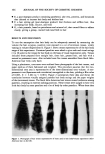
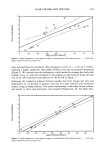
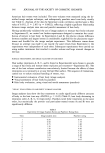
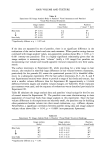
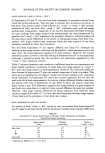
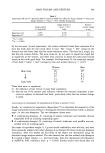
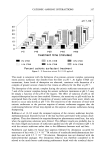
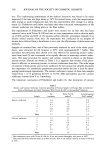
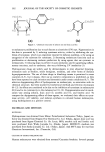
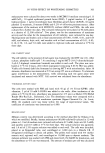
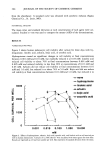
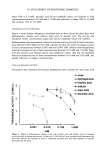
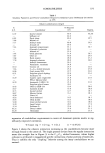
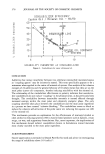
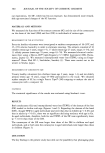
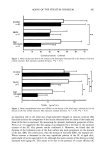
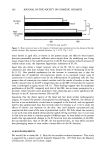
366 JOURNAL OF THE SOCIETY OF COSMETIC CHEMISTS 0.5 mM of arbutin, 0.5 mM of kojic acid, or 0.5 mM of ascorbic acid. The intensity of the melanin color in cells cultured with arbutin was lighter than in the untreated cells. However, the melanin color in cells cultured with kojic acid or ascorbic acid was similar to that of the untreated cells. Table I compares the effects of each agent on melanin production. The amount of melanin was obtained from the absorbance at 475 nm after dissolution of intracellular melanin with 1N NaOH. Melanin production was significantly reduced by 0.5 mM of arbutin, but not by 0.5 mM of kojic acid or 0.5 mM of ascorbic acid. DISCUSSION It has been reported that cultured neonatal human melanocytes are an excellent source for the study of pigment cell biology (15,16), even though there may be fundamental biochemical differences, such as proliferation and melanin production in adult versus neonatal melanocytes (17,18). In this study, we used neonatal human melanocytes for in vitro assay of some depigmenting agents. We compared the inhibitory effects of these agents on melanin synthesis, using cell viability, tyrosinase activity, and the amount of melanin as an index. Hydroquinone dose-dependently reduced tyrosinase activity per well at concentrations at which no change in cell viability was seen. The specific cytotoxicity of hydroquinone in melanoma has previously been investigated (11, 12). An explanation of this cytotoxicity may be that hydroquinone acts as a substrate for tyrosinase, thereby being converted into toxic semiquinone radicals (9). The degradation of melanosomes observed in the pres- ence of topically applied hydroquinone in guinea pig skin melanocytes has been de- scribed (10). It is possible that reduction of tyrosinase activity occurs by melanosomal specific cytotoxicity. Furthermore, under certain conditions, hydroquinone is a better substrate for tyrosinase than tyrosine itself (8). This suggests that the depigmentation induced by this agent is strongly associated with its inhibition of tyrosinase activity apart from cytotoxicity. Whether these two mechanisms are responsible for the reduc- tion of tyrosinase caused by hydroquinone remains unknown. Linoleic acid (0.001 mM and 0.005 mM) did not reduce tyrosinase activity in the wells. However, this agent might have marked cytotoxic effects at higher concentrations, at which it reduced cell viability to less than 20%. Therefore, linoleic acid seems to have reduced tyrosinase activity per well at higher concentrations by decreasing the number of viable cells. The cytotoxic action of linoleic acid has also been reported in the presence of the culture medium containing EGF (19). We studied the in vivo effect of linoleic acid Table I Effects of Arbutin, Kojic Acid, and Ascorbic Acid on Melanin Content in Human Melanocytes Melanin per cell Agent Concentration (ng/cell) Control 0.794 + 0.032 Arbutin 0.5 mM 0.592 + 0.012' Kojic acid 0.5 mM 0.768 + 0.162 Ascorbic acid 0.5 mM 0.746 -+ 0.004 Cultures of 40,000 cells/well were incubated with these agents for three days. Results are expressed as ng of melanin per cell and represent mean -+ SD. * P 0.001, vs control.

IN VITRO EFFECT OF WHITENING COSMETICS 367 on mouse hair follicle melanocytes. Topically applied 2% linoleic acid markedly sup- pressed hair growth, but the depigmenting effect was less significant (data not shown). These findings suggest that linoleic acid inhibits melanin production by its cytotoxic action. Arbutin dose-dependently reduced tyrosinase activity per well at concentrations below 1.0 mM. The amount of melanin was reduced to 75% by arbutin. The effect of arbutin was about 1/100 that of hydroquinone. Arbutin can also act as a good substrate for tyrosinase, similar to hydroquinone the effectiveness of these drugs as depigmenting agents may be related to their ability to act as substrates for tyrosinase. The depig- menting effect of a milky lotion containing 3% arbutin was tested on some forty individuals suffering UV irradiation on the inner side of the upper arm. The lotion was applied three times daily. After seven days, skin pigmentation was significantly inhib- ited compared with placebo lotion (20). Kojic acid markedly inactivated isolated tyrosinase by chelation (1). In cultured human melanocytes, tyrosinase activity per well was slightly reduced at the concentration range between 0.1 mM and 0.5 mM but was rapidly dose-dependently reduced at higher concentrations. At lower concentrations, a dose-dependent decrease was not observed. These findings suggest that the inhibitory effect of kojic acid on tyrosinase activity in the cell culture system is smaller than that of arbutin at concentrations that do not affect cell viability, even though marked inactivation was observed in isolated tyrosinase. Nair et al., using Yucatan minipigs as an assay in vivo (21), reported that kojic acid topically applied for 12 weeks resulted in no activity. On the contrary, Mishima et al. reported that topically applied kojic acid prevented artificial pigmentation in humans by irra- diation with UV (22). The discrepancy between these results may be ascribed to the difference of species or the method of in vivo testing. Further investigations are needed to clarify this. In ascorbic acid-treated cells, tyrosinase activity per well was slightly reduced at final concentrations between 0.05 mM and 0.50 mM but rapidly dose-dependently reduced at higher concentrations. Ascorbic acid was oxidized rapidly in the aqueous phase, with loss of activity in time and very limited transcellular potency owing to its being hydrophilic. Some ascorbic acid derivatives were considered stable and transcutaneous with regard to antipigmenting function (23,24). Magnesium ascorbic acid phosphate, which is a stable ascorbic acid derivative, prevented erythema and postinflammatory hyperpigmentation following UV irradiation in humans (23). Lipophilic ascorbic acid derivatives also prevent freckles and melanin spots on the skin (24). Ascorbic acid is a potent antioxidant in addition to its anti-enzymatic properties (23,26), it may prevent melanin synthesis by suppressing inflammation (25) and by inhibiting the auto- oxidation of dopa and dopaquinone. These results suggest that, to clarify those effects not ascribed to cytotoxicity, assays for both tyrosinase activity and cell viability in human melanocyte cultures are necessary to evaluate the depigmenting action. As whitening cosmetics are usually used daily, if the depigmenting effect is caused by cytotoxicity, irreversible hypopigmentation will occur somewhat in the skin or hair. In this assay system, arbutin inhibits melanin production by reducing tyrosinase activity, not by non-specific cytotoxicity, and the depigmenting action of arbutin is stronger than that of kojic acid or ascorbic acid. However, the end exposure site for whitening cosmetics will usually be intact skin. We need to consider both in vitro and in vivo effects.
Purchased for the exclusive use of nofirst nolast (unknown)
From: SCC Media Library & Resource Center (library.scconline.org)