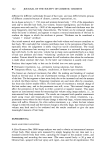
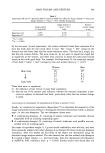
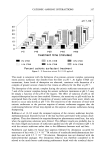
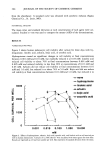
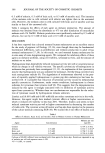
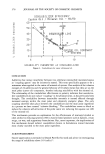
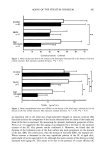
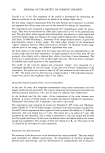
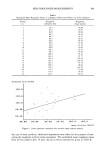
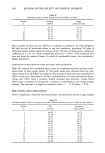
364 JOURNAL OF THE SOCIETY OF COSMETIC CHEMISTS from the absorbance. A standard curve was obtained with synthetic melanin (Sigma Chemical Co., St. Louis, MO). STATISTICAL ANALYSIS The mean value and standard deviation at each concentration of each agent were cal- culated. Student's t-test was used to compare the means (-+SD) of the determinations. RESULTS VIABLE CELLS PER WELL Figure 2 shows human melanocyte cell viability after culture for three days with hy- droquinone, linoleic acid, arbutin, kojic acid, or ascorbic acid. Hydroquinone caused no significant changes in cell viability at final concentrations between 0.00! mM and 0.0! mM, but markedly reduced it at 0.05 mM. Linoleic acid reduced cell viability to about 70% at final concentrations between 0.00! mM and 0.005 mM and reduced viability to less than 20% at concentrations of 0.01 mM and 0.05 mM. Arbutin did not reduce cell viability at final concentrations between 0.0 ! mM and 1.0 mM, but reduced it to about 74% at 5.0 mM. Kojic acid did not reduce cell viability at final concentrations between 0.0! mM and 1.0 mM, but reduced it to 3000 2000 lOOO o.ool o none --- hydroquinone -- linoleic acid -e-arbutin • kojic acid [] ascorbic acid ß . . ....al ß , , .an..I ß . ß nl=..I ß ß . 0.010 0.100 1.000 10.000 rnM Figure 2. Effects of hydroquinone, arbutin, kojic acid, ascorbic acid, and linoleic acid on cell survival per well in human melanocytes. Cultures of 12,500 cells/cm 2 were incubated with these agents for three days. Results are expressed as cell survival number per well. Bars represent of standard deviation from the mean.

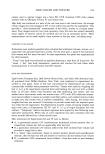
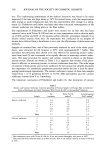
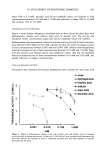
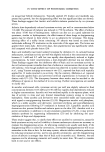
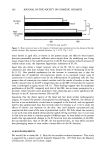
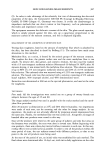
IN VITRO EFFECT OF WHITENING COSMETICS 365 about 54% at 5.0 mM. Ascorbic acid did not markedly reduce cell viability at final concentrations between 0.01 mM and 0.5 mM, but reduced it to about 78% at 1.0 mM and to about 35% at 5.0 mM. TYROSINASE ACTIVITY PER WELL Figure 3 shows human melanocyte tyrosinase activity after culture for three days with hydroquinone, linoleic acid, arbutin, kojic acid, or ascorbic acid. The activity was calculated within concentration ranges that did not markedly reduce cell viability. Hydroquinone dose-dependently reduced tyrosinase activity per well at final concentra- tions between 0.00 ! mM and 0.0 ! mM. Linoleic acid did not reduce tyrosinase activity at final concentrations between 0.001 mM and 0.005 mM. Arbutin dose-dependently reduced tyrosinase activity at final concentrations between 0.01 mM and 1.0 mM. Kojic acid and ascorbic acid showed similar dose-inhibitory curves they did not markedly reduce tyrosinase activity at final concentrations between 0.01 mM and 0.50 mM, but rapidly reduced it at higher concentrations. CELLULAR MELANIN CONTENT Cell pellets were obtained after human melanocytes were cultured for three days with o none * hydroquinone x linolei½ acid -• 3 -e-arbutin • kojic acid • • ascorbic acid _ 2 ........ I . ß . . ....I ...... ill . • ß • 0.001 0.010 0.100 1.000 rnM Figure 3. Effects of hydroquinone, arbutin, kojic acid, ascorbic acid, and linoleic acid on tyrosinase activity per well in human melanocytes. Cultures of 12,500 cells/era 2 were incubated with these agents for three days. Results are expressed as units of mushroom tyrosinase per well. Bars represent of standard deviation from the mean. z o • 0
Purchased for the exclusive use of nofirst nolast (unknown)
From: SCC Media Library & Resource Center (library.scconline.org)