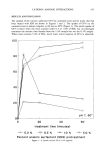
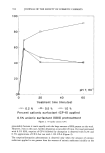
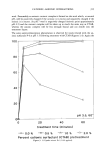
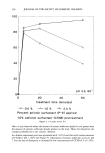
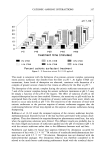
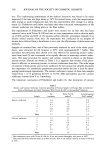
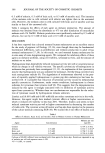
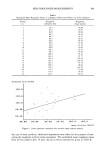
CATIONIC-ANIONIC INTERACTIONS 3 5 9 surfactant and structural rearrangement occur during conditioning of human hair, might therefore depend on interaction of the cationic surfactant with nonextracted anionic surfactant. Such anionic-cationic complexes would behave in a manner similar to oils, and the re-oiling of hair after shampooing and conditioning might be effected through such a mechanism. Should this mechanism for conditioning be substantiated by further testing on human hair, then it will be evident that the level of anionic surfactant on hair as a result of shampooing treatments is a major factor in determining conditioning behavior. The importance of length of alkyl chain and pH of both shampoo and conditioners might also be sorted out scientifically on the basis of such a mechanism. ACKNOWLEDGMENT The competent technical assistance of Ms. J. A. Saunders is gratefully acknowledged. REFERENCES (1) (2) (3) (4) (5) (6) (7) (8) (9) (10) (11) (12) C. R. Robbins, in Chemical and Physical Behaviour of Human Hair, 2nd ed. (Springer-Verlag, New York, 1988), Chapter 5. G. V. Scott and C. R. Robbins, Effects of surfactant solutions on hair fiber friction, J. Soc. Cosmet. Chem., 31, 179-200 (1980). P. Finkelstein and K. Laden, The mechanism of conditioning hair with alkyl quaternary ammonium compounds, Appl. Polym. Symp., 18, 673-680 (1971). C. R. Robbins, G. V. Scott, and J. D. Barnhurst, The influence of presorbed anionic surfactant on the sorption of cationic surfactant by hair, Textile Res. J., 38, 1197-1199 (1968). R. G. Aickin, The adsorption of sodium alkyl sulphates by wool and other fibres,J. Soc. Dyers Colour., 60, 60-65 (1944). J. A. Maclaren and J. A. McDermott, Some effects of the sorption of cationic surfactants by wool, J. Text. Inst., 75, 416-423 (1984). L. A. Holt and I. W. Stapleton, The distribution of some fluorescent anionic surfactants applied to wool, J. Soc. Dyers Colour., 104, 387-392 (1988). L. A. Holt and I. W. Stapleton, The distribution of anionic and cationic surfactants on wool, Proc. Textile Inst. World Conf., Sydney 1988, pp. 420-427. L. A. Holt and J. Onorato, The substantivity of various anionic surfactants applied to wool, Textile Res. J., 59, 653-657 (1989). L. E. Aicolina, I. H. Leaver, and I. W. Stapleton, Fluorescence quenching studies of the self- association in water of fluorescent surfactants. Alkaryl-2-pyrazolines and alkyl-7-hydroxycoumarins, Dyes and Pigments, 11, 213-232 (1989). E. Heinerth, in Anionic Surfactants-Chemical Analysis, John Cross, Ed. (Marcel Dekker, New York, 1977), p. 221. G. V. Scott, C. R. Robbins, and J. D. Barnhurst, Sorption of quaternary ammonium surfactants by human hair, J. Soc. Cosmet. Chem., 20, 135-152 (1969).

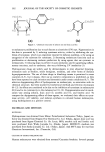
J. Soc. Cosmet. Chem., 42, 361-368 (November/December 1991) In vitro effectiveness of several whitening cosmetic components in human melanocytes KAZUHISA MAEDA and MINORU FUKUDA, Shiseido Research Center, Yokohama, Japan. Received March 20, 1991. Synopsis The inhibitory action of arbutin, kojic acid, and ascorbic acid on tyrosinase activity in human melanocytes was compared. These substances are active whitening cosmetic components. Hydroquinone was used as a positive control. The depigmenting effect of linoleic acid, which has been reported to inhibit melanin synthesis, was compared with those of arbutin, kojic acid, and ascorbic acid. Human melanocytes were cultured with each agent in multiwell plates for three days, and the tyrosinase activity was assayed using L-DOPA as a substrate. In addition, cell viability of three-day cultures was evaluated by the MTT test. Arbutin dose-dependently reduced tyrosinase activity at final concentrations between 0.0! mM and 1.0 mM, at which no change in cell viability was seen. This action was about 1/100 that of hydroquinone, and was stronger than that of kojic acid and ascorbic acid. Linoleic acid did not reduce tyrosinase activity at non-cytotoxic ranges. Furthermore, at concentrations of 0.5 mM, the amount of melanin was reduced significantly by arbutin. These results suggest that arbutin inhibits melanin production in humans by reducing tyrosinase activity and that the depigmenting action of this agent is stronger than that of kojic acid or ascorbic acid. INTRODUCTION In Japan various whitening beauty cosmetics that contain arbutin (hydroquinone-[3-D- glucopyranoside Figure la), kojic acid (5-hydroxy-2-(hydroxymethyl)-4-pyrone Figure lb), or ascorbic acid as their principal components are commercially available for clinical use. These cosmetics are considered to be effective for preventing freckles due to ultra- violet exposure. Arbutin, the active component of the crude drug uvae ursi folium described in the Japanese Pharmacopoeia, is a hydroquinone glycoside. Kojic acid is a substance ex- tracted from the fermentation fluid of koji mold. Mishima et al. suggested that this agent inhibits tyrosinase activity by chelating the copper in tyrosinase [EC. 1.14.18.1] (1), the key enzyme for melanin formation. Shono et al. reported that the long-chain fatty acid, linoleic acid, also inhibits melanin production (2). Pigmentation, such as freckles, in the skin is caused by enhanced melanin production 361
Purchased for the exclusive use of nofirst nolast (unknown)
From: SCC Media Library & Resource Center (library.scconline.org)