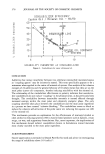
386 JOURNAL OF THE SOCIETY OF COSMETIC CHEMISTS Corcuff et al. (1-4). The roughness of the profile is determined by measuring the shadows produced on the impression by means of an oblique light source. For this study, negative impressions from the volar forearm were measured. A colorless and pigment-free silicon mass was used as the material for taking the impressions. The impressions were evaluated at approximately 20 x magnification under the micro- scope. They were lit from below by a fiber optic light source at 45 ø to the perpendicular axis. The skin relief, which appears three-dimensional, was taken by a video camera and stored for further image processing in the image analyser (Quantitative Image Analyser, Carl Zeiss, D-2000 Hamburg 1, Germany) of the image analysis system. A grey level discrimination creates a binary image. The white phase consists of the illuminated "slopes" (negative furrows). Other structures are excluded. To eliminate further insig- nificant parts of the image, two different algorithms were used. All these objects in the image with the longer axis direction not perpendicular to the incident light direction were eliminated. An angle mismatch of not more than 30 ø was accepted. Also objects with a relation feret y/feret x less than 2 were eliminated. The direction y is perpendicular to the incident light direction. This was done to eliminate air bubbles and round particles in the measurement. The width of the correctly shaped and orientated "slopes" were measured by a cordlength algorithm all over the image. To get data of all furrows independent of the orientation, the replica was turned in steps of 30 ø and measured in each direction of 0 ø to 180 ø . The mean of all six directions (an average of about 1.500 individual measure- ments) was used as the roughness value of one replica. MEASURING SKIN ROUGHNESS WITH A STYLUS INSTRUMENT In the past 10 years, skin roughness measurement using stylus instruments has been largely perfected and automated. The various measuring and evaluation procedures are well-documented (references 5-8), and we need not examine them further here. In the methods used for this study, silicon impressions of the volar forearm were prepared. A variety of dental masses are suitable materials for making the impressions. Xantopren © from Bayer AG, Leverkusen, was used in this study. The impressions were evaluated by means of a Hommel T 20 © stylus unit (Hommel- werke GmbH, D-7730 VS-Schwenningen, Germany) with fully automatic sample feed. Circular © silicon impressions (skin negatives) were sectioned off radially in 12 different directions. The scan length was 12.5 mm. The sensor has a tip radius of 5 •m. The parameter R z was measured, and in order to determine it, the scan length was divided into five equal-sized areas. In each area, the distance from the highest peak to the lowest trough was established. The average of these five distances is R z (2). The mean of the 12 values for R z was taken for each impression. MEASURING THE SKIN MOISTURE The moisture of the skin in vivo can be determined by various methods. The most widely used procedures are infrared spectroscopy, the measurement of electrical properties, photoacoustic spectroscopy, and the determination of transepidermal loss of moisture

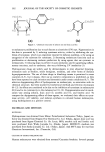
SKIN ROUGHNESS MEASUREMENTS 387 (9). In order to take advantage of the relatively low cost of determining the electrical properties of the skin, the Corneometer CM 820 PC (Courage 8: Khazaka Electronic GmbH, D-5000 Cologne 41, Germany) was chosen. It avoids the disadvantages in impedance methods that use direct current or low frequency, such as polarization of electrodes and impedance contact (10). The equipment measures the dielectric constant of the skin. The glass-coated capacitor, which is simply pressed against the skin, sets up a capacitance proportional to the moisture content of the stratum corneum, and this is displayed digitally. MEASUREMENT OF THE ADSORPTION OF METHYLENE BLUE Testing skin roughness, based on the amount of methylene blue which is adsorbed by the skin, has been described in detail by Padberg (11). The authors have made some alterations to this method. Methylene blue, as a cation, is bound by the anionic groups of the stratum corneum. The rougher the skin, the greater surface area and the more methylene blue it can adsorb. To remove dirt, skin grease, and cosmetic residues, the skin was first washed with a 1% non-ionogenic surfactant solution (Nonoxynol-30 Arkopal N 300©) after 30 minutes drying, it was stained with the methylene blue solution. This solution consists of up to 80% of a 1% non-ionogenic surfactant solution and 20% of a 0.5% methylene blue solution. The unbound color was removed using a 0.25 % non-ionogenic surfactant solution. The bound color was then extracted with a solution consisting of 2% sodium lauryl sulphate, 50% isopropyl alcohol, and 48% demineralized water. Extinction was determined at 660 nm in the spectral photometer, and used as the value for roughness. TEST DESIGN First study. All the investigations were carried out on a group of twenty female test subjects between the ages of 35 and 60. The image analysis method was used in parallel with the stylus method and the meth- ylene blue procedure. After 20 minutes' acclimatization at 22øC and 60% relative humidity, two impressions were made of each area, one for scanning and the other for image analysis. In our experience, the results are not adversely affected by preparing several impressions from the same area. Finally, the methylene blue test was carried out. Altogether 22 ranges of branded skin care products were tested in this way. Since all the products were tested on the same group of subjects and only four areas on the forearms were available, the tests were done in several runs. Before beginning with new products, there was a three-day interval without cosmetics in each case. In this way, overlap effects were avoided as far as possible. In order to test all the products within the same period of time, the test subjects started with different products, so that at any point in the test all products were being used. At the start of the period of use, an initial value was established for each method. The final values were determined after 14 days' use, with twice-daily application on the volar
Purchased for the exclusive use of nofirst nolast (unknown)
From: SCC Media Library & Resource Center (library.scconline.org)