378 JOURNAL OF THE SOCIETY OF COSMETIC CHEMISTS (33) P. C. K. Lui and H. G. Donnelly, Determination of liquid mixture solubility parameters and inter- action energy densities, Am. Inst. Chem. Engr. J., 19, 574 (1973). (34) A. Purkayastha andJ. Walkley, Studies in solubility parameter theory for mixed solvent systems, Can. J. Chem., 50, 834 (1972). (35) B. A. Wolf and M. M. Willms, Measured and calculated solubility of polymers in mixed solvents: Co-nonsolvency, Makrolmol. Chem., 179, 2265 (1978). (36) J. H. Hildebrand, Solubility. XII. Regular solutions, J. Am. Chem. Soc., 51, 69 (1929). (37) S. H. Yalkowsky, S.C. Valvani, and G. L. Amidon, Solubility of nonelectrolytes in polar solvents IV: Nonpolar drugs in mixed solvents, J. Pharm. Sci., 65(10), 1488 (1976). (38) W. E. Acree, N. M. Pontikos, and C. L. Judy, Solubility in binary systems. 6. Prediction of biphenyl solubilities based on the Wilson model, Int. J. Pharmaceut., 31, 225-230 (1986). (39) W. G. T. Kranandonk and D. Frenkel, Simulation of the adhesive hard-sphere model, Mol. Phys., 64(3), 403-424 (1988). (40) J. C. Rasaiah, J. Zhu, and S. H. Lee, Solvent effects. I. Effect of a hard sphere solvent on the sticky electrolyte model, J. Chem. Phys., 91, 495-504 (1989). (41) C. D. Vaughan and D. A. Rice, Predicting emulsion stability by the required HLB equation,J. Disp. Sci. Technol., 11(1) 83-91 (1990). (42) J. W. Williams, The behavior of electrolytes in dilute methyl alcohol, J. Am. Chem. Soc., 53, 303-319 (1931). (43) T. Endo, M. M. Ito, Y. Yamada, H. Saito, K. Miyazawa, and M. Nishio, Gas-liquid partition chromatoraphic evidence that alkyl-phenyl interactions are specific for the shape of the alkyl group, J. Chem. Soc. Chem. Commun., 1430-1432 (1983). (44) E. Speiss, G. Schuster, and H. Pospischil, Turbidity titration as an aid in the development of cosmetic and pharmaceutical formulations, Cosmet. Toiletr., 95(8), 31-36 (1980). (45) J. Lang, R. Rueff, M. Dinh-Cao, and R. Zana, Influence of alcohol and surfactant structure on the extent of the monophasic domains for some water/oil/alcohol/surfactant systems, J. Colloid Interface Sci., 101(1), 184-192 (1984). (46) M. J. Kahlweit, J. Colloid Interface Sci., 90, 197 (1982). (47) H. Brown, Sunscreens need vehicles, Cosmet. Toiletr., 101(3), 51-54 (1986). (48) N. R. Draper and H. Smith, Applied Regression Analysis, 2nd ed. (John Wiley & Sons, New York, 1981). (49) H. Kamphuis and R. J. J. Jongschaap, The squeezing of liquid out of a structured dispersion,J. Coll. Interface Sci., 107(2), 579 (1985). (50) A. C. Dweck, The sweating of lipsticks, Cosmet. Toiletr., 96(1), 29-32 (1981).

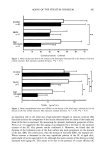
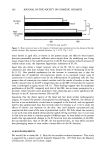
j. Soc. Cosmet. Chem., 42, 379-383 (November/December 1991) Functional changes of the stratum comeurn associated with aging and photoaging SHINOBU SAIJO, KUMIKO HASHIMOTO-KUMASAKA, MOTOJI TAKAHASHI, and HACHIRO TAGAMI, Department of Dermatology, Tohoku University School of Medicine, Sendal (S.S., K. H-K. H.T. ), and Shiseido Basic Research Laboratories, Yokohama (M. T. ), Japan. Received February 1, 199 I. Synopsis To evaluate the effect of photoaging on the function of the stratum corneum (SC), we measured conductance (Gx) to high frequency current of 3.5 MHz, which is a parameter for the hydration state of the skin surface transepidermal water loss (TEWL), which is a parameter for the water barrier function of the SC and the size of corneocytes, a parameter for epidermal proliferation, on the dorsa of the hand (DH) and foot (DF) in individuals of various ages. Gx and TEWL tended to decrease with age, and this tendency was more clear on the relatively protected skin of the DF than on the exposed skin of the DH. The corneocytes of elderly persons were larger than those of children and, in both groups, those of the DF were larger than those of the DH. The age-associated alterations in the SC function seem to occur relatively uninfluenced by chronic sun exposure. INTRODUCTION Recently it has been clarified that, in addition to intrinsic aging, actinic damage contributes to the aging process on chronically sun-damaged areas such as the face and the dorsum of the hand (1). To study the effect of chronic actinic damage on skin function, we need to compare the skin sites with similar regional properties such as the dorsa of the hand (DH) and foot (DF). Although the DH and DF share a similar embryogenetic background, the DH is an exposed area in contrast to the DF, which is relatively protected from sun exposure by socks and shoes. In this paper, we investigate the stratum corneum (SC) function on the DH and DF. The hydration state of the SC, which can be assessed by electrical conductance (Gx) to high frequency, is an important factor in influencing skin plasticization (2). Evaporation of water from the skin, which checks a vital channel for the maintenance of heat balance in the human body, is indicative of the barrier function of the SC in transepidermal water loss (TEWL) when measured in a cool non-sweating environment (3). As a consequence, we measure both Gx and TEWL to estimate the SC function. Contrary to 379
Purchased for the exclusive use of nofirst nolast (unknown)
From: SCC Media Library & Resource Center (library.scconline.org)