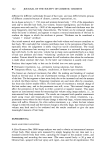
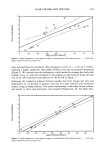
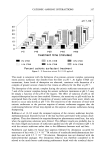
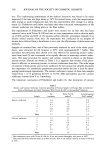
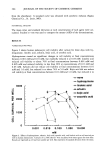
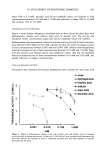
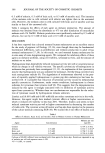
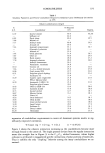
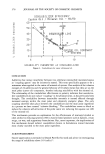
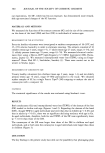
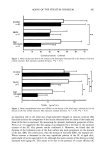
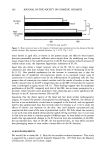
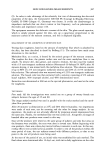
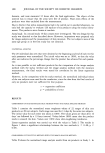
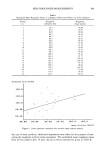
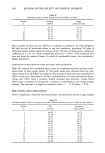
380 JOURNAL OF THE SOCIETY OF COSMETIC CHEMISTS our expectation, the DF, which has less sun exposure, has demonstrated more remark- able age-associated changes of the SC function. MATERIALS AND METHODS We measured the functions of the stratum corneum (SC) and the size of the corneocytes on the dorsa of the hand (DH) and foot (DF) in individuals of various ages. MEASUREMENT OF THE SC FUNCTION Forty-six healthy volunteers were investigated at ambient temperatures of 18-20øC and 25-35% relative humidity in order to eliminate sweating. The subjects consisted of 16 children (mean age 3 years, range 1-5), 17 adults (mean age 27 years, range 21-34), and 13 elderly persons (mean age 70 years, range 63-78). We measured electrical conduc- tance (Gx) using a Skicon-200 © high-frequency (3.5 MHz) hygrometer (lBS, Hama- matsu, Japan) (2). We measured transepidermal water loss (TEWL) using an Evapo- rimeter © (Servo Med EP-1, Stockholm, Sweden) (3). These were carried out in the winter in Sendai, Japan. MEASUREMENT OF CORNEOCYTE SIZE Twenty healthy volunteers [ten children (mean age 2 years, range 1-3) and ten elderly persons (mean age 76 years, range 65-88)] participated in the study. We obtained surface samples of SC by a single Post-it Tape © (3M) stripping to analyze the size of corneocytes with a computer (4). STATISTICS The statistical significance of the results was evaluated using Student's t-test. RESULTS Both conductance (Gx) and transepidermal water loss (TEWL) of the dorsum of the foot (DF) tended to decline with age (Figures I and 2). Regarding the dorsum of the hand (DH), though TEWL in aged individuals was lower than that in children (p 0.05) and that in adults (p 0.01), there was no significant declining tendency with age in Gx. In aged individuals, therefore, both Gx and TEWL of the DF were significantly lower (p 0.01) than those of the DH. The corneocytes of the DF were larger than those of the DH in children and aged individuals, and at both sites the corneocytes in aged individuals were larger than those in children (Figure 3). DISCUSSION The key finding in the present study has ruled out the possibility that photoaging plays

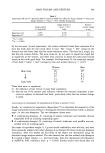
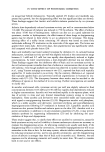
AGING OF THE STRATUM CORNEUM 381 Children n=16 Adults n=17 Aged individuals n=13 0 10 20 30 40 50 60 70 Conductance (/•m ho) Figure l. Mean conductance (Ox) on the dorsum of the hand (open columns) and on the dorsum of the foot (closed columns). Bars represent standard deviation. **p 0.01. Children n=16 Adults n=17 Aged indivi•als n=13 0 5 10 TEWL (g/m2/h) Figure 2, Mean transepidermal water loss (TEWL) on the dorsum of the hand (open columns) and on the dorsum of the foot (closed columns). Bars represent standard deviation. *p 0.05 **p ( 0.01. an important role in the induction of age-associated changes in stratum corneum (SC) functions as far as the comparison of the results obtained from the dorsa of the hands and those of the feet is concerned. By measuring the dynamic mechanical properties of skin, Potts et al. (5) suggested that skin aging is accompanied by a decrease in the moisture content of the SC. Our present results confirmed it. Moreover, we found that the decrease of the hydration state of the skin surface was more prominent on the dorsum of the foot (DF), the covered area, than the dorsum of the hand (DH), the exposed site. Water content is decreased in the very superficial portion of the SC of aged skin, particularly ofxerotic aged skin (6-8), although the water content of the dermis is rather increased with aging (6). This seems to be due to the presence of a more efficient SC
Purchased for the exclusive use of nofirst nolast (unknown)
From: SCC Media Library & Resource Center (library.scconline.org)