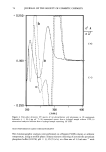
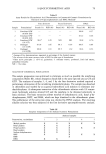
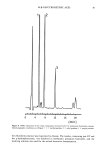
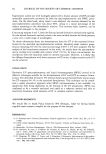
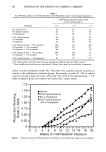
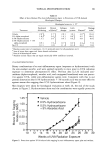
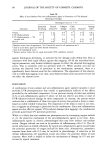
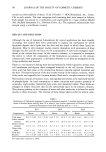
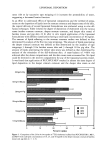
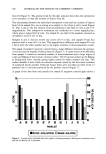
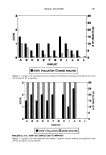
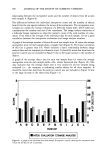
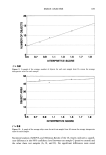
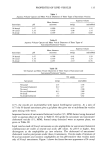
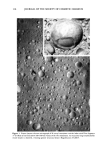
TOPICAL PHOTOPROTECTION 87 HISTOLOGY The histological methods and grading scales were those used previously (6,7,9). Briefly, biopsies (2 x 10 mm) from visibly non-tumor-bearing dorsal skin were taken at sacrifice (CO 2 asphyxiation), fixed in 10% buffered formalin, embedded in paraffin, and sec- tioned at 6 to 10 microns. Sections were then stained with a variety of stains. The grading scales were based on our observations of the sequence of histological events that occur in the mouse, 0 representing the histological observations on normal 10- to 12-week-old mice, and the upper end of the scales being the maximum observed change in the parameters in previous work (6). The histological parameters and the correspond- ing stains and grading scales (half-grade increments) follow: epidermal thickness (H&E stain), 0-3 scale glycosaminoglycan content (Mowry stain), 0-4 scale dermal cellu- larity (H&E stain), 0-3 scale elastosis (Luna stain), 0-5 scale and collagen damage (Van Gieson stain), 0-5 scale. The scores for all parameters were summed to arrive at a histological damage index, a convenient way to express histological data in a single number. STATISTICS The Student t-test was used to determine the statistical significance of differences among treatment groups. RESULTS AND CONCLUSIONS UVB PHOTOPROTECTION Binary combinations of an anti-inflammatory agent (naproxen, ibuprofen, or hydro- cortisone) with an anti-oxidant (alpha-tocopherol, ascorbic acid, or 2,4-hexadien-l-ol) were applied topically to mice prior to each UVB radiation exposure to determine photoprotective effect. The combinations were more effective against mouse skin wrin- kling than were the individual test materials (Table I). The level of protection by the combination appears to be additive of the individual component effects. A plot of the data for a typical example, 0.5 % hydrocortisone q- 5 % alpha-tocopherol, is presented in Figure 1. Noteworthy is the delay in onset of wrinkling by the combi- nation. There was no delay for the individual components. Skin biopsies were taken for histological evaluation at week 20, the end of the study shown in Figure 1. The histological results parallel the visible skin-wrinkling data i.e., the combination was overall more protective against alterations than were the individual components (Table II). As expected, dermal cellularity scores were reduced for the treatments involving an anti-inflammatory agent. Of particular interest are the collagen histological scores, which correspond well with the observed skin-wrinkling grades. Other data from our lab (2,9,10) also suggest a similar association. The combination treatment groups were stopped before a good assessment of tumor development could be made. However, most vehicle control mice had at least one visible

88 JOURNAL OF THE SOCIETY OF COSMETIC CHEMISTS Table I Anti-Wrinkling Effect of Anti-Oxidant Plus Anti-Inflammatory Agent vs Individual Components % Wrinkling reduction a when vehicle control wrinkle grade is: Treatment 0.5 1.0 1.5 5% Ascorbic acid 5% Alpha-tocopherol 5% Hexadienol 0.5% Hydrocortisone 1% Ibuprofen 1% Naproxen 0.5% Hydrocortisone q- 5% tocopherol 1% Ibuprofen q- 5% tocopherol 1% Naproxen q- 5% tocopherol 0.5% Hydrocortisone q- 5% ascorbate 1% Naproxen q- 5% ascorbate 0.5% Hydrocortisone q- 5% hexadienol 70 54 23 82 53 29 64 48 25 38 35 26 68 40 29 64 48 26 100 b 73 b 60 b 100 b 87 b 67 b 88 73 b 52 b 100 b 90 b 73 b 91 80 b 42 82 75 b 47 b a All wrinkle grade reductions shown here are significantly different from the vehicle control. b These wrinkle grade reductions are significantly different from those for the individual components. tumor at study termination (week 20), while there was a greatly reduced incidence of tumors in the combination treatment groups. For example, at week 20, 70% of vehicle control mice had at least one tumor, while only 10% of the 0.5% hydrocortisone q- 5% alpha-tocopherol group had tumors (one mouse had a single tumor). 1.75 1.50 1.25 1.00 0.75 050 ' 0.25 ß Vehicle ß 0.5% Hydrocortisone •5% o•-Tocopherol A0.5% Hydrocortisone +5% o•-Tocopherol 0 2 4 6 8 10 12 14 16 18 20 Weeks of UVB Radiation Exposure Figure 1. Protection against UVB-induced skin wrinkling by anti-inflammatory agent plus anti-oxidant.
Purchased for the exclusive use of nofirst nolast (unknown)
From: SCC Media Library & Resource Center (library.scconline.org)