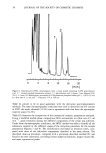
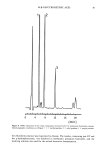
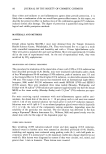
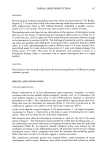
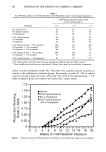
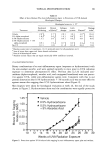
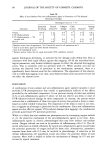
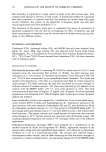
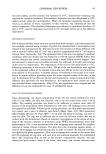
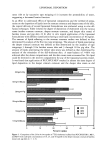
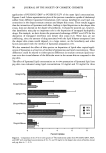
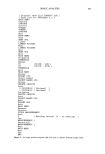
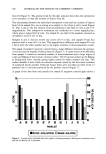
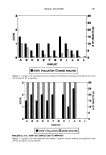
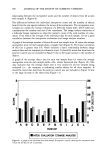
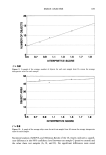
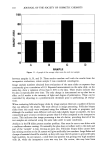
TOPICAL PHOTOPROTECTION 89 Table II Effect of Anti-Oxidant Plus Anti-Inflammatory Agent in Prevention of UVB-Induced Histological Changes Histological scores (n = 5) a Epidermal Dermal Collagen GAG Treatment thickening cellularity b damage increase Elastosis b Damage index c 2.0 2.7 2.0 ] 1.0 ] 4.9 12.6 ] 5% Alpha-tocopherol 1.8 2.6 1.4 ] 0.6] 4.2 10.6 ] 0.5% Hydrocortisone 1.5 ] 2.0 1 0.9 ] 0.6 4.8 9.8 ] 0.5% Hydrocortisone + 5% alpha-tocopherol 0.9] 1.9 0.1] 0.2] 4.4 7.5] No UV 0.1 ] 1.0 ] 0 0.1 0.6 ] 1.8 ] Baseline scores (start of experiment, 10-12-week-old mice) for all parameters are 0. Sum of scores from upper and lower dermal evaluations. Sum of all histological scores. Brackets enclose values that are equal statistically (95% confidence interval). UVA PHOTOPROTECTION Binary combinations of an anti-inflammatory agent (naproxen or hydrocortisone) with the anti-oxidant ascorbic acid were applied topically to mice prior to UVA radiation exposure to determine photoprotective effect. Previous data (2,3,6) indicated anti- oxidants (alpha-tocopherol, ascorbic acid, and conjugated hexadienes) were not protec- tive against UVA, while anti-inflammatory agents were. Consistent with this is our present observation that 0.5 % hydrocortisone + 5% ascorbic acid was no more effective against mouse skin sagging than 0.5% hydrocortisone alone (Figure 2). Skin biopsies were taken for histological evaluation at week 26, the end of the study shown in Figure 2. Hydrocortisone alone and the combination were equally protective 1.25 ß Vehicle T [] 0.5% Hydrocortisone _/• 1.00 ß 0.5% Hydrocortisone ,y .L + 5% Ascorbic Acid ß/ 0.75 0.50 0.25 0 I I I I I ß I I I I I •' I I I I I I I 10 12 14 16 18 20 22 24 26 28 30 Weeks of UVA Radiation Exposure Figure 2. Protection against UVA-induced skin sagging by anti-inflammatory agent plus anti-oxidant.

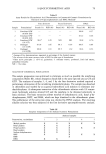
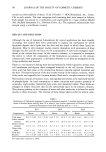
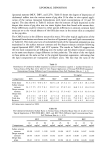
90 JOURNAL OF THE SOCIETY OF COSMETIC CHEMISTS Table III Effect of Anti-Oxidant Plus Anti-Inflammatory Agent in Prevention of UVA-Induced Histological Changes Histological scores (n = 5) a Epidermal Dermal Collagen GAG Treatment thickening cellularity b damage increase Elastosis b Damage index c 0.5% 0 I 1.5] 0.2 0.1 3.1 0.5% Hydrocortisone q- 5% ascorbic acid 0.2
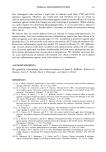
Hydrocortisone 1.5 0.4 2.4 ] No UV 0 0.6 ] 0.1 0.4 ] 6.8] 4'91 4.5 1.1] Baseline scores (start of experiment, 10-12-week-old mice) for all parameters are O. Sum of scores from upper and lower dermal evaluations. Sum of all histological scores. Brackets enclose values that are equal statistically (95% confidence interval). against histological alterations, as indicated by the damage index (Table III). This is consistent with their equal efficacy against skin sagging. Of all the individual histo- logical parameters, only dermal cellularity appears to reflect the observed skin-sagging scores. This is consistent with our previous work (7). While ascorbic acid did not increase the observed level of protection in the combination treatment, there is a significantly lower elastosis score for the combination. The importance of this observa- tion to visible skin sagging is not clear, since hydrocortisone alone was protective yet did not affect the elastosis score. DISCUSSION A combination of anti-oxidant and anti-inflammatory agent applied topically to mice provides UVB photoprotection that overall is approximately additive of the effects provided by the individual components. In our previous testing of either anti-oxidants (2,3) or anti-inflammatory agents (7) alone, we did not observe any delay in onset of UVB radiation-induced damage by these compounds. In contrast, the present results indicate that a combination of these two types of actives does provide a delay in onset, based on visible wrinkle evaluations. The importance of the delay in onset is not clear, but it suggests an advantage in protection for the combination. Since anti-inflammatory agents are also effective against UVA-induced damage (skin sagging), the combination provides good broad UV spectrum protection. While it is likely that anti-oxidants are photoprotective by scavenging oxygen radicals (1-3), the protective mechanism of the anti-inflammatory agents is not clear. Anti- inflammatory agents in chronic photodamaged skin may have indirect anti-oxidant action. Oxygen radicals can arise as by-products of inflammatory cells (11). The ob- served reductions in dermal cellularity by topical anti-inflammatory agents would lessen the potential generation of oxygen radicals by these cells. Alternatively, proteolytic enzymes from these cells (12) may be involved in photodamage. A reduction in the dermal inflammatory cell population would also reduce the potential release of such enzymes. More work is needed to define the mechanisms of damage by UV and pro- tection by topical treatment.
Purchased for the exclusive use of nofirst nolast (unknown)
From: SCC Media Library & Resource Center (library.scconline.org)