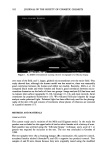
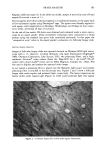
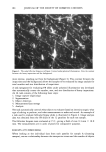
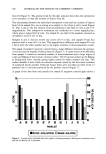
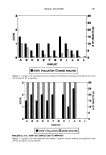
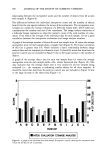
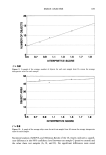
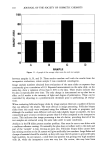
TOPICAL PHOTOPROTECTION 91 Our histological data indicate a high level of elastosis with both UVB and UVA radiation exposures. However, our results here and elsewhere (2) do not reveal an obvious association between the effectiveness against elastosis and the efficacy of a topical treatment against visible skin changes and other histological parameters. While elastosis is a useful marker for identifying photodamaged skin, it is not clear how it relates to other photodamage events. Further effort is necessary to define the association among these events. We believe that the results observed here are relevant to human photoprotection. In human testing, both anti-oxidants and anti-inflammatory agents have been shown to be effective against acute skin photodamage (13-18). Tocopherol is protective against lipid peroxidation (13), while ascorbic acid reduces the severity of UV-induced erythema (14). Several anti-inflammatory agents also inhibit UV-induced erythema (15-18). Addition- ally, we have observed that both tocopherol and hydrocortisone inhibit the UV induc- tion of human epidermal ornithine decarboxylase and that acute photoprotection pre- dicts chronic photoprotection (manuscripts in preparation). We therefore anticipate that the acute observations on humans will translate into chronic benefits for anti-oxidants and anti-inflammatory agents, used either alone or in combination. ACKNOWLEDGMENTS We gratefully acknowledge the technical assistance of James F. McBride, Rebecca A. Runyan, Larry F. Patrick, Mark J. Benzinger, and Jayne L. Ritter. REFERENCES (1) H. S. Black, Potential involvement of free radical reactions in ultraviolet light-mediated cutaneous damage, Photochem. Photobid., 46, 213-221 (1987). (2) D. L. Bissett, R. Chatterjee, and D. P. Hannon, Photoprotective effect of superoxide-scavenging anti-oxidants against ultraviolet radiation-induced chronic skin damage in the hairless mouse, Pho- todermatol. Photoimmunol. Photomed., 7, 56-62 (1990). (3) D. L. Bissett, S. Majeti, J. L. Fu, J. F. McBride, and W. E. Wyder, Protective effect of topically applied conjugated hexadienes against ultraviolet radiation-induced chronic skin damage in the hair- less mouse, Photodermatol. Photoimmunol. Photomed., 7, 63-67 (1990). (4) D. L. Bissett, R. Chatterjee, and D. P. Hannon, Chronic ultraviolet radiation-induced increase in skin iron and the photoprotective effect of topically applied iron chelators, Photochem. Photobiol., 54, 215-223 (1991). (5) L. H. Kligman, F. J. Akin, and A.M. Kligman, The contributions of UVA and UVB to connective tissue damage in hairless mice, J. Invest. Dermatol., 84, 272-276 (1985). (6) D. L. Bissett, D. P. Hannon, and T. V. Orr, An animal model of solar-aged skin: Histological, physical, and visible changes in UV-irradiated hairless mouse skin, Photochem. Photobiol., 46, 367-378 (1987). (7) D. L. Bissett, R. Chatterjee, and D. P. Hannon, Photoprotective effect of topical anti-inflammatory agents against ultraviolet radiation-induced chronic skin damage in the hairless mouse, Photodermatol. Photoimmunol. Photomed., 7, 153-158 (1990). (8) D. L. Bissett, G. G. Hillebrand, and D. P. Hannon, The hairless mouse as a model of skin photo- aging: Its use to evaluate photoprotective materials, Photodermatol., 6, 228-233 (1989). (9) D. L. Bissett, D. P. Hannon, and T. V. Orr, Wavelength dependence of histological, physical, and visible changes in chronically UV-irradiated hairless mouse skin, Photochem. Photobid., 50, 763-769 (1989). (10) R. Chatterjee, M. J. Benzinger, J. L. Ritter, and D. L. Bissett, Chronic ultraviolet B radiation- induced biochemical changes in the skin of hairless mice, Photochem. Photobid., 51, 91-97 (1990).

92 JOURNAL OF THE SOCIETY OF COSMETIC CHEMISTS (11) (12) (13) (14) (15) (16) (17) (18) E. W. Kellogg and I. Fridovich, Superoxide, hydrogen peroxide, and singlet oxygen in lipid perox- idation by xanthine oxidase system, J. Biol. Chem., 250, 8812-8817 (1975). E. A. Kitchen, W. Dawson, K. D. Rainsford, and T. Cawston, "Inflammation and Possible Modes of Action of Anti-Inflammatory Drugs," in Anti-Inflammatory andAnti-Rheumatic Drugs, K. D. Rains- ford, Ed. (CRC Press, Boca Raton, FL, 1985), pp. 48-52. R. Rampoldi, N. Macedo, W. Alallon, and J. Sanguimetti, Topical vitamin E and ultraviolet radiation on human skin, Med. Cutan, Ibero Lat. Am., 18, 269-272 (1990). J. Murray, D. Darr, J. Reich, and S. Pinnell, Topical vitamin C treatment reduces ultraviolet B radiation-induced erythema in human skin, Clin. Res., 39, 548A (1991). T. F. Anderson, C. Peterson, and T. Hamilton, Meclofenomate inhibition of UV-induced erythe- ma--A randomized, placebo-controlled, double-blind study, Photoderm., 6, 63-68 (1989). W. S. Miller, F. R. Fuderman, and J. G. Smith, Aspirin and ultraviolet light-induced erythema in man, Arch. Dermatol., 95, 357-358 (1967). E. K. Edwards, S. N. Horwitz, and P. Frost, Reduction of the erythema response to ultraviolet light by non-steroidal antiinflammatory agents, Arch. Dermatol. Res., 272, 263-267 (1982). P. M. Farr and B. L. Diffey, A quantitative study of the effect of topical indomethacin on cutaneous erythema induced by UVB and UVC radiation, Brit. J. Dermatol., 115, 453-466 (1986).
Purchased for the exclusive use of nofirst nolast (unknown)
From: SCC Media Library & Resource Center (library.scconline.org)