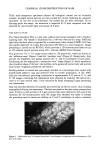
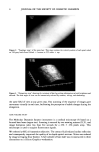
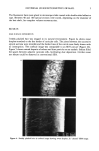
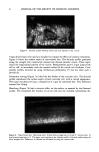
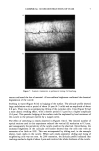
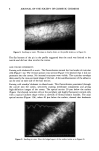
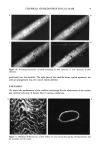
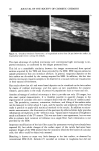
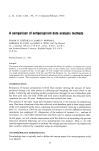
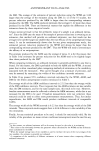
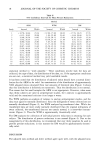
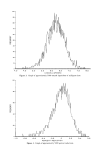
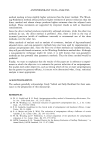
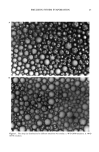
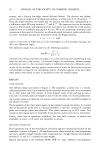
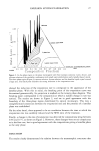
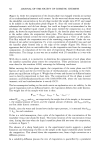
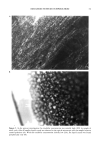
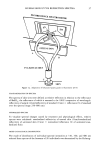
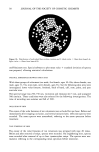
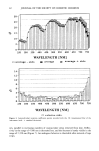
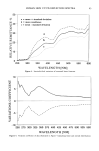
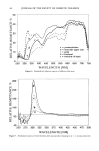
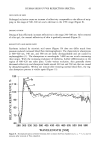
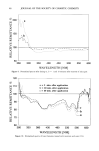
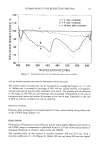
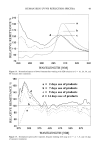
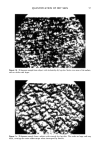
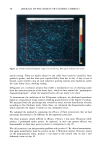
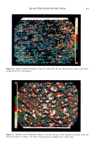
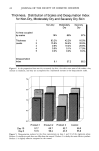
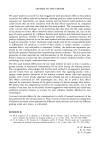
EMULSION SYSTEM EVAPORATION 31 Figure 5. In the present investigation the emulsifier concentration was initially high (10% by weight of total), and a film of lamellar liquid crystal was observed in the optical microscope with the sample between crossed polarizers (A). With the emulsifier concentration initially low (2%), the liquid crystal was found peripherically only (B).

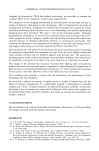
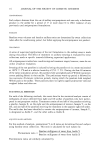
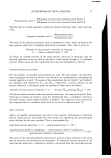
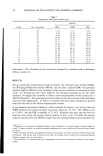
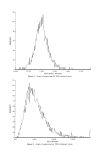
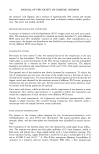
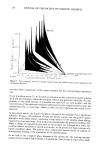
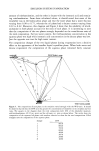
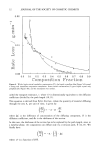
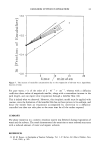
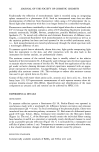
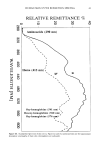
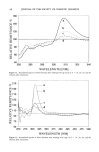
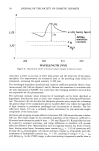
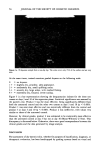
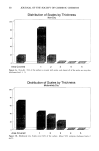
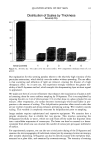
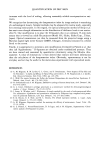
32 JOURNAL OF THE SOCIETY OF COSMETIC CHEMISTS 0,02 0.01 ¸ 0.00 0.0 [] 0.1 0.2 0.3 0.4 0.5 0.6 0.7 0.8 0.9 Cornposi[ion Fraction Figure 6. With a higher initial emulsifier concentration ([•), the liquid crystalline film (Figure 5A) caused a strong and immediate evaporation retardation. Lower initial concentration (*) gave liquid crystal only peripherically (Figure 5B), and the retardation was modest. called the transport resistance, r, where 1/r is dimensionally equivalent to the diffusion coefficient divided by the path length (10,11). This equation is derived from Fick's first law, where the quantity of material diffusing through the area A, per unit of time, is given by: = -A. o.zX T where AC is the difference of concentration of the diffusing component, D is the diffusion coefficient, and Ax is the thickness of the section. In this case, the thickness of the section has to be replaced by the path length, since in a lameliar phase, the components can diffuse only via a tortuous path, 8 (12,13). We finally have: = -A ß ß AC where 1/r is a function of D/8.
Purchased for the exclusive use of nofirst nolast (unknown)
From: SCC Media Library & Resource Center (library.scconline.org)