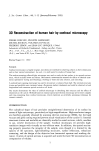
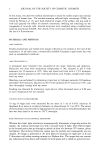
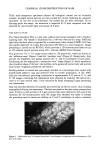
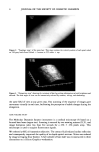
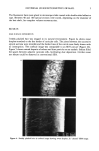
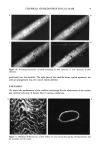
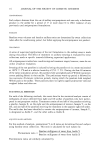
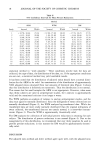
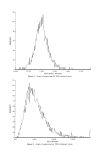
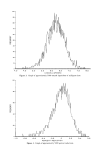
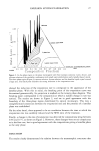
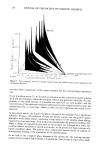
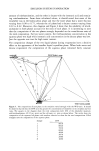
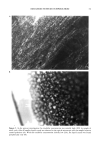
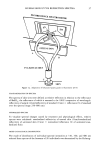
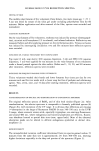
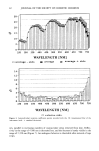
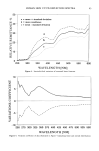
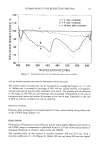
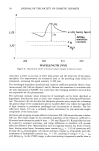
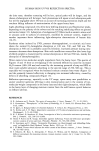
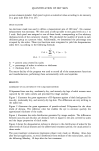
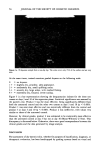
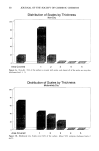
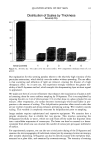
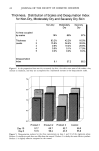
HUMAN SKIN UV/VIS REFLECTION SPECTRA 37 FLUORESCENCE SPECTROMETER A FITTING BOX UV-LIGHT-GUIDES SKIN Figure la. Adaptation of bifurcated quartz guide to fluorimeter LS 50. STANDARDIZATION OF SPECTRA The spectra of skin sites were defined as relative reflection in relation to the reflectance of BaSO4, the reflectance of which is assumed to be 100% irrespective of wavelength: reflectivity of sample (1/nm)/reflectivity of standard (1/nm) = reflectance (% of standard over the spectral range 250-800 nm). NORMALIZED SPECTRA To visualize spectral changes caused by treatment and physiological effects, relative spectra were calculated: standardized reflectivity of treated skin (1/nm)/standardized reflectivity of untreated skin (1/nm) = normalized reflectance (% of untreated stan- dardized skin). MODE OF STATISTICAL DISTRIBUTION The mode of distribution of individual spectral intensities at 310, 340, and 480 nm selected from spectra of the forearms of 20 individuals was determined by the Kolmog-

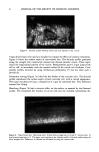
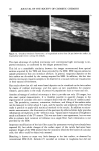
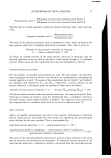
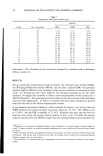
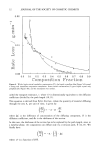
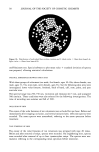
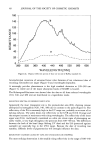
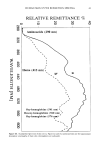
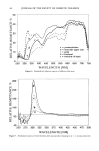
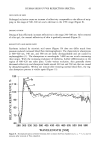
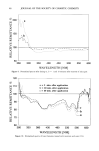
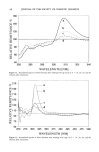
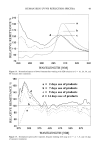
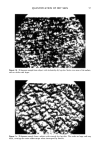
38 JOURNAL OF THE SOCIETY OF COSMETIC CHEMISTS Figure lb. Distribution of individual fibers within common end C (dark circles = fibers from branch A light circles = fibers from branch B). oroff-Smirnow test. Special software to plot mean value q- standard deviation of spectra was prepared, allowing statistical calculations. SPECTRAL DIFFERENCES BETWEEN BODY SITES With three groups of volunteers (ten male, five female, ages 10-20a eleven female, one male, ages 31-55a nine male, seven female, ages 56-72a) the following skin sites were investigated: lower volar forearm, forehead, back of hand, calf, nose, palm, and post auricular area. The spectral range was 250-750 nm, excitation and emission slit 3 nm, and scanspeed 500 nm/min. These conditions were also selected for the following investigations. The time of recording was summer and fall of 1991. OCCLUSION OF SKIN The center of the volar forearms of ten volunteers was occluded for one hour. Before and immediately after stopping occlusion, and several minutes later, reflection spectra were recorded. The mean spectra were normalized, referring to the mean spectrum before treatment. TAPE STRIPPING OF SKIN The center of the volar forearms of ten volunteers was stripped with tape 20 times. Before and after removal of strips, spectra were recorded. On neighboring sites, spectra were recorded after removal of up to four cyanoacrylate strips. The spectra were nor- malized, referring to the corresponding mean spectrum before treatment.
Purchased for the exclusive use of nofirst nolast (unknown)
From: SCC Media Library & Resource Center (library.scconline.org)