j. Soc. Cosmet. Chem., 46, 301-320 (November/December 1995) Interactions of cleansing bars with stratum corneum proteins: An in vitro fluorescence spectroscopic study S. MUKHERJEE, M. MARGOSIAK, K. ANANTHAPADMANABHAN, K. YU, and M. ARONSON, Unilever Research, 45 River Road, Edgewater, NJ 07020. Received May 15, 1995. Synopsis The interactions of stratum corneum proteins with formulated cleansing bar compositions as well as with several of their constituent surfactants were studied by a steady-state fluorescence probe technique. The binding of anionic surfactants to corneum proteins was monitored by their displacement of the well known protein-binding fluorescence probe ANS (1-anilinonaphthalene-8-sulfonic acid). The changes in fluores- cence generally correlated with direct measurements of surfactant binding to the corneum using radiolabeled pure surfactants. The results indicate that both a high-glycerol triethanolammonium soap based cleansing bar composition and a pure-alkali metal soap composition appear to have higher binding affinity for corneum proteins and leave more residue bound to these proteins after rinsing than cleansing bars based on the synthetic detergent, sodium fatty acyl isethionate. The extent of surfactant binding to the corneum proteins in a realistic washing situation correlates well with clinical measurements of the in vivo harshness potential of these cleansers. The pitfalls in using other probe molecules, such as fluorescein, that possess hydrlyzable groups to quantify surfactant binding and the correct interpretation of the data are also discussed. INTRODUCTION Repeated use of personal cleansing bars can damage the skin, drying out the stratum corneum and eventually causing irritation, e.g., erythema. It is believed that these cutaneous effects are a consequence of damage to the stratum corneum barrier by the anionic surfactants in the cleanser. It has also been suggested that the residual surfactant present in skin after washing with a harsh soap might be the primary cause for skin roughness (1,2) and tightness (3). The ability of surfactants to bind to and denature stratum corneum proteins is also believed to make a significant contribution to surfactant-induced barrier damage (4,5). However, these correlations have been based primarily on studies of interactions of pure surfactants with soluble proteins such as bovine serum albumin (6) or with the insoluble corn protein, zein (7). There have been relatively few studies (8,9) probing the details of the interactions of formulated cleansing products with stratum corneum, particularly the site(s) of interaction with this com- posite multiphase structure. 301

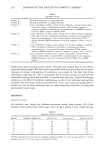
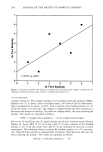
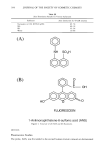
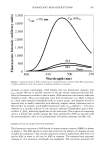
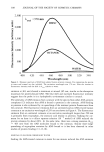
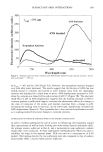
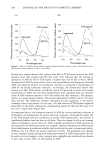
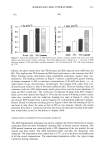
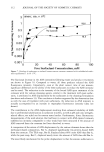
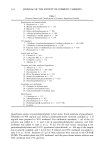
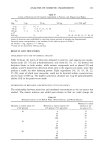
302 JOURNAL OF THE SOCIETY OF COSMETIC CHEMISTS The objective of this study was to investigate the relationship between interactions of a cleanser with corneum proteins and its clinical harshness. To that end, the interaction potentials of a synthetic detergent-based bar known to be relatively mild to skin were compared with those of two soap-based compositions. In human clinical studies using the flex wash (10), these three bars have been found to be significantly different in their irritation potential, with the isethionate-based bar significantly milder than the two soap-based compositions. The interactions of the cleansers with stratum corneum were compared by their ability to displace the fluorescence probe, 1-anilinonaphthalene-8-sulfonic acid (ANS), from corneum proteins. The fluorescence characteristics of ANS have been studied extensively over the years (11,12) as a selective and sensitive marker for protein interactions. Recently we have applied this technique to probe the interactions of pure surfactants with stratum corneum proteins and have analyzed the spectral changes observed in some detail (13). The probe is essentially non-fluorescent in water but becomes appreciably fluorescent when bound to proteins. Anions that are more hydrophobic than ANS can displace it from its protein binding sites, with consequent decrease in its emission intensity (14). These spectral properties have made ANS a valuable probe for studying ligand-protein binding. Using the ANS displacement technique, the location and the relative amounts ofanionic surfactants bound to corneum during a one-minute wash with the three cleansers were measured. The treatment condition was kept sufficiently short to approximate a realistic cleansing situation. Experiments were carried out with isolated human stratum corneum as well as with dermatomed porcine skin. We also measured the corneum interactions of the pure surfactants sodium lauroyl isethionate and triethanolammonium laurate, which are important constituents of the formulated compositions, and compared the results with those of sodium dodecyl sulfate, a well known harsh surfactant. The fluorescence results were correlated with direct measurements of surfactant binding to corneum, using radiolabeled materials. EXPERIMENTAL MATERIALS The nominal compositions of the three skin cleansing bars are given in Table I. Bar A has a synthetic detergent cocoyl isethionate as its main ingredient. Bar B is a high- glycerol triethanolammonium soap composition, while Bar C is a pure soap composition Table I Ingredients of Test Products Bar A: Bar B: Bar C: Sodium cocoyl isethionate, stearic acid, sodium tallowate, water, sodium isethionate, coconut acid, sodium stearate, sodium dodecyl benzene sulfonate, sodium cocoate, fragrance, sodium chloride, titanium dioxide, trisodium EDTA, trisodium etidronate, BHT Sodium soap, TEA soap, TEA, glycerin, TEA lauryl sulfate, acetylated lanolin, alcohol, water, cocodiethanolamide Sodium cocoate, sodium tallowate, water, fragrance, sodium chloride
Purchased for the exclusive use of nofirst nolast (unknown)
From: SCC Media Library & Resource Center (library.scconline.org)