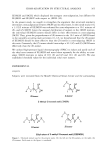
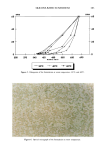
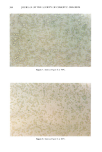
378 JOURNAL OF THE SOCIETY OF COSMETIC CHEMISTS The present study was designed to optimize a photoprotector formulation in which silicone was a major component. We selected formulations that were most readily incorporated into emulsions (i.e., those that had low surface tension), that imparted the best dry emollient characteristics (i.e., that gave the formulation a smooth, but not oily or greasy feel), and that yielded optimum evaporation/freezing characteristics, which made the formulations suitable for sunscreens to be used in the mountains as well as on the beach. Earlier studies (2) showed that the most suitable formulation was 1:1 mixture of V-5 (pentameric cyclomethicone, Rh6ne Poulenc) and DC-244 (tetrameric cyclo- methicone, Dow Corning). The incorporation of solar filters against UV-A (Parsol 1789) and UV-B (Hellopan Eusolex 1000) radiation presented no technological problems. MATERIALS AND METHODS SOLAR FILTERS Parsol 1789 (butylmethoxydibenzoyl methane), supplied by Givaudan Roure, is an oily UV-A filter with maximum absorption at 359 nm. Hellopan E-1000 (isoamyl p-methoxycinnamate), supplied by Haarman & Raimer, is an oily UV-B filter with maximum absorption at 310 nm. Dimethylconol DC-1401 and tetrameric cyclomethicone DC-244 were supplied by Dow Corning. Pentameric cyclomethicone V-5 was supplied by Rhbne-Poulenc, and was used at a proportion of 1:1 in accordance with previously reported findings. Carbopol 1382 was from BF Goodrich. Triethanolamine was from Panreac. Distilled water was used in all formulations. The galenical formula was developed according to recent technologies for preparing emulsions at room temperature (3-6), based on their low surface tension and the emul- sifying capacity of new carbopol resins. The formulation investigated here was developed from a formula for makeup remover, which includes cyclomethicones and carbopol 1382 (7). The resulting gel emulsion conserves the two desirable characteristics noted above. The new formula contained almost no greasy or oily components. When UV-A and UV-B filters were incorporated, a non-greasy photoprotective gel-emulsion was ob- tained, which was of potential use as a sunscreen by persons with oily or mixed skin. The UV-B filter (cinnamate derivative) had an ideal absorption spectrum for protection against radiation (8). Moreover, of all the filters compared, it showed the best solubility in cyclomethicones, and displayed good limits of solubility in the UV-A filter chosen (Parsol 1789, Givaudan) (9). COMPOSITION OF THE GEL EMULSION The formulation tested is: Heliopan E-1000 ...... 7% Parsol 1789 ......... 1.5% Finsolv SB ............ c.s.

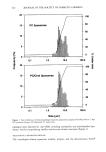
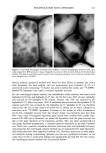
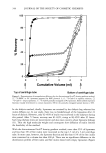
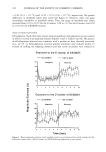
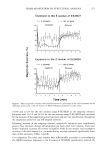
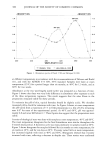
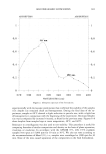
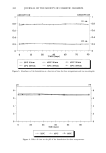
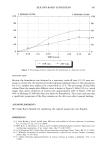
SILICONE-BASED SUNSCREENS 379 DC-244 ........... 2.5% SV-5 .............. 2.5% Carbopol 1382 ...... 0.7% Nipaguard BPX ..... 0.5 % Triethanolamine ..... 08% DC-1401 .......... 3.0% Distilled water ..... c.s. 100 PREPARATION OF THE GEL EMULSION 1. Mix solar filters at 60 rpm with Finsolv SB (benzoic alcohol C12-C15), a solvent that ensures complete dissolution of Parsol 1789 in the silicone phase (RW20 stirrer, Janke and Kunkel GmbH, Staufen, Germany). 2. Add the cylomethicone mixture at 60 rpm to the combined filter solution. This yields an oily phase. 3. Disperse carbopol resin in the oily phase at 200 rpm. 4. Add distilled water very slowly with rapid shaking at 1700 rpm, under a vacuum if possible, until a milky, homogeneous dispersion is formed. 5. Neutralize the milky dispersion with triethanolamine. 6. Add dimethylconol slowly with rapid shaking at 1000 rpm. 7. Homogenize in a colloid mill (Lancor-Himmel, 2G.80 1.1H, Bilbao, Spain). RESULTS AND DISCUSSION SPECTROPHOTOMETRIC ANALYSIS The final formulation was analyzed, as was each of the solar filters separately. The results demonstrated the stability of the formulation under different experimental conditions. Figure 1 illustrates the absorption spectra of the UV-A and UV-B filters. Peak absorp- tions were found at 359 nm for Parsol 1789 and at 310 nm for Heliopan E-1000. Spectrophotometric analysis of the final cream (Figure 2) showed a major peak at 310 nm and a much weaker peak at 359 nm. Absorbance of longer wavelengths decreased steadily. These results were not surprising in view of the concentrations of the two solar filters in the final formulation: as much as five times more Heliopan E-1000 was present than Parsol 1789. The percentages of the two filters in the final formula were chosen in accordance with previously published recommendations and the limits set by current European law (10). The association of these two filters has the advantage of providing protection over a wide range of wavelengths and increasing the protective effect of our formulation. STABILITY ANALYSIS Because the preparations were thermodynamically unstable, we investigated viscosity and droplet size as well as organoleptic characteristics of the formulation. Tests were run
Purchased for the exclusive use of nofirst nolast (unknown)
From: SCC Media Library & Resource Center (library.scconline.org)