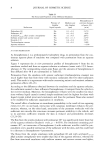
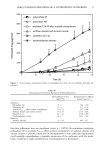
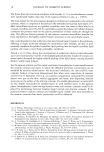
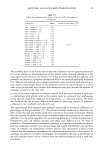
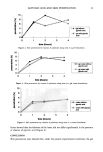
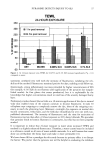
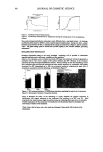
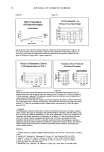
l0 JOURNAL OF COSMETIC SCIENCE The fluxes from the structured emulsions with steareth-2/-21 or triethanolamine stearate were significantly higher than that of the aqueous reference (t-test, p = 0.05%). The main barrier for the percutaneous absorption of almost all compounds is the stratum corneum, which is composed of keratinized cells embedded in lameliar lipid layers (27). Most intercellular lipids are in a gelified crystalline state, but some of them may be in a liquid crystalline state (28-30). It is generally accepted that these intercellular domains constitute the primary route for the passive permeation of many molecules through the skin. The effective barrier property of the stratum corneum intercellular lamellae has been attributed to the highly ordered bilayer structures in the intercellular spaces. One could hypothesize that surfactants that have formed liquid crystals in the emulsions, diffusing as single molecules through the intercellular lipid lamellae, are able to pref- erentially transform the gelified crystalline lipid packing into the liquid crystalline lipid packing and create a more fluid, permeable, membrane. French et al. (31) have shown that incorporation of surfactants (dodecyl ether ethoxylate type) into multilamellar vesicles of distearylphosphatidylcholine (model of stratum cor- neum lipids) disrupted the highly ordered packing of the lipid chains, causing increased fluidity within lipid bilayers. For the aqueous solution and for simple emulsions, benzophenone-4 partitioned between the stratum corneum and water, in which the diffusible permeant concentration can be modified by miceliar solubilization. For structured emulsions, the case could be more complex. Indeed, it has been demonstrated that when some suspensions of nonionic vesicles (32) or liposomes (33) (e.g., an aqueous compartment surrounded by lameliar layers) were put on the skin, vesicles aggregated and fused, thus depositing lameliar structures on the surface of the stratum corneum. If a similar phenomenon occurred with an oily droplet surrounded by lameliar layers or with lameliar layers in the aqueous phase, benzophenone-4 partitioning between water and stratum corneum could be re- placed by partitioning between lameliar liquid crystals and stratum corneum. If the partition between stratum corneum and lameliar liquid crystals were more favorable to the stratum corneum than water, permeation could be enhanced. REFERENCES (1) S. Friberg, Three-phase emulsions,J. Soc Cosmet. Chem., 30, 309-319 (1979). (2) G. Couarraze and J. Wepierre, "Topical Applications of Liposomes," in Liposomes, New Systems and New Trends in their Applications, F. Puisieux, P. Couvreur, J. Delattre, and J. P. Devissaguet, Eds. (Editions de sant•, Paris, 1995), pp. 615-644. (3) H. Komatsu, H. Okamoto, K. Miyagawa, M. Hashida, and H. Sezaki, Percutaneous absorption of butylparaben from liposomes in vitro, Chem. Pharm. Bull., 34, 3423-3430 (1986). (4) A. Vermoken, M. Hukkelhoven, A. Vermeesch-Markslag, C. Goos, P. Wirtz, and J. Ziegenmeyers, The use of liposomes in the topical application of steroids,J. Pharm. PharmacoL, 36, 334-336 (1984). (5) M. Mezei and V. Gulasekharam, Liposomes, a selective drug delivery system for the topical route of administration, (2) Gel dosage form, J. Pharm. Pharmacol., 34, 473-747 (1982). (6) C. B. Lalor, G. L. Flynn, and N. Weiner, Formulation factors affecting release of drugs from topical vehicles. II. Effect of solubilities on in vitro delivery of a series of n-alkyl p-aminobenzoates,J. Pharm. Sd., 84, 673-676 (1995). (7) P. Ashton, K. A. Walters, K. R. Brain, and J. Hadgraft, Surfactant effects in percutaneous absorption. I. Effects on transdermal flux of methyl nicotinate, Int. J. Pharm., 87, 261-264 (1992).

PERCUTANEOUS DIFFUSION OF A HYDROPHILIC SUNSCREEN 11 (8) M.J. Cappel and J. Kreuter, Effect of nonionic surfactants on transdermal drug delivery: I. Polysor- bates, In. J. Pharm., 69, 143-153 (1991). (9) K.A. Walters, M. Walker, and O. Olejnik, Non-ionic surfactant effects in hairless mouse skin permeability characteristics, J. Pharm. Pharmaco/., 40, 525-529 (1988). (10) Z.T. Chowhah and R. Pritchard, Effect of surfactants on percutaneous absorption of naproxen. I. Comparisons of rabbit, rat, and human excised skin,.]. Phar•. Sci., 67, 1272-1274 (1978). (11) W. W. Shen, A. G. Danti, and F. N. Bruscato, Effect of nonionic surfactants on percutaneous absorp- tion of salicylic acid and sodium salicylate in the presence of dimethyl sulfoxide, J. Phar•. Sd., 65, 1780-1783 (1976). (12) H. G. Ibrahim, Release study from lyotropic liquid crystal systems,J. Pharm. Sd., 78,683-687 (1989). (13) H. L. G. M. Tiemessen, H. E. Bodde, C. VanMourik, and H. E. Junginger, In vitro drug release from liquid crystalline creams: Cream structure dependence, Progr. Colloid. Polymer Sci., 77, 131-135 (1988). (14) C. C. Muller-Goymann and S. G. Frank, Interaction of lidocaine-HC1 with the liquid crystal structure of topical preparations, Int..]. Pharm., 29, 147-159 (1986). (15) S. Wahlgren, A. L. Linsdtrom, and S. E. Friberg, Liquid crystals as a potential ointment vehicle,.]. Pharm. Sci., 73, 1484-1486 (1984). (16) K. Kriwet and C. C. Muller-Goymann, Diclofenac release from phospholipid drug systems and per- meation through excised human stratum corneum, Int..]. Pha•m., 125, 231-242 (1995). (17) I.L. Wilisch and C. C. Muller-Goymann, Correlation of colloidal microstructure, drug release and permeation through excised human skin, Int..]. Pharm., 96, 79-84 (1993). (18) J. Swarbrick and J. Siverly, The influence of liquid crystalline phases on percutaneous drugs. II. Percutaneous studies through excised human skin, Pharm. Res., 9, 1550-1555 (1992). (19) D. W. Osborne, A.J.I. Ward, and K.J. O'Neill, "Surfactant Association Colloids as Topical Drug Delivery Vehicles," in Topical Drug Delivery Formulations, D. W. Osborne and A. H. Amann, Eds. (Marcel Dekker, New York, 1990), pp. 349-379. (20) S. B. Ruddy, "Surfactants," in Percutaneous Penetration Enhancers, E. W. Smith and H. I. Maibach, Eds. (CRC Press, Boca Raton, FL, 1995), pp. 245-257. (21) P. Ashton, J. Hadgraft, and K. A. Walters, Effects of surfactants in percutaneous absorption, Pharm. Acta Helv., 61, 228-235 (1986). (22) K.A. Walters, "Surfactants and Percutaneous Absorption," in Prediction of Percutaneous Penetration, R. C. Scott, R. H. Guy and J. Hadgraft, Eds. (IBC Technical Services, London, 1989) pp. 148-162. (23) D. Atwood, A. T. Florence, Surfactants Systems (Chapman and Hall, London, 1983) pp. 124-228. (24) P. P. Sarpotdar and J. L. Zatz, Evaluation of penetration enhancement of lidocaine by nonionic sur- factants through hairless mouse skin in vitro, .]. Pharm. Sci., 75, 176-181 (1986). (25) M. Loden, The simultaneous penetration of water and sodium lauryl sulfate through isolated human skin,.]. Soc. Cosmet. Chem., 41, 227-233 (1990). (26) J. L. Zatz, "Modification of Skin Permeation by Surface-Active Agents," in Skin Permeation: Funda- mentals and Application, J. L. Zatz, Ed. (Allured Publishing Corp., Wheaton, IL, 1993), pp. 149-162. (27) P.M. Elias, Epidermal lipids, membranes, and keratinization, Int..]. Dermatol., 20, 1-19 (1981). (28) B. Ongpipattanakul, M. L. Francoeur, and R. O. Potts, Polymorphism in stratum corneum, Blochim. Biophys. Acta, 1190, 122-155 (1994). (29) D.T. Parrott and J. E. Turner, Mesophase formation by ceramides and cholesterol: A model for stratum corneum lipid packing?, Blochim. Biophys. Acta, 1147, 273-276 (1993). (30) S.J. Rehfeld, W. Z. Plachy, S. Y. E. Hou, and P.M. Elias, Localization of lipid microdomains and thermal phenomena in murine stratum corneum and isolated membrane complexes: An electron spin resonance study,.]. Invest. Dermatol., 95,217-223 (1990). (31) E.J. French, C. W. Pouton, and G. Steele, "Fluidization of Lipid Bilayers by Non-Ionic Surfactants: Structure-Activity Studies Using a Fluorescent Probe," in Prediction of Percutaneous Penetration, R. C. Scott, R. H. Guy, J. Hadgraft, Eds. (IBC Technical Services, London, 1989), pp. 308-315. (32) H. E.J. Hofland, J. A. Bouwstra, F. Spies, H. E. Bodde, J. F. Nagelkerke, C. Cultander, and H. E. Junginger, Interactions between non-ionic surfactant vesicles and human stratum corneum in vitro,.]. Liposome Res., 5, 241-263 (1995). (33) J. Lasch and J. Bouwstra, Interactions of external lipids (lipid vesicles) with the skin,.]. Liposome Res., 5, 543-569 (1995).
Purchased for the exclusive use of nofirst nolast (unknown)
From: SCC Media Library & Resource Center (library.scconline.org)