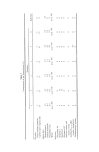
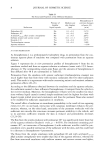
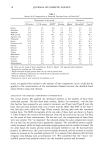
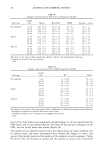
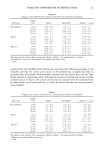
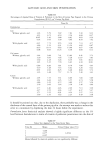
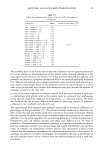
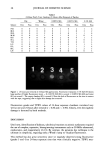
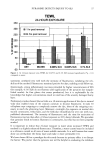
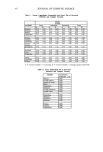
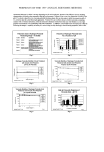
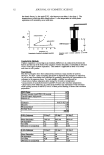
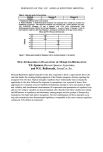
GLYCOLIC ACID AND SKIN PENETRATION 29 Table VII Tukey Test Applied to the Time x Glycolic Acid x Formulation Interaction Interaction Means Critical Tukey value (5%) Gel x without x 1 h 6.91 Gel x without x 2 h 5.21 Gel x without x 4 h 7.77 Gel x with x 1 h 6.59 Gel x with x 2 h 9.78 Gel x with x 4 h 6.13 Gel cream x without x 1 h 4.12 Gel cream x without x 2 h 7.31 Gel cream x without x 4 h 7.68 Gel cream x with x 1 h 5.62 Gel cream x with x 2 h 7.85 Gel cream x with x 4 h 6.20 Cream x without x 1 h 4.36 Cream x without x 2 h 4.50 Cream x without x 4 h 5.26 Cream x with x 1 h 3.62 Cream x with x 2 h 4.19 Cream x with x 4 h 5.33 3.4214 The cornified layer of the human skin is the most important barrier against penetration by several substances. Disarrangement of this barrier using chemical substances is the most rapid method to reach the dermis (15). It has also been observed that glycolic acid promotes an increase in epidermal thickness as well as an increased epidermal hydration (16). These factors indicate that vitamin A palmitate, when combined with glycolic acid, may tend to reach deeper layers of the epidermis or even to remain longer in it since some of the factors that may increase skin absorption may also increase the amount of substance retained in the skin (15). In view of the many empirical conclusions reached with the use of vitamin A palmitate in combination with glycolic acid, in the present study we evaluated this combination on the basis of a parameter judged to be of importance, i.e., skin penetration. The study was based on the use of three different formulations containing vitamin A palmitate combined or not combined with glycolic acid. The experimental data obtained were analyzed statistically to determine differences in percentages of skin penetration (17). The statistical study conducted to determine the effect of glycolic acid and vehicle on the skin penetration of vitamin A palmitate showed that the presence of glycolic acid in the formulation alters the penetration of vitamin A palmitate into the guinea pig skin. The penetrating behavior of vitamin A palmitate in formulations with and without glycolic acid along time differed at the 5% level of probability. The penetration of vitamin A palmitate in formulations containing glycolic acid was accelerated between one and two hours but rapidly fell between two and four hours. In contrast, the formulation without glycolic acid maintained a more or less uniform rate of penetration throughout the experimental period (one to four hours). In summary, the amount of vitamin A palmitate that penetrated the skin in the absence of the acid took four hours to do so, whereas with the addition of glycolic acid it took only two hours.

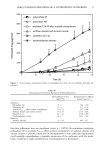
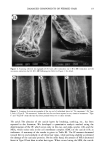
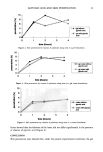
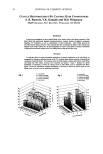
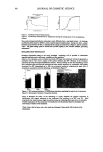
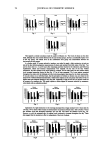
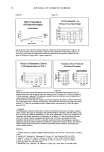
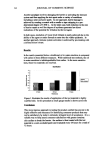
30 JOURNAL OF COSMETIC SCIENCE The interaction among the three sources of variation (times x glycolic acid x formula- tions) was also significant at the 5% level. These interactions were analyzed separately in view of the inadequate interpretation of a triple interaction. Thus, the behavior of formulations along time was studied individually as a function of the presence or absence of glycolic acid. The study of skin penetration by vitamin A palmirate along time in the different formulations and in the absence of glycolic acid showed that the gel cream and the cream virtually presented the same behavior after one hour, whereas the gel favored a much higher vitamin A palmirate penetration. After two hours, however, the pen- etration of vitamin A palmirate in the gel formulation fell abruptly, whereas it increased abruptly in the gel cream formulation, with the two formulations thus presenting opposite behaviors. In the cream formulation, penetration of vitamin A palmirate was practically constant. In contrast, skin penetration by vitamin A palmirate along time in the different for- mulations and in the presence of glycolic acid was higher in the gel formulation within one hour, and this difference was more marked compared to the cream formulation. After two hours, all formulations presented some increase in penetration compared to the previous time, but the gel and gel cream formulations showed identical behavior, i.e., they favored a marked increase in vitamin A palmirate penetration, whereas the cream formulation showed a very small increase in vitamin A palmirate penetration during this time interval. After four hours, vitamin A palmirate penetration was similar for all formulations, although the curves showed a fall in penetration for the gel and gel cream formulations along time, and a continuous increase in vitamin A palmitate penetration for the cream formulation was observed. The study of the effect of glycolic acid on skin penetration by vitamin A palmirate along time in the gel formulation showed that the glycolic acid factor did not alter vitamin A palmirate penetration during the first hours. After two hours, the gel formulation containing glycolic acid favored a much higher vitamin A palmirate penetration com- pared to the gel formulation without glycolic acid. Between two and four hours, the formulation with glycolic acid caused a fall in vitamin A palmirate penetration probably due to the metabolism of vitamin A palmirate into the skin (18), whereas the formu- lation without glycolic acid favored increased penetration. Thus, the gel formulation containing glycolic acid promoted a faster vitamin A palmirate penetration than the formulation without glycolic acid (Figure 2). The gel cream formulation containing glycolic acid promoted a slight increase in vita- min A palmirate penetration during the first hour. After two hours, the formula with glycolic acid and the formula with no glycolic acid behaved in a similar manner, both of them favoring increased vitamin A palmirate penetration. In contrast, after four hours the formula with glycolic acid caused a fall in vitamin A palmirate penetration, whereas the gel cream formula without glycolic acid caused increased penetration (Figure 3). Thus, the behavior of the gel cream was generally similar to that of the gel formula since in the gel cream glycolic acid also promoted a more rapid penetration of vitamin A palmirate along time. However, the gel cream formula without glycolic acid did not show a fall in vitamin A palmirate penetration after two hours, as was the case for the gel formula. The study of skin penetration by vitamin A palmirate along time in the cream formu-
Purchased for the exclusive use of nofirst nolast (unknown)
From: SCC Media Library & Resource Center (library.scconline.org)